People don’t rise from nothing. We do owe something to parentage and patronage. The people who stand before kings may look like they did it all themselves. But in fact they are invariably the benefici...
1 Samuel 15:10-23 , 2 Chronicles 26:16-21 , Ecclesiastes 2:4-11, Mark 10:35-45 , Luke 18:9-14 , Psalm 49:16-20
William James, in a famous letter to H. G. Wells in 1906, credited what he called American “moral flabbiness” to “the exclusive worship of the bitch-goddess Success. That—with the squalid cash interpr...
In Jeremiah it is clear that the excellence comes from a life of faith, from being more interested in God than in self, and has almost nothing to do with comfort or esteem or achievement. Here is a pe...
The challenge each of these faced in their deconstruction—and what we may face—is walking the tightrope between becoming our own person and honoring our past. In The Homeless Mind , sociologist P...
It is not the critic who counts; not the man who points out how the strong man stumbles, or where the doer of deeds could have done them better. The credit belongs to the man who is actually in the ar...
The Double Helix, James Watson’s 1968 memoir about discovering the structure of DNA, describes the roller coaster of emotions he and Francis Crick experienced through the progress and setbacks of the ...
Lord Nelson once said that all his achievements in life came down to one simple habit: he was always there a quarter of an hour early, never a quarter of an hour late.
Matthew 6:25-34, Galatians 1:10, Philippians 2:3-4, Matthew 23:1-12, Romans 12:2
In his book, Scary Close , Donald Miller acknowledges that over time he developed a mask, or a persona that kept even those closest to him from experiencing with him. As he began to peel back layers ...
The Japanese have a word, ikigai, that captures this sense of drive we all have inside us. Roughly translated as “the happiness of constant busyness,” ikigai reflects your awareness of your life’s pur...
The Christian’s self-understanding is that she is precious before God—however much a sinner, however much a failure (or success) she may be by the standards of worldly comparisons—and that every other...
Proverbs 16:18, Psalm 103:14-16, Luke 14:11, Micah 6:8, 1 Peter 5:5-6, James 4:6-10, Jeremiah 9:23-24
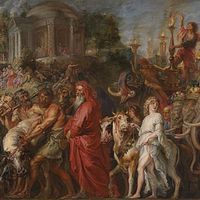
If you were to travel back in time to the city of Rome (either during the Republic or the Empire), you may have had the opportunity to witness the Triumph, a colossal spectacle in which the greatest m...
Paul give us an excellent example of what looking at people from a worldly point of view looks like in Philippians chapter 3: If someone else thinks they have reasons to put confidence in the flesh, ...
Ecclesiastes 2:10-11 , 1 Kings 11:1-4, Job 2:11-13, Mark 8:36, Luke 10:38-42, Psalm 127:1-2
We would do well to keep in mind that Solomon’s words on the necessity of friendship were written toward the end of his life, well after he scaled his own Mount Significance. His accomplishments were ...
Ecclesiastes 4:9-12 , Genesis 2:18, 1 Samuel 18:1-4, Mark 8:36, Philippians 2:3-4, Psalm 133:1
Read any study on human satisfaction and you will see the paramount role of relationships with others. And yet, so many of us readily exchange friendship and community for success and achievement, onl...
Proverbs 16:20, Nehemiah 8:10, Philippians 4:4, John 15:11, Psalm 37:4, Matthew 6:33
If you observe the people around you, you’ll find most individuals follow a formula that has been subtly or not so subtly taught to them by their schools, their company, their parents, or society. Tha...
Exodus 33:18-23, Isaiah 6:1-4 , Daniel 4:28-37, John 17:1-5 , 2 Corinthians 3:7-18, Psalm 19:1
What resonance does the word glory have in today’s English language? How often is it used, and with what meaning? The adjective glorious is familiar enough—we might say that we saw a “glorious” sunset...
In their beginnings, many universities were connected to the church and religious orders, and a sabbatical was considered a time to experiment, learn anew, or pray and meditate. That understanding, un...
Perhaps there is no object more desired than a house in America. Meghan Daum writes in her hilarious and poignant book Life Would Be Perfect If I Lived in That House, “There is no object of desire qui...
Not very long ago, “culture” commonly referred to what is now meant by “high culture.” For instance, we might have said, “She has such a cultured voice.” If a person read Shakespeare, Goethe, Gore Vid...
Luke 18:9-14, Ephesians 1:7, John 14:6, Psalm 23:1, John 17:3, Titus 3:4-5
In his insightful book, Delighting in the Trinity , Michael Reeves shares an interesting point of connection between the Protestant understanding of sola grati discovered by Francis Xavier during...
One day Saint Francis and brother Leo were walking down the road. Noticing Leo was depressed, Francis turned and asked, “Leo, do you know what it means to be pure of heart?” “Of course. It means to h...
Steve Sample has been described as the greatest university president of his generation. For nineteen years, by his capable leadership, Sample led the University of Southern California to new heights o...
Sometimes it is helpful to see what life looks like on the other side of faith, that is, for those who believe that God does not exist. Bertrand Russell, the renowned philosopher and avowed atheist, h...
Matthew 6:24, 1 Timothy 6:9-10, Colossians 3:5, Psalm 115:4-8, Matthew 13:22, Mark 8:36, Ecclesiastes 2:11
Andrew Carnegie rose to become among the world's richest individuals through his steel empire. In the midst of this acquisition of massive wealth at just thirty-three years old—Carnegie conducted ...
Shakespeare’s play, Measure for Measure is an exploration of the nature of power and mercy. Isabella, the novice nun, trying to persuade the tyrant Angelo to have mercy on her brother Claudio, utters ...
John Wesley’s covenant prayer demonstrates a level of sacrifice and devotion to Jesus that has been rarely matched. How many of us have asked for suffering, in order to experience the humility and the...
One could spend long hours making a list of great human achievements-from the wheel to the great cathedrals to the discovery of DNA and the development of computers-and Ivet leave out one of the most ...
Thomas Aquinas, the famous medieval theologian, created one of the greatest intellectual achievements of Western civilization in his Summa Theologica. It’s a massive work: thirty-eight treatises, thre...
There is a great difference between successfulness and fruitfulness. Success comes from strength, control, and respectability. A successful person has the energy to create something, to keep control o...
Like so many people, I once associated excellence with flawlessness. The excellent person never makes mistakes, is always consistent and confident, and is continuously applauded by scores of imperfect...