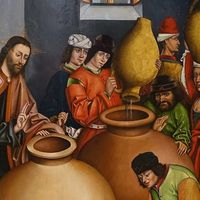
One key difference between much of the early church vs. the church of today (at least in the West) was the belief in, and regular experience of, miracles. As Joel Green, the noted professor and writer...
Cultural diversity was built into the Christian faith…in Acts 15, which declared that the new gentile Christians didn’t have to enter Jewish culture…. The converts had to work out…a Hellenistic way of...
So if we want to get the church right, we have to learn to see it as a salad in a bowl, made the Right Way of course. For a good salad is a fellowship of different tastes, all mixed together with the ...
Jesus’ first followers were at the forefront of a new kind of textual technology. From quite early on they used the codex, with sheets stuck together to comprise something like a modern book, rather t...
Matthew 22:39, Philippians 2:3-4, 1 Corinthians 10:24, Romans 15:1-2, Galatians 6:10, Romans 12:10, Acts 20:35, Matthew 25:35-40, Isaiah 58:6-7, Proverbs 19:17, Luke 10:30-37, James 2:15-16, 1 John 3:17, Proverbs 31:8-9, Matthew 25:40, Acts 11:29-30, 2 Corinthians 8:13-15, Acts 2:44-45, Acts 4:32-35, 1 Corinthians 12:25-26
Pursuing the common good has been a strong marker of the Christian church from the very beginning. The early church had many habits that they became known for, of course—including meeting frequently, ...
Matthew 22:37-39, Matthew 25:35-40, Luke 3:11, Ephesians 5:2, Acts 2:42-47, James 2:14-17, Galatians 2:10, Psalm 72:12-14
A passage often referred to in order to describe the sacrificial, countercultural quality of the early church comes to us interestingly enough, from one of its strongest critics, known later to histor...
Matthew 5:10-12, John 15:18-20, 2 Timothy 3:12, Acts 14:22, Romans 8:35-37, 1 Peter 4:12-14, 2 Corinthians 12:9-10, Acts 1:8, Romans 8:11, Isaiah 41:10
What is the witness of the church in times of persecution? The historical record demonstrates that persecutions of Christians were regular and prolific in the first centuries of the church, especially...
These disciples turned the world upside down because they saw a dead man come back to life by the power of God. And whatever that “knowing” and “seeing” did in them, it did it at a deep level because ...
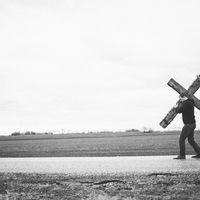
The Dolorous Passion described Simon of Cyrene as a “stout-looking man,” and a fourth-century sarcophagus (stone coffin) from Rome supports this description – The Passion Sarcophagus, probably from th...
Matthew 16:25, Romans 8:17-18, Philippians 1:21, 2 Corinthians 4:17, Psalm 116:115, Daniel 3:, Daniel 6:
How many modern Christians consider dying to be the worst thing that can happen to them? We pray for safety, healing, and protection, and rightly so. However, do we live in the truth that death has tr...
It was this…intention that made the primitive Christians such eminent instances of piety, that made the goodly fellowship of the Saints and all the glorious army of martyrs and confessors. And if you ...
John 13:34-35, Luke 6:27-28, John 14:6, Philippians 2:5-8, 1 John 4:9-11, Ephesians 2:8-9, Psalm 103:8-12
A friend sat down in a small London restaurant and picked up a menu. “What will it be?” the waiter asked. Studying the puzzling selections, my friend said, “Uhh …” The waiter smiled. “Oh, a Yank. What...
Proverbs 28:20, Revelation 2:10, Matthew 5:10-12, Matthew 10:22, 2 Corinthians 4:8-10, 1 Peter 4:12-14, Romans 8:35-37, John 15:18-20, Psalm 31:23, Matthew 25:21, 1 Corinthians 4:2, 1 Timothy 6:12, Matthew 24:45-46
Pliny, a Roman Governor serving around 112 AD, faced a challenging situation regarding Christianity. Many Church historians believe that by his time, it had become illegal to profess the Christian fai...
Revelation 2:10, Psalm 71:20-21, Philippians 3:10-14, Luke 21:16-19, 2 Corinthians 4:17-18, Romans 8:17-18, James 1:12
One of the great leaders of the first generation after the apostles was a man named Polycarp. Polycarp, it is believed, was discipled by the apostle John and carried out a long and fruitful ministry i...
Revelation 11:15, Matthew 28:19, Galatians 3:28, Matthew 8:10-11, 1 Corinthians 15:25-26
What shall I say of the Romans themselves, who fortify their own empire with garrisons of their own legions, nor can extend the might of their kingdom beyond these nations? But Christ’s name is extend...
Most people today imagine that the point of Christianity is “to go to heaven when you die.” That’s what most believers believe. It’s what most unbelievers unbelieve. It’s certainly what journalists, b...
Acts 8:1-3, 2 Timothy 3:12, 1 Peter 4:12-16, Matthew 5:10-12, Luke 6:41-42, Genesis 3:8-19, Genesis 39:6-20, Job 2:11-13, Job 42:7-9
Most of us are aware of various persecutions that took place during the first few centuries of the church’s existence. One particularly brutal local persecution took place during the reign of Nero, wh...
Revelation 2:10, Matthew 5:10-12, 2 Timothy 4:7-8, 1 Peter 4:12-13, James 1:12, Psalm 46:1-3
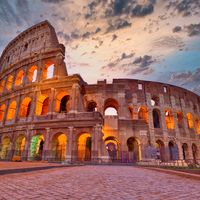
Like a scene straight out of Gladiator, Polycarp was dragged into the Roman Colosseum. Discipled by the apostle John himself, the aged bishop faithfully and selflessly led the church at Smyrna through...
James 1:27, Isaiah 1:17, Psalm 68:5, Matthew 25:34-40, 1 Timothy 5:3-4, Zechariah 7:9-10, Matthew 12:48-50, Romans 8:14-17, Luke 4:18, Acts 4:34-35, James 2:15-16
Christianity revitalized life in Greco-Roman cities by providing new norms and new kinds of social relationships able to cope with many urgent urban problems. To cities filled with the homeless and im...
The fact that a cross became the Christian symbol, and that Christians stubbornly refused, in spite of the ridicule, to discard it in favour of something less offensive, can have only one explanation....
The only “church growth formula” the early church possessed was the body of truth flowing with the blood of grace. They drew thousands to Jesus by being like Jesus. But what does it mean to “be like J...
Did you know that the history of the word “fellowship,” is, rather simply, a relationship among fellows? The idea of a fellowship being that two or more people have been bonded together in some signif...
James Brownson describes what he calls a “missional hermeneutic” as observed throughout the New Testament: I call the model I am developing a missional hermeneutic because it springs from a basic obs...
Matthew 6:19-21, Malachi 3:10, Acts 20:35, Luke 6:38, Proverbs 3:9-10, 2 Corinthians 9:6-7
John Chrystostom was an early church father and Bishop of Constantinople from 347-407. The name “Chrysostom” is not a surname, but rather an epithet “golden tongued,” given to him because of his excel...
After the fall of our first parents, boundaries were something to push past, to transgress. It’s worth pausing to note how we use the word transgression for “sin.” With its Latin roots, “across” and ...
Before child baptism was common in the early Church, Epiphany was a special holy day for baptism. This is because Epiphany is traditionally associated with the baptism of Jesus by John in the Jordan. ...
The fact as such that Jesus possesses supreme divine authority is, even apart from its being acknowledged by all New Testament authors and by the whole of the Early Church, of the greatest significanc...
The early church took a view of suffering that stands in testimony to our comfort-addicted culture. For example, Ignatius of Antioch, a martyr in the second century, forbade his community from asking ...
John 10:6, John 17:21, 1 Corinthians 3:11, 1 Corinthians 1:10-13, Revelation 7:10
Before he was a household name, C. S. Lewis was a hardened atheist. From his teens to his early thirties, he vocalized many of the objections to Christianity that animate doubt in our age. After his s...
1 Corinthians 7:1-9, Matthew 19:3-12 , Psalm 139:13-16 , Genesis 2:18-25, Song of Solomon 4:1-16, Proverbs 5:15-19, Genesis 2:18
James Nelson describes sexuality as the central clue to what God is up to in the world. While this might seem a little over the top, when you think about it, sexuality factors integrally in our relati...