Proverbs 16:18, Psalm 103:14-16, Luke 14:11, Micah 6:8, 1 Peter 5:5-6, James 4:6-10, Jeremiah 9:23-24
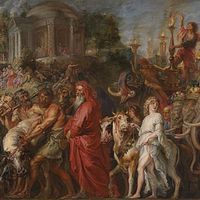
If you were to travel back in time to the city of Rome (either during the Republic or the Empire), you may have had the opportunity to witness the Triumph, a colossal spectacle in which the greatest m...
Revelation 2:18-29, Psalm 50:16–23, Luke 9:23–25, Matthew 23:25–28 , Micah 6:6–8, Amos 5:21–24
Churches want to hear nice, optimistic messages, free of the mention of sin or a call for repentance. Churches want nice, lean programs, directed at nice, clean families, leading to growth without sac...
One of the real problems in modern life is that people who are good at being civil lack strong convictions and people who have strong convictions lack civility.
Micah 6:8, Exodus 23:2–3, 6, Proverbs 31:8–9, James 2:12–13 , Luke 6:36–37, Psalm 103:8–10
Christian civility does not commit us to a relativistic perspective. Being civil doesn’t mean that we cannot criticize what goes on around us. …Civility is a different matter, though. I can treat ...
Exodus 34:6–7, Genesis 39:21, Micah 6:8, Titus 3:4–5, Luke 6:35–36, Psalm 136:1
In the Old Testament, God is often praised for his kindness. There is a beautiful word in Hebrew— hesed —which is so rich in meaning that it gets translated in many ways. Very often it is translat...
Exodus 20:1–17, Genesis 22:1–14 , Micah 6:6–8 , Luke 10:25–37 , Matthew 5:17–20, Psalm 82:3–4
Interpretive strategies have gone through cycles of strict-constructionist (or Originalism) and broad-constructionist (or Living Constitution) perspectives. Originally the procedure of interpreting th...
Isaiah 53:3–5, Daniel 3:16–18, Micah 6:6–8, Matthew 23:23–24, Luke 4:16–30, Psalm 2:1
Jesus, as always, gets caught in the middle—along with a good number of his followers. Many people in America today were brought up in strict Christian homes and churches of one sort or another. There...
Genesis 22:1-14, Exodus 14:21-31, Micah 6:6-8, Matthew 22:36-40 , James 1:22-25, Psalm 119:105
Søren Kierkegaard offers two suggestions for the reader who tackles difficult portions of the Bible. First, read it like a love letter, he says. As you struggle with language, culture, and other barri...
Micah 6:8, Exodus 22:21-22 , Isaiah 58:6-7 , Matthew 22:37-39, James 2:1-9 , Psalm 103:6
We cannot have true justice unless it is motivated by love, just as God’s greatest act of justice, sending Jesus to die for us, was motivated by love. Years ago, before the emancipation of slaves, Fre...
1 Kings 3:16-28, Micah 6:8, Proverbs 3:5-7, Matthew 22:15-22 , James 1:5 , Psalm 119:105
Richard Mouw, the former president of Fuller Seminary and a professor of philosophy, shares an amusing anecdote from a lecture by the esteemed Catholic ethicist Charles Curran. During his talk, Curran...
Exodus 3:7-10, Isaiah 58:6-10, Micah 6:6-8, Matthew 23:27-28 , James 1:26-27, Psalm 146:7-9
A major stumbling block for many earnest seekers is the compelling evidence throughout history that terrible things have been done in the name of religion. This applies to virtually all faiths at some...
Since our savior is also our Lord, we are called to follow his ways. And whenever discussions arise about what those ways look like in a church, confusion is bound to follow regarding grace and works....
1 Samuel 24:10-12, Proverbs 16:8, Romans 12:17-18, Psalm 72:1-4, Micah 6:8, Matthew 5:13-16
When in conflict we should demonstrate that our public witness is more important than winning a political battle. This means that if our side has to do something unloving or corrupt to win, then it’s ...
There are also many historical examples of Christians faithfully using political means to fight for justice and righteousness. William Wilberforce: Politician and Abolitionist William Wilber...
The prophet Isaiah describes God as a purveyor of righteousness and justice continually, and speaks to God’s expectation that his children will bring about righteousness and justice as well. Justice i...
Exodus 3:7-10, Micah 6:8, Matthew 25:40, Galatians 6:2, Psalm 82:3-4
In 1830, the Indian Removal Act led to what’s known as the Trail of Tears, in which almost fifty thousand indigenous people were removed from the southeastern United States and relocated west of the M...
Genesis 12:1-4 , Exodus 3:1-12, Micah 6:8, Matthew 4:18-22 , Ephesians 2:10, Psalm 90:12 , Matthew 9:9
It is helpful to understand the call of God in three distinct ways. First, there is the call to be a Christian. The God of creation invites us to respond to his love. This call comes through Jesus, wh...
Romans 12:2, John 15:18-19, Psalm 24:1-2, Micah 6:6-8, Genesis 1:31
We need to be careful to define what the Bible does and does not mean by “the world.” It does not mean the created order—mountains, lakes, forests, deserts, seas, animals and people—especially people...
Faith and pessimism are incompatible. To be sure, we are not starry-eyed idealists; we are down to earth realists. We know well that sin is ingrained in human nature and in human society. We are not e...
Psalm 42:1-2, Micah 6:8, Matthew 5:3-12, Luke 6:20-22
The beatitudes paint a comprehensive portrait of a Christian disciple. We see him [or her] first alone on his knees before God, acknowledging his spiritual poverty and mourning over it. This makes him...
John 9:1-3, Matthew 7:1-5, James 4:11-12, Micah 6:8, Proverbs 18:13
As sinners, we are apt to assume the worst about people. We are eager to find favorable comparisons that make ourselves look good at the expense of others. We are quick to size people up and think we ...
Isaiah 1:17, Micah 6:8, Exodus 22:22-23, Proverbs 14:31, Luke 4:18
In his excellent book, Just Courage , founder and CEO of the International Justice Mission, Gary Haugen articulates some of the realities behind the systemic oppression of the poor around the world...
For biblical righteousness is more than a private and personal affair; it includes social righteousness as well. And social righteousness, as we learn from the law and the prophets, is concerned with ...
1 Peter 3:9, Ephesians 4:32, Colossians 3:12-14, Luke 6:36, Romans 12:21, Matthew 5:7, Micah 6:8
The victory of God in our time over this deathly idolatry is hidden from us, as God’s decisive victory is always hidden from us. We do not know exactly when and where the victory has been wrought. It ...
Isaiah 61:1, Jeremiah 22:3, Micah 6:8, James 1:27, Matthew 25:35-36, Psalm 82:3-4, Isaiah 58:6-7
In the wake of slavery and the Civil War, there was so much ugliness in black life that one would have had to be blind not to see it. And nothing, absolutely nothing, was uglier than lynching in all o...
Matthew 25:40, Romans 12:21, Luke 4:18-19, James 1:27, Micah 6:8, Isaiah 1:17
In October 2014 Wired magazine reported on the dirty work every social media company must somehow handle: moderating the deluge of exploitative, degrading content posted in unimaginable quantities aro...
Matthew 25:40, Jeremiah 22:3, James 2:1, Psalm 82:3-4, Micah 6:8
Frederick Douglass describes how the evils of slavery and racism acts as a sap on the integrity of both our country and our faith in a God where there is neither Jew nor Greek, slave nor free: Fello...
Galatians 6:2, Romans 12:10, Isaiah 1:17, Micah 6:8, James 5:16
Practicing confession is one way to guard against paternalism in both extreme and more subtle ways. For example, we can tell stories of justice in a way that discounts other people’s agency—that is, t...
Galatians 6:2-3, Matthew 6:1-4, Romans 12:10, Isaiah 58:6-7, 1 Peter 5:5-6, James 4:10, Micah 6:8
In the context of justice, I think what Christians need to confess about their pride isn’t so much about taking credit away from God but from the people we help. One version of this is sometimes refer...