Probably nobody has hated the ‘softness’ of the Sermon on the Mount more than Friedrich Nietzsche. Although the son and the grandson of Lutheran pastors, he rejected Christianity during his student da...
The Sermon on the Mount is probably the best-known part of the teaching of Jesus, though arguably it is the least understood, and certainly it is the least obeyed. It is the nearest thing to a manifes...
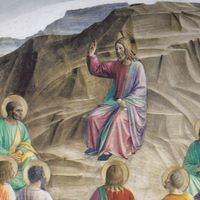
Pastor and Professor Darrell W. Johnson sets the scene for the Sermon on the Mount with great description. This could serve as a model for the beginning of a sermon on the S.O.M. They were sitting i...
They see in it an unattainable ideal. How can they develop this heart-righteousness, turn the other cheek, love their enemies? It is impossible. Exactly! In this sense, the Sermon is ‘Mosissimus Moses...
We can “know” something to be true, and then find it is not true after all. I recall confidently assertive to a student that, of course, the name of the region Perea (to the east of the Dead Sea) appe...
Matthew 5:1-48, Matthew 6:1-34, Matthew 7:1-29, 2 Timothy 3:16-17, Romans 15:4, Isaiah 55:11, Hebrews 4:12-13, Matthew 4:4, Matthew 24:35
After a sojourn in the United States where he experienced the vibrancy of Black churches, Dietrich Bonhoeffer returned to Germany in 1931 to teach at the University of Berlin. His pastoral ministry co...
Dr. William Evans, who pastored College Church from 1906–1909, was an unusually accomplished man. He had the entire King James Version of the Bible memorized as well as the New Testament of the Americ...
Consider an interview a Christian leader had with a reporter in 2018. The reporter asked why so many Christians were willing to support political candidates who revel in disobeying Jesus’ teachings. “...
In the Sermon on the Mount, Jesus likens his followers to salt and light. While the concept of light may resonate more easily with us today, the significance of salt might be less apparent. But not so...
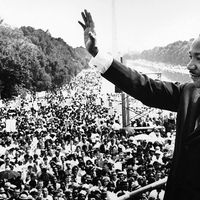
The Sermon on the Mount contains some of the most difficult ethical injunctions in all of scripture. Many of us do not know how to love our enemies and pray for those who persecute us. Martin Luther K...
There’s a quote by H. Richard Niebuhr that I believe is absolutely true. “The great Christian revolutions,” he argued, “come not by the discovery of something that was not known before. They happen w...
The Bruderhof is one such Christian community with many locations around the world. Unlike most such attempts to build radical communities, the Bruderhof has not only survived, it is thriving. In 2021...
Matthew 5:43-45, Romans 12:17-21, Luke 17:20-21, Matthew 6:25-33, Acts 4:18-20, 2 Corinthians 10:3-4, Isaiah 2:4, James 3:17-18, Philippians 3:20, John 18:36
A young Russian, deeply moved by the teachings of Tolstoy and the New Testament, had become a conscientious objector. Standing before a magistrate, he spoke passionately about a life that loves its en...
Matthew 5:null, 1 Peter 2:9, Galatians 5:22-23, James 2:17, Romans 12:1, Mark 4:21, Philippians 2:15
Jesus describes his followers as being “salt” and “light” in the world in Matthew 5. When you think about salt, it doesn’t really have a whole lot of value when it’s just sitting in a salt shaker. Si...
Matthew 5:13-16, Ephesians 5:8-9, Colossians 4:6, John 8:12-20, Luke 14:34-35
Salt and light are indispensable household commodities. Several commentators quote Pliny’s dictum that nothing is more useful than ‘salt and sunshine’ (sale et sole). The need for light is obvious. Sa...
In his thoughtful book, Our Good Crisis: Overcoming Moral Chaos with the Beatitudes , Jonathan K. Dodson asks an important question: how do you mourn the losses in your life: How do you mourn? ...
In his book Love Your Enemies: How Decent People Can Save America from the Culture of Contempt , author and professor Arthur C. Brooks charts the rise of anger — and more importantly, contempt — ...
How does the theme of glory that predominates in Epiphany fit with the large amount of space devoted to the Sermon on the Mount during the season? It all depends on what one means by glory. The “g...
Building an antifragile faith takes time. It can’t be rushed. Consider this: It takes (on average) around twelve to eighteen months to construct a new single-family home in America. This process incl...
The outline of Bonhoeffer’s story is well known. In 1927 he was a student earning a doctorate in theology from Berlin University at the age of twenty-one. In 1930 he was a debater crossing theological...
There’s a difference between intelligence and wisdom, as illustrated by the old story of the favorite course at the University. The favorite course? A survey of the New Testament. It was a favorite be...
John Wesley’s covenant prayer demonstrates a level of sacrifice and devotion to Jesus that has been rarely matched. How many of us have asked for suffering, in order to experience the humility and the...
Jeremiah 17:7-8, John 15:4-5, Matthew 23:27-28, Isaiah 58:11, Ezekiel 36:26-27
Every year at the end of November, my husband, Ike, and I load the kids in the car and drive to the nearest Christmas tree lot. We are committed “real tree” people—not to be confused with “fake tree” ...
Zechariah 9:9, Matthew 21:1-11, Mark 11:8-11, Luke 19:36-44, John 12:16-19
The entrance into Jerusalem was an acted parable. It gave the faithful the sign they had been waiting for. It inaugurated the Master’s final mission to his people and was a fitting prelude to the days...
The biblical writers and reciters make extensive use of metaphors, parables and dramatic actions. Jesus does not say, “God’s love is boundless.” Instead, he tells the story of the prodigal son. He doe...
15 percent of everything Christ said relates to this topic [of money and possessions]—more than His teachings on heaven and hell combined. Why did Jesus put such an emphasis on money and possessions? ...
In his excellent book on the desert fathers, Where God Happens , former Archbishop of Canterbury Rowan Williams tells of an encounter between two monastic fathers. The first was Macarius, famous in...
Matthew 13:, Exodus 14:21-31, Daniel 3:13-30 , 1 Kings 18:20-40, Luke 15:11-32, Psalm 23:
In the second century before Christ the great rival to Roman power in the Mediterranean world was Carthage, the Phoenician city-state located on the north African coast. It had been founded in 822 B.C...
“Teaching is no joke, sonny! … Comforting truths, they call it! Truth is meant to save you first, and the comfort comes afterwards. Besides, you’ve no right to call that sort of thing comfort. Might a...
The most radical social teaching of Jesus was his total reversal of the contemporary notion of greatness. Leadership is found in becoming the servant of all. Power is discovered in submission. The for...