Introduction Sometimes verses 1-4 are separated from 5-10 in preaching. N. T. Wright points out, however, that in both sections, the need for humility binds the passages together. A teacher must prac...
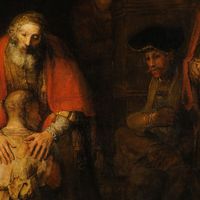
This is one of Jesus’ most vivid parables. He paints a dramatic picture of two figures, with a twist to upend his hearer’s expectations. While the context of this passage involves the dynamics of an a...
Ancient lens What's the historical context? Jesus' Strangest Tales Occasionally Jesus tells a parable that just doesn’t quite fit the framework of his teaching. Already in Luke we had...
Jacob was on his way back to face his brother Esau whom he had wronged, and he wrestled with the angel until the break of day. When the angel tried to free himself from Jacob’s persistent grip, Jaco...
Context: The Grumblers Jesus tells the three parables of Luke 15 to “the Pharisees and scribes” who were grumbling. Throughout Luke’s gospel account Jesus has been involved in controversy with the Ph...
Introduction Luke 16:1-13 isn’t an easy parable to preach on. It looks for all the world like Jesus is commending a guy who’s basically a dishonest rascal. You will sometimes see interpreters tying ...
Context This passage takes a number of turns that may, at first, seem disconnected from one another. Our text is part of a larger teaching discourse of Jesus in Luke’s gospel that has been causing te...
Context Jesus’ lesson on prayer in Luke’s gospel comes not in the context of a longer sermon (as with Matthew’s parallel in the Sermon on the Mount), but rather in response to a request from one of h...
Ancient Lens What can we learn from the historical context? Small Town Boys The towns in this area were small and close together, but they were not particularly large. As such, even a few thousa...
Mark 12:37, Matthew 19:24, Matthew 7:5, Mark 3:25, Mark 7:27, Mark 8:15, Luke 15:11–32, Luke 10:25–37, Luke 18:9–14-, 25:31–46
One of my daughters has been singing a song about Jesus that contains the line “Jesus was a story-tellin’ man.” When I first heard that line it seemed a bit flip, as so many contemporary Christian son...
The Danish philosopher Søren Kierkegaard once told a parable to illustrate the urgency of the gospel message—and the need for all believers, not just clergy, to share it. A traveling circus in Denm...
Matthew 13:, Exodus 14:21-31, Daniel 3:13-30 , 1 Kings 18:20-40, Luke 15:11-32, Psalm 23:
In the second century before Christ the great rival to Roman power in the Mediterranean world was Carthage, the Phoenician city-state located on the north African coast. It had been founded in 822 B.C...
The key to interpreting most allegories [i.e., parables] lies in recognizing what a small handful of characters, actions or symbols correspond to and then fitting the rest of the story in with them.
Every happening, great and small, is a parable whereby God speaks to us, and the art of life is to get the message. To see all that is offered us at the windows of the soul, and to reach out and rece...
Rabbis spoke of parables as handles for understanding Torah; before parables no one understood the Torah, but when Solomon and others created parables, then people understood.
Matthew 13:, Mark 4:1-20, Luke 8:4-15, Mark 4:30-32, Matthew 13:47-50, Luke 18:1-8, Matthew 13:44
Parables were the means Jesus used most frequently to explain the kingdom of God and to show the character of God and the expectations that God has for humans.
Stories are inherently interesting. Discourse we tolerate; to story we attend. Story entertains, informs, involves, motivates, authenticates, and mirrors existence. By creating a narrative world, stor...
This is one of Jesus’ most vivid parables. He paints a dramatic picture of two figures, with a twist to upend his hearer’s expectations. While the context of this passage involves the dynamics of an a...
Ancient lens What's the historical context? Jesus' Strangest Tales Occasionally Jesus tells a parable that just doesn’t quite fit the framework of his teaching. Already in Luke we had...
Luke 17:5-10, Luke 17:1-4, 1 Corinthians 6:19-20, John 15:15
Introduction Our lectionary text is inextricably linked with the five verses that precede it. For that reason, I’ll give a summary of verses 1-4. It’s possible the lectionary authors chose to separat...
Introduction Luke 16:1-13 isn’t an easy parable to preach on. It looks for all the world like Jesus is commending a guy who’s basically a dishonest rascal. You will sometimes see interpreters tying ...
Context: The Grumblers Jesus tells the three parables of Luke 15 to “the Pharisees and scribes” who were grumbling. Throughout Luke’s gospel account Jesus has been involved in controversy with the Ph...
Context This passage takes a number of turns that may, at first, seem disconnected from one another. Our text is part of a larger teaching discourse of Jesus in Luke’s gospel that has been causing te...
Ancient Lens What can we learn from the historical context? Small Town Boys The towns in this area were small and close together, but they were not particularly large. As such, even a few thousa...
Luke 11:1-13, Matthew 18:23-35, Colossians 3:13, James 1:2-3
Context Jesus’ lesson on prayer in Luke’s gospel comes not in the context of a longer sermon (as with Matthew’s parallel in the Sermon on the Mount), but rather in response to a request from one of h...
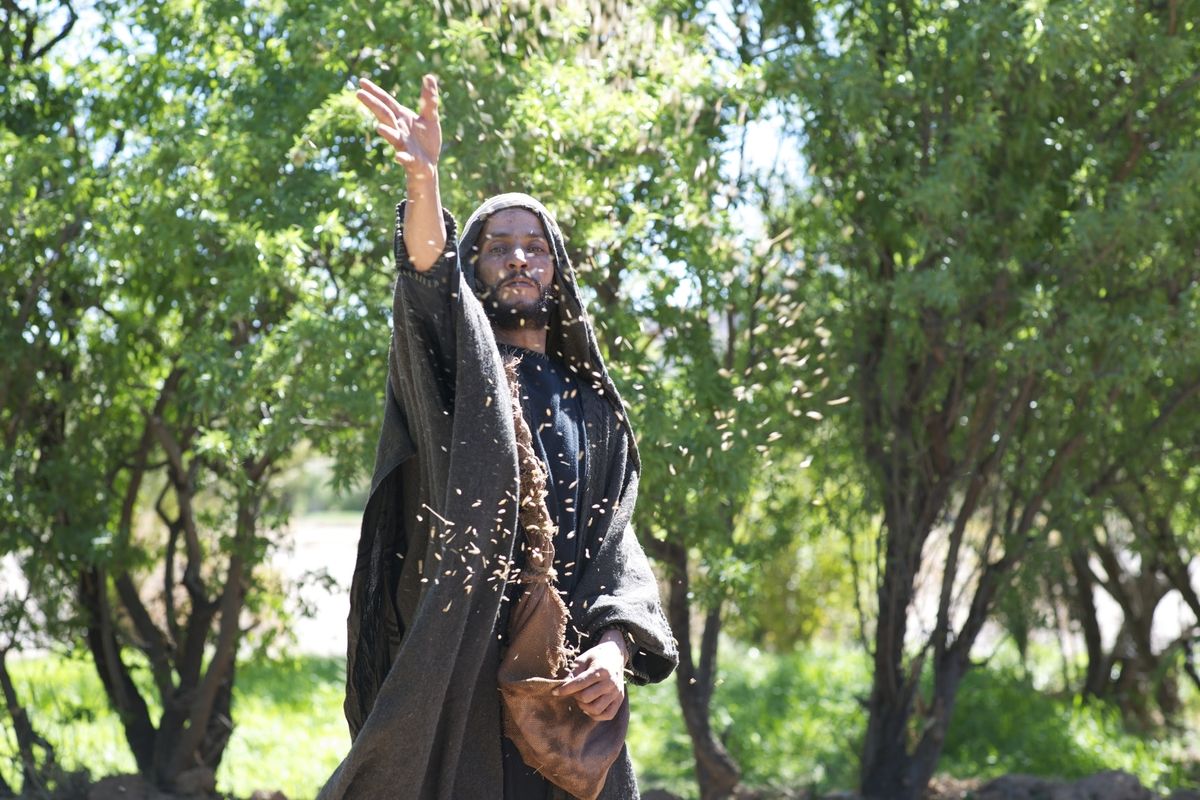
Glimpses of God’s Kingdom In these parables, Jesus provides two glimpses of God’s Kingdom: the slow growth of a seed into a stalk of wheat and the growth of a humble mustard seed. Both of Jesus’ para...
Philippians 2:6-8, John 1:10-11, Isaiah 53:3-4, Matthew 11:19, Mark 15:34, Isaiah 53:12, Luke 15:20-24, Revelation 7:13-14
In this excerpt, the French monastic leader Frere Pierre Marie, shares an interpretation of Jesus as the true prodigal son—bringing all of us home with him: He, who is born not from human stock, or ...
Mark 4:26-34, Matthew 13:31-32, Luke 13:18-19, Matthew 13:33, Luke 13:20-21, Matthew 13:44, Matthew 13:45-46
If we only had eyes to see and ears to hear and wits to understand, we would know that the Kingdom of God in the sense of holiness, goodness, beauty is as close as breathing and is crying out to born ...