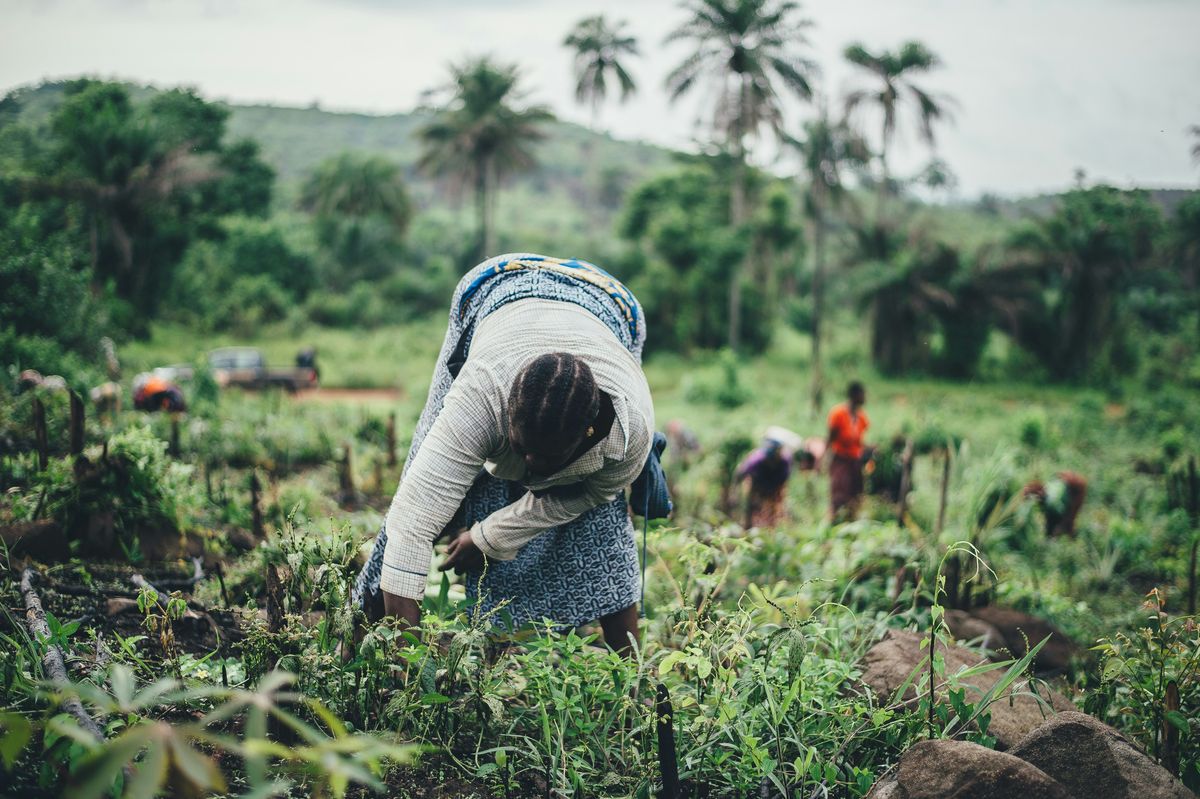
We get a feel for the goodness of working as creatures with bodies in Leo Tolstoy’s classic Anna Karenina . In the novel, Constantine Dmitrich Levin is a wealthy landowner in nineteenth-century R...
According to Bill Tripp, a member of the Karuk tribe in Northern California and a forest manager, Fire is that which renews life. A lot of people have been conditioned to look at it as a threat and...
Glimpses of God’s Kingdom In these parables, Jesus provides two glimpses of God’s Kingdom: the slow growth of a seed into a stalk of wheat and the growth of a humble mustard seed. Both of Jesus’ para...
An experienced gardener knows the value of not watering their tomatoes. Well, there's a little more to it, but that's the headline. Suppose you go to the nursery in the spring and get a tom...
Farmers everywhere provide bread for all humanity, but it is Christ alone who is the bread of life. He alone satisfies the deepest hunger of humanity…. Even if all the physical hunger of the world wer...
You make everything beautiful in its season, Creator. You are faithful, and summer, with warm air and green fields, has returned to bless our land. We thank you for the change of seasons, the melting ...
Too Busy for God? American work culture is all-pervasive. For many members of your congregation, it can be a real fight to get actual time off—and cell phones and the internet has made it possible to...
Glimpses of God’s Kingdom In these parables, Jesus provides two glimpses of God’s Kingdom: the slow growth of a seed into a stalk of wheat and the growth of a humble mustard seed. Both of Jesus’ para...
This prayer may be offered with or without the congregational response. Due to its length, consider using two or more liturgists to lead the prayer. VOICE ONE: Almighty God, Maker of Heaven and Eart...
O most merciful Father, who has blessed the labors of the farmer in the return of the fruits of the earth; we give you humble and hearty thanks for this their bounty; asking you to continue your lovin...
Almighty God, we thank you for making the earth fruitful, so that it might produce what is needed for life: Bless those who work in the fields; give us seasonable weather; and grant that we may all sh...
Lord of the Harvest, We give you great thanks for all the work that has been done to make our lives possible. For those who work the fields of the earth to provide us with food, for those who work in...
Matthew 13:1, 1 Corinthians 3:6, Romans 12:2, Matthew 7:22, Hebrews 6:4-5, Isaiah 6:9-10, Matthew 12:34-35
Preaching Angle: Preach the Word, Rest in God’s Work Maybe I tend to focus on the negative, but when I read the parable of the soils, I tend to focus on the soils that struggle (the soil too close to...
Matthew 13:24-30, Matthew 16:18, Ephesians 2:3, Romans 5:10, Luke 5:31, Matthew 10:30, 1 Peter 5:8, Psalm 73:4-7, 13, 18-20
Preaching Angle: Wheat and Weeds Grow Even in the Church God’s good creation grows food for all living creatures. God made the Earth, God made all the plants, and God made all the humans and animals ...
Matthew 13:24-30, 36-43, Matthew 16:18, Ephesians 2:3, Romans 5:10, Luke 5:31, Matthew 10:30, 1 Peter 5:8, Psalm 73:4-7, 13, 18-20
Preaching Commentary Preaching Angle: Wheat and Weeds Grow Even in the Church God’s good creation grows food for all living creatures. God made the Earth, God made all the plants, and God made all ...
Matthew 13:1-9, 18-23, 1 Corinthians 3:6, Romans 12:2, Matthew 7:22, Hebrews 6:4-5, Isaiah 6:9-10, Matthew 12:34-35
Preaching Commentary Preaching Angle: Preach the Word, Rest in God’s Work Maybe I tend to focus on the negative, but when I read the parable of the soils, I tend to focus on the soils that struggle...
In Understanding Genesis Nahum Sarna explodes the myth that in the story of Cain and Abel represents a biblical preference for the shepherd over the tiller of the soil. He points out that “there is no...
In Israel’s tribal society, redemption was the act of a patriarch who put his own resources on the line to ransom a family member who had been driven to the margins of society by poverty, who had been...
Preaching Commentary In Israel’s tribal society, redemption was the act of a patriarch who put his own resources on the line to ransom a family member who had been driven to the margins of society b...
Food production entails at every stage judgments and practices that bear directly on the health of the earth and living creatures, on the emotional, economic, and physical well-being of families and c...
It is a sad but true saying that our biggest problems are ignorance and apathy. It is certainly true of agriculture. With the bulk of the American population two or more generations removed from farmi...
Overall, from a biblical perspective, the sustained fertility and habitability of the earth, or more particularly of the land of Israel, is the best index of the health of the covenant relationship. W...
Sometimes when a farmer is looking for a suitable spot in which to plant a tree, he unexpectedly comes across a treasure. Something similar may happen to the seeker after God.
Let the vineyards be fruitful, Lord, and fill to the brim our cup of blessing. Gather a harvest from the seeds that were sown, that we may be fed with the bread of life. Gather the hopes and dreams of...
We say that Nature rests, yet she is working like mad. She has only shut up shop and pulled the shutters down; but behind them she is unpacking new goods, and the shelves are becoming so full that the...
The most exemplary nature is that of the topsoil. It is very Christ-like in its passivity and beneficence, and in the penetrating energy that issues out of its peaceableness. It increases by experienc...
1 John 3:9, Genesis 1:11-13, 1 John 3:9, Matthew 13:23, Galatians 6:7-8, John 15:5
The seed of God is in us. Given an intelligent and hard-working farmer, it will thrive and grow up to God, whose seed it is; and accordingly its fruits will be God-nature. Pear seeds grow into pear tr...
All the great agricultural systems which have survived have made it their business never to deplete the earth of its fertility without at the same time beginning the process of restoration.