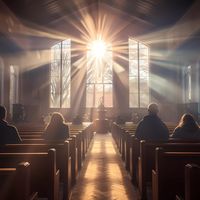
Following the biblical pattern, the church has always assumed that God can communicate spiritual truths to people through their imaginations, especially through dreams and visions. Church history is r...
Isaiah 65:17-25, Micah 4:1-4, Exodus 3:7-10 , Luke 4:18-19, Matthew 5:1-12, Psalm 146:7-9
Author and Episcopal priest Stephanie Spellers suggests that instead of imagining a kingdom, a better way for us to understand what Jesus had in mind when he spoke of this script, this new way of livi...
Karl Barth wrote that, “God is always a mystery. Revelation is always revelation in the full sense of the word or it is not revelation” ( CD I.8.2). God’s revelation, to Barth, always exists in a dia...
Luke 15:11-32, Matthew 18:22-35, Luke 16:19-31, Matthew 13:3-8, Matthew 20:1-16, Matthew 13:24-33, Matthew 13:44-50, Mark 4:26-29
The thrust of the parables is to subvert the distorted myths in which people live their lives. To understand what we mean by “living in a myth” just think of a couple of our own contemporary myths. Ta...
Luke 16:10, Acts 17:26-27, Zechariah 4:10, Matthew 25:21, Colossians 3:23-24
One of the seductions that continues to bedevil Christian obedience is the construction of utopias, whether in fact or fantasy, ideal places where we can live the good and blessed and righteous life w...
Sleep reminds us of our helplessness. Asleep, we have nothing to commend us; we accomplish nothing to put on our resume. Because of this, sleep is a counter-formative practice that reminds us that our...
The term “American Dream” was first used by James Truslow Adams in 1931 in his book The Epic of America. There he described it as “a dream of social order in which each man and each woman shall be abl...
Isaiah 7:14, Matthew 1:23, John 1:14, Philippians 2:6-8, Hebrews 2:14, John 3:16
When he was a young boy, twelfth-century church leader Bernard of Clairvaux fell asleep outside a church while waiting to go in for a Christmas Eve service. In his sleep he had a dream, a kind of visi...