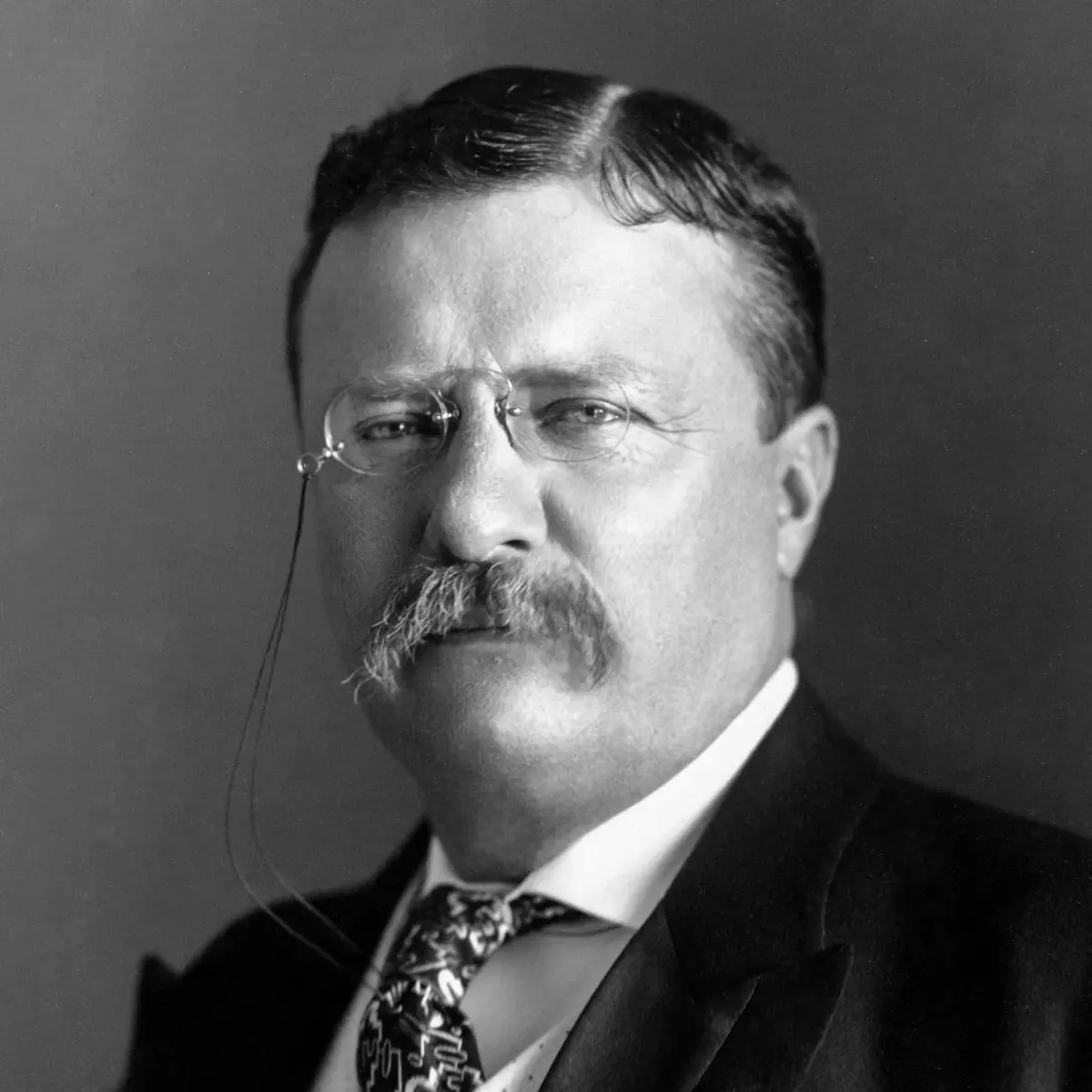
Theodore Roosevelt
Theodore Roosevelt (1858–1919), the 26th President of the United States, was a dynamic leader, reformer, and intellectual whose legacy resonates deeply in American history. Born into a wealthy New York family, Roosevelt overcame childhood asthma through a commitment to physical fitness and a love of the outdoors. His education at Harvard University and subsequent travels laid the foundation for his lifelong interest in history, nature, and governance.
Roosevelt's political career began in the New York State Assembly, where he championed progressive reforms. After personal tragedy struck with the death of his wife and mother on the same day, he sought solace on the western frontier, working as a rancher in the Dakota Territory. This period solidified his rugged persona and conservationist ideals.
Returning to public life, Roosevelt served as New York City Police Commissioner, Assistant Secretary of the Navy, and later as a war hero in the Spanish-American War, leading the Rough Riders in the Battle of San Juan Hill. His leadership propelled him to the governorship of New York and, eventually, the vice presidency under William McKinley.
After McKinley's assassination in 1901, Roosevelt assumed the presidency, becoming the youngest person to hold the office at 42. As president, he pursued a "Square Deal" of progressive reforms, championed antitrust regulation, mediated labor disputes, and initiated significant conservation efforts, establishing national parks, forests, and wildlife refuges. He was instrumental in the construction of the Panama Canal, enhancing America's global influence.
Post-presidency, Roosevelt continued to advocate for reform and even ran for president in 1912 as a Progressive Party candidate. An accomplished author, naturalist, and explorer, Roosevelt embodied a life of energy and purpose. His exuberant personality, love for adventure, and unwavering dedication to public service left an indelible mark on the United States.