A predominant characteristic . . . of the behavior of those I call evil is scapegoating. Because in their hearts they consider themselves above reproach, they must lash out at anyone who does reproach...
Matthew 18:15-17, Luke 15:11-32 , Hebrews 12:11, Genesis 18:19, Psalm 25:4
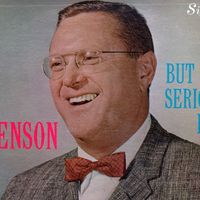
The late comedian Sam Levenson enjoyed sharing funny anecdotes about his childhood, especially his early school days. One of his favorite stories was about his first day of school, when his overly pro...
Human beings, being what they are, somehow feel entitled to question the reasons for everything that happens to them. In many instances life itself becomes a continual criticism and dissection of one’...
Evading self-acknowledgment of our faults enables us to avoid painful moral emotions: guilt and remorse for harming others; shame for betraying your own ideals; self-contempt for not meeting even our ...
One of the most difficult defilements of the spirit to deal with is the critical spirit. A critical spirit has its root in pride. Because of the ‘plank’ of pride in our own eye, we are not capable of ...
In his thoughtful book, Our Good Crisis: Overcoming Moral Chaos with the Beatitudes , Jonathan K. Dodson describes what has become a reality of modern-day life-scandals happen every day, and no-one...
When we fail to set boundaries and hold people accountable, we feel used and mistreated. This is why we sometimes attack who they are, which is far more hurtful than addressing a behavior or a choice.
Why do any of us get upset or tense when confronted? Why do any of us activate our inner lawyer and rise to our own defense? Why do any of us turn the tables and remind the other person that we are no...
When you take "personal" attacks personally, you unwittingly conspire in one of the common ways you can be taken out of action-you make yourself the issue. Attacks may be personal, understan...
Galatians 5:14-15, John 8:32, Micah 6:8, 1 Corinthians 1:10, Matthew 7:3-5, Romans 12:2, James 3:17
People bind themselves into political teams that share moral narratives. Once they accept a particular narrative, they become blind to alternative moral worlds.
When we observe evil, sinful behavior from a distance, the inclination is simply to see people as acting with malicious intent. We assume they are “bad people.” But often the motivations that lead to ...
If someone is criticizing you and the criticism is mostly mistaken, identify the 20 percent of the indictment that is fair. Without excuse be willing to take it to heart. The strongest Christians are ...
We get our calling wrong when we imagine that God needs us, to be the hero of our own story, rather than Christ. Second, we routinely misdiagnose the problem of our world, underestimating the brokenne...
The false self plays its deceptive role, ostensibly protecting us but doing so in a way that is programmed to keep us fearful—of being abandoned, losing support, not being able to cope on our own, not...
While extremely sensitive as to the slightest approach to slander, you must also guard against an extreme into which some people fall who, in their desire to speak evil of no one, actually uphold and ...
Whenever you are about to find fault with someone, ask yourself the following question: What fault of mine most nearly resembles the one I am about to criticize?
As a pastor, I have received my fair share of letters and missives criticizing my words or actions. Some have been anonymous, others put their name on it. When the criticism felt unfair or angered me,...
Matthew 5:11-12, 1 Peter 2:12, Galatians 1:10, Acts 17:16-34, Ephesians 4:29, Matthew 7:1-5, James 4:11-12
In life, whenever someone achieves success, criticism usually follows—regardless of their skill or the effort they’ve invested. An old story illustrates this truth. A woman crafted artificial fruit so...
We boast of taking advantage of others, love evil more than good, speak deceit rather than tell the truth. We relish words that hurt and harm. We take refuge in wealth, security in savings and in succ...
Isaiah 30:15-16, James 1:2-4, Romans 5:3-5, 1 Peter 4:12-13, Hebrews 12:1-2
A typical response to threat and burden is to want to flee it. It’s evacuation as the cure for trouble. If only I could get away is our mantra. Then I would be safe. Then I could enjoy my life. But wh...
Leviticus 19:15, Proverbs 18:17, 1 Kings 3:9, Matthew 7:1–5, John 7:24, Psalm 141:5
At a recent gathering of seminary professors, one teacher reported that at his school the most damaging charge one student can lodge against another is that the person is being “judgmental.” He found ...
John 3:30, Philippians 2:3-4, James 4:6, 1 Peter 5:5-6, Matthew 23:1-12, Galatians 6:14
One of the cardinal rules of improvisational theater is that actors must never steal scenes. In her book Improvisation for the Theater , Viola Spolin bluntly puts it this way: “Any player who ‘st...
Critics of Christianity correctly point out that the church has proved an unreliable carrier of moral values. The church has indeed made mistakes, launching Crusades, censuring scientists, burning wit...
You stay alive in the practice of leadership by reducing the extent to which you become the target of people’s frustrations. The best way to stay out of range is to think constantly about giving the w...
Matthew 25:35-40, John 8:1-11, Luke 19:1-10, John 4:1-26, John 8:10-11, Luke 19:10
In these acts of love Jesus created a scandal for devout, religious Palestinian Jews. The absolutely unpardonable thing was not his concern for the sick, the cripples, the lepers, the possessed . . . ...
In His book When Narcissism Comes to Church, Chuck DeGroat shares about a unique phenomenon that occurs in organizations: Collective Narcissism: Churches are particularly susceptible to a phenomenon...
The problem is not recognizing the importance of the individual. The problem is the glorification of the individual. When the individual self is glorified over the greater good of the community, right...