Genesis 32:22-32, Exodus 5:1-21, 2 Samuel 12:1-14, Matthew 18:15-17, John 21:15-19, Psalm 141:5
The Latin term for confrontation means “to turn your face toward, to look at frontally.” It merely indicates that you are turning toward the relationship and the person. You are face-to-face, so to sp...
Isaiah 40:31, Lamentations 3:25-26, James 5:7-8, 2 Peter 3:8-9, Habakkuk 2:3
Waiting isn’t an in-between time. Instead, this often-hated and under-appreciated time has been a silent force that has shaped our social interactions. Waiting isn’t a hurdle keeping us from intimacy ...
Matthew 6:25-34, Galatians 1:10, Philippians 2:3-4, Matthew 23:1-12, Romans 12:2
In his book, Scary Close , Donald Miller acknowledges that over time he developed a mask, or a persona that kept even those closest to him from experiencing with him. As he began to peel back layers ...
In her book Keeping Place: Reflections on the Meaning of Home , Jen Pollock Michel reflects on the nature of home in a transient age. In this short excerpt, Michel focuses on etymology of home in v...
I am more or less ready to wash someone’s feet, but, like Peter, I discover I am not prepared to have my feet washed. I am willing to play like I am a servant and wash the feet of someone else. When I...
The family has long been a haven in a heartless world, the one place immune to market forces and economic calculations, where the personal, the private, and the emotional hold sway. Yet. . . that is ...
Genesis 45:1–15 , 1 Samuel 1:9–18, Lamentations 2:18–19, Luke 7:36–50, 2 Corinthians 7:9–10, Psalm 56:8
The “gift of tears” written about by the desert elders and several centuries later by St. Ignatius of Loyola are not about finding meaning in our pain and suffering. They do not give answers but inste...
Ronald Rohlheiser tells a true story of a Jewish boy named Mordechai who could not be coaxed into going to school. When he turned six years old, his mother forced him to go, but the process was misera...
Deep, solemn optimism, it seems to me, should spring from this firm belief in the presence of God in the individual; not a remote, unapproachable governor of the universe, but a God who is very near e...
"Not Against Flesh and Blood..." There is an unspoken battle that every pastor faces—a battle not against flesh and blood , nor merely against the seen forces of ministry challenges, but...
There is a great difference between successfulness and fruitfulness. Success comes from strength, control, and respectability. A successful person has the energy to create something, to keep control o...
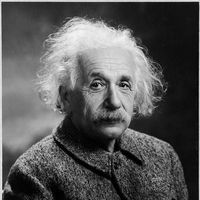
Famed scientist Albert Einstein once delivered an ultimatum to his first wife, Mileva Maric. True to his scientific nature, Einstein expressed his demands without any trace of kindness or empathy, ins...
This week, we have chosen two illustrations that describe the nature of waiting, and perhaps can inspire each of us to wait well as we long for life to return, at least in part, to normalcy: Hope y...
Perhaps you have been ensnared by a sinful habit that you will not abandon, and your guilt is so overwhelming you are ashamed to approach Christ. Whatever the reason for your broken intimacy with God,...
While extremely sensitive as to the slightest approach to slander, you must also guard against an extreme into which some people fall who, in their desire to speak evil of no one, actually uphold and ...
Contentment is when we tell the Shepherd that His provision is enough for all our physical and material needs. If our old car gimps down the road, that is fine. If we get a shiny newer auto with less ...
The pyschologist Carl Rogers, a person who would know quite well the interior lives of others, has this to say of our inmost thoughts: I have most invariably found that the very feeling which has see...
I have—found that the very feeling which has seemed to me most private, most personal and hence most incomprehensible by others, has turned out to be an expression for which there is a resonance in ma...
It is my belief that we’re currently in the middle of a cultural overdose on authenticity—but without that necessary companion of vulnerability. I love that we’re all being so authentic and genuine. B...
The more authentic our desires, the more they touch upon our identities and also upon the reality of God at the heart of our being. Our most authentic desires spring ultimately from the deep inner wel...
[In expressive individualism] each person has a unique core of feeling and intuition that should unfold or be expressed if individuality is to be realized.
If we want the advantages of love, then we must be willing to take the risks of love. And that requires vulnerability. Of course, we can refuse this path and trod another one devoid of openness. But t...
Relational congruence is the ability to be fundamentally the same person with the same values in every relationship, in every circumstance and especially amidst crisis. It is the internal capacity to ...
In his prose and poetry, David Whyte shares what David Brooks refers to as “emotional joy” in his book, While not necessarily unique to the Christian, this type of joy has the ability to draw us towar...
John 8:32, 1 Samuel 18:20, John 4:1-26, John 3:1-21, 2 Corinthians 12:9-10, 1 John 1:7, Ephesians 4:25
It’s difficult for people to love the real you when you are covering up who you really are. We connect with others when we take our mask off and let others in.





![[In expressive individualism] each](https://images.unsplash.com/photo-1478515463067-d20f52aace26?ixid=M3w1NzU0OTZ8MHwxfHNlYXJjaHw5Nnx8cGVyc29uJTIwYWxvbmV8ZW58MHwwfHx8MTcxMjk1OTU4Nnww&ixlib=rb-4.0.3&q=80&auto=compress&fit=crop&w=200&h=200)