James 4:1-10, Jeremiah 9:23-24, Mark 7:20-23, Proverbs 15:25-33, Proverbs 16:18, 1 Samuel 18:null, Luke 18:9-11
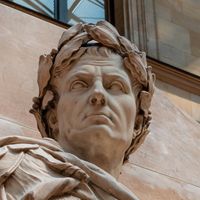
When Julius Caesar returned to Rome after many years of fighting its battles abroad, he planned great festivities and triumphal processions to celebrate his victories over Gaul, Egypt, Pontos, and Afr...
Matthew 5:48, 1 John 3:2-3, Galatians 5:16-17, Philippians 3:13-14, Colossians 3:1-2, Ephesians 4:22-24
The scholastics used to say: Homo non proprie humanus sed superhumanus est —which means that to be properly human, you must go beyond the merely human.
In his poem Cocktail Party , T. S. Eliot captures a fundamental truth about human nature and the source of much hurt in the world. People’s actions are rarely driven by outright malice—intended t...
Desire is primal: to be human is to want. Consider that wanting is the earliest language we learn. As infants, when we’re yet incapable of forming words on our tongue, we’re infinitely good at knowing...
Ephesians 1:13-14, Galatians 5:22-23, 1 Corinthians 2:12-13, Romans 8:9-11, 1 John 2:27, John 16:7-8, John 15:26-27
When he died, he sent his Spirit to teach us the intricacies of the art of living. That’s why his Spirit is the only One who can fill our spiritual vacuum, helping us become truly human.
Exodus 18:13-27 , 1 Kings 19:1-9 , Deuteronomy 5:12-15 , Mark 6:30-32, Matthew 11:28-30, Psalm 23:1-3
Dangerous levels of exhaustion usually accumulate over a longer period of time in which we are consistently living beyond human limits, functioning outside our giftedness, or not paying attention to t...
Before my mentor, Dallas Willard, passed over to glory, I asked him what he thought about the rapid rise of the Christian spiritual formation movement. He said, “It is a wonderful thing, but my fear i...
So, how are you feeling? It’s not a trick question. But it’s more complicated than it sounds. We’re always feeling something, usually more than one thing at a time. Our emotions are a continuous ...
Proverbs 16:18, Psalm 103:14-16, Luke 14:11, Micah 6:8, 1 Peter 5:5-6, James 4:6-10, Jeremiah 9:23-24
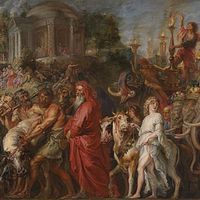
If you were to travel back in time to the city of Rome (either during the Republic or the Empire), you may have had the opportunity to witness the Triumph, a colossal spectacle in which the greatest m...
James 1:2-4, Romans 5:3-5, 1 Peter 1:6-7, 2 Corinthians 4:16-18, Isaiah 40:31
It’s human nature to resist change—particularly when it comes in the form of adversity or challenges. But change is inevitable, and developing the trait of resilience helps us not only survive change,...
As a writer, my great interest is human nature, and in particular, the subject of happiness. A few years ago, I noticed a pattern: when people told me about a “before and after” change they’d made tha...
There is no better exercise for strengthening the heart than reaching down and lifting people up. Think about it; most of your best friends are those who encourage you. You don’t have many strong rela...
Unfortunately, the world has taken some of the greatest minds God has given us and locked them up in cages. Most very brilliant or creative people seem strange to ordinary people. Geniuses are almost ...
Proverbs 16:9, Psalm 37:23-24, Isaiah 30:21, Luke 16:10, Matthew 6:34, Ecclesiastes 9:11
The pioneering work of Israeli psychologists Daniel Kahneman and Amos Tversky has been popularized in recent years by the gamut of notable thinkers, including Malcolm Gladwell (Blink) and, in this cas...
These, then, are the two points I wanted to make. First, that human beings, all over the earth, have this curious idea that they ought to behave in a certain way, and cannot really get rid of it. Seco...
We are too anxious to be able to wait for fruit and time to ripen, so we take the shortcuts of robbery and violence, even the torture of little children; sin leads to crimes against both nature and ou...
In his excellent book, Strong & Weak , Andy Crouch discusses the unique phenomenon of nakedness, something, as he will argue, no other species really experiences. “Nakedness” has, for good reas...
Genesis 18:22-33, Exodus 3:1-12 , 1 Kings 19:9-13, John 5:19-30, John 16:12-15, Psalm 116:1-2
The God who shares power is a listener. Listening is not something that becomes necessary for God only after the world is created. Listening is who God is. In God’s very being, communication does not ...
In their excellent book, Invitation to a Journey , M. Robert Mulholland and Ruth Haley Barton describe the foundation of life as being spiritual in nature. This means we are constantly be “form...
In her engaging work, Teach us to Want , Jen Pollock Michel describes the nature of The Lord’s Prayer: To borrow from Dietrich Bonhoeffer, the Lord’s Prayer is our “yes to God’s earth.” The Lor...
The earth had been completely unformed and empty; in the six-day process of development God had formed it and filled it—but not completely. People must now carry on the work of development: by being f...
We are bodies of broken bones. I guess I’d always known but never fully considered that being broken is what makes us human. We all have our reasons. Sometimes we’re fractured by the choices we make; ...
After finishing a major project, have you ever stood back, taken in what you have accomplished, and said to yourself, “That’s pretty good”? I’ll admit that I have on numerous occasions, especially aft...
I have been pondering the nature of presence and encounter since first reading Martin Buber’s I and Thou as a university student. His assertion that “All real living is meeting” struck a deeply resona...
John 11:35, Psalm 5:5, Psalm 6:1, Psalm 78:58, Psalm 78:40, Psalm 18:19, Psalm 25:6, Psalm 5:7, Exodus 20:5, Exodus 22:23, Isaiah 15:5, Luke 15:null, Genesis 23:2, Genesis 42:24, 1 Samuel 1:10, 2 Samuel 1:11-12, 2 Kings 8:11-12, 2 Kings 22:18-20, Mark 14:72, John 20:11, Acts 20:37, Revelation 5:4
When the Professor Weeps: A Personal Story About ten years ago, I was teaching a course on the psalms for my seminary students in the midst of a personal health crisis. It wasn’t in my notes, but I ...
There is but one truly serious philosophical problem and that is suicide. Albert Camus Two events recently collided in my mind and coalesced into this short essay: The first was a relatively in...