Proverbs 16:18, Psalm 103:14-16, Luke 14:11, Micah 6:8, 1 Peter 5:5-6, James 4:6-10, Jeremiah 9:23-24
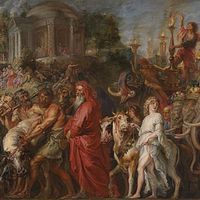
If you were to travel back in time to the city of Rome (either during the Republic or the Empire), you may have had the opportunity to witness the Triumph, a colossal spectacle in which the greatest m...
The Rule of Benedict is a document that has ordered the life of Benedictine monks for 1500 years. That remarkable document, written by Saint Benedict of Nursia, instructs the monks in how they are to ...
Matthew 5:10-12, John 15:18-20, 2 Timothy 3:12, Acts 14:22, Romans 8:35-37, 1 Peter 4:12-14, 2 Corinthians 12:9-10, Acts 1:8, Romans 8:11, Isaiah 41:10
What is the witness of the church in times of persecution? The historical record demonstrates that persecutions of Christians were regular and prolific in the first centuries of the church, especially...
Saul's Confident Error Last week, we considered Abram and the way that God may send us out on a journey, waiting to see his will without knowing the destination. Today we move forward to Saul on...
John 9:1-5, John 9:5, John 9:null, John 9:25, Matthew 27:54
Blog post adapted from Necessary Christianity by Claude Alexander, Jr. Adapted from Chapter 5, "I Must Be Diligent" The life of Jesus reveals that God’s call and God’s claim on the belie...
Genesis 21:1-5, 1 Samuel 2:1-11, Luke 1:11-17, Luke 2:1-21, Isaiah 9:6, Matthew 1:21, Micah 5:2
A century ago, men were following with bated breath the march of Napoleon and waiting feverishly for news of the war. And all the while in their own homes, babies were being born. But who could think ...
Is God stingy? Mark D. Roberts observes that many writers and preachers focus on the prohibition of the Tree of the Knowledge of Good and Evil instead of Genesis 2:16: "You may freely eat of each...
James 4:1-10, Jeremiah 9:23-24, Mark 7:20-23, Proverbs 15:25-33, Proverbs 16:18, 1 Samuel 18:null, Luke 18:9-11
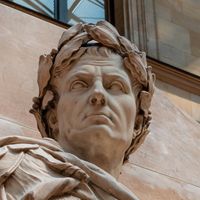
When Julius Caesar returned to Rome after many years of fighting its battles abroad, he planned great festivities and triumphal processions to celebrate his victories over Gaul, Egypt, Pontos, and Afr...
Revelation 5:1-14, Matthew 25:31, Revelation 21:3-4
When you go into one of the great homes of the late Roman empire and you see a mosaic of Christ enthroned at the far end, you’re looking at the place where the emperor would sit. And the emperor would...
I don’t know about you, but I’ve always enjoyed hearing stories about the origins of certain words. One of these words is the “sincere.” While there are some questions about the history’s authenticity...
During his time as commander in the Roman army, Caesar Augustus (who would become the first Roman Emperor) had to relieve a soldier from duty for bad behavior. The man begged to remain in military ser...
During the ancient Greek Olympics, the judge of the contest sat on an elevated seat. After the contest was over the competitors came before him to receive their rewards. This was not a judicial bench ...
Do not be conformed to this world, but be transformed by the renewal of your mind. that by testing you may discern what is the will of God what is good and acceptable and perfect. Risen C...
Roman imprisonments were brutal. There was no concern for prisoner comfort, no plan for meals or for medical care, and no concern for a just and speedy trial. Paul’s imprisonment in Caesarea went on f...
There have been times, not least the time of the birth of Athenian democracy, when most of the people who thought and wrote about human wholeness concluded that no one could be a whole human being, no...
Matthew 28:18-20, Acts 1:8, Acts 10:34-35, Galatians 3:28, Romans 1:16, John 4:21-24, Psalm 22:27-28
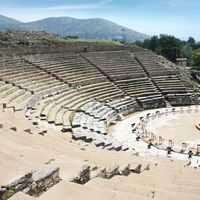
[Speaking of the early church] A cosmopolitan spirit grew, particularly in the cities, that transcended national barriers. Old tribal distinctions and identities were breaking down, leaving people rip...
Colossians 3:2, Philippians 3:20, 2 Corinthians 4:18, Romans 12:2, Hebrews 11:13-16, Matthew 6:19-21, 1 John 2:15-16, Luke 12:33-34, Luke 18:22, Matthew 19:21
The life of a Christian is wondrously ruled in this world, by the consideration and meditation of the life of another world.
Matthew 5:48, 1 John 3:2-3, Galatians 5:16-17, Philippians 3:13-14, Colossians 3:1-2, Ephesians 4:22-24
The scholastics used to say: Homo non proprie humanus sed superhumanus est —which means that to be properly human, you must go beyond the merely human.
Many first-century Jews thought of themselves as living in a continuing narrative stretching from earliest times, through ancient prophecies, and on toward a climactic moment of deliverance which migh...
Exodus 17:1-7, 2 Kings 4:1-7, John 2:1-11, Matthew 25:14-30 , Psalm 19:1
John Dryden (1631–1700), an English critic and poet laureate, often skipped classes at Westminster School in London and rarely prepared his lessons. One day, when tasked with writing a poem on the gos...
In ancient Judaism, discipleship was taken very seriously. It was taken so seriously that eager disciples would ty to follow their rabbi (teacher) everywhere they went. Why? Because they wanted to see...
Paul give us an excellent example of what looking at people from a worldly point of view looks like in Philippians chapter 3: If someone else thinks they have reasons to put confidence in the flesh, ...
[I]f to govern realms belong to few, Yet all who live have passions to subdue. Self-conquest is the lesson books should preach, Self-conquest is the theme the stages should teach.
For the grace of God has appeared, bringing salvation for all people, training us to renounce ungodliness and worldly passions, and to live self-controlled, upright, and godly lives in this present ag...
Matthew 25:35-40, John 8:1-11, Luke 19:1-10, John 4:1-26, John 8:10-11, Luke 19:10
In these acts of love Jesus created a scandal for devout, religious Palestinian Jews. The absolutely unpardonable thing was not his concern for the sick, the cripples, the lepers, the possessed . . . ...













![[Speaking of the early church] A](https://a-us.storyblok.com/f/1016915/1200x801/ed572a4861/the-early-church.jpg/m/200x200/smart)





![[I]f to govern realms belong to few,](https://images.unsplash.com/photo-1612369106482-d6eee4c0c866?ixid=M3w1NzU0OTZ8MHwxfHNlYXJjaHwxfHxTZWxmLUNvbnRyb2x8ZW58MXwyfHx8MTcxMDUzMzg0N3ww&ixlib=rb-4.0.3&q=80&auto=compress&fit=crop&w=200&h=200)