Psychiatrist James Knight describes in graphic detail the experience that members of Alcoholics Anonymous experience: These persons have had their lives laid bare and pushed to the brink of destructi...
John 13:14-15, James 2:13, Isaiah 58:7, Matthew 5:3, Psalm 34:18, Luke 7:47-48
Angela’s Ashes took the publishing world by storm when it was released in September 1996. It won numerous awards, including the Pulitzer Prize in the category of Biography/Autobiography. It was also a...
Classically, there are three ways in which humans try to find transcendence--religious meaning--apart from God as revealed through the cross of Jesus: through the ecstasy of alcohol and drugs, through...
Matthew 9:10-13, Luke 15:11-32, Romans 3:23-24, 1 John 1:8-9
The neighborhood bar is possible the best counterfeit there is to the fellowship Christ wants to give his church. It’s an imitation, dispensing liquor instead of grace, escape rather than reality, but...
As adults, we develop all sorts of coping mechanisms to handle stress. Maybe you like to read a book, meditate, knit, watch TV, or exercise. When I was in New York, I used to go for a long run at the ...
I see my past drinking as a behavioral problem, a learned response to dealing (or not dealing) with emotional pain and stress. Once I achieved the excavation of my wounds, I no longer lived with the s...
It would seem that Our Lord finds our desires not too strong, but too weak. We are half-hearted creatures, fooling about with drink and sex and ambition when infinite joy is offered us, like an ignora...
Addiction goes deeper than obsession and compulsion. It is worship. It is giving my heart and soul over to something that I believe will ease my pain and provide an outlet for my fury at being out of ...
Ephesians 5:18-21, Proverbs 20:1, 1 Corinthians 10:23-24, Colossians 3:5, James 1:12-15, Matthew 6:19-24, Ecclesiastes 6:9
In her thought-provoking book, Teach us to Want , Jen Pollock Michel describes the tension in listening to our deepest desires: some of them these desires are integral to our identity, but they a...
Exodus 17:1-7, 2 Kings 4:1-7, John 2:1-11, Matthew 25:14-30 , Psalm 19:1
John Dryden (1631–1700), an English critic and poet laureate, often skipped classes at Westminster School in London and rarely prepared his lessons. One day, when tasked with writing a poem on the gos...
From drugs and alcohol to TV and workaholism, we are increasingly a society that fulfills T.S. Eliot’s description of a people “distracted by distraction.” There is hardly a public menace we can name ...
People do not drift toward Holiness. Apart from grace-driven effort, people do not gravitate toward godliness, prayer, obedience to Scripture, faith, and delight in the Lord. We drift toward compromis...
The beginning of my sober years felt much like waking up to my mother’s song. It was a slow waking from some dreamy death spiral. And as I’ve talked to others who are in recovery from their own coping...
Pastor: O wise and wonderful God, in our quick temper and selfish pride, we have not followed your example—you are slow to anger, abounding in love, and show steadfast faithfulness to your children. ...
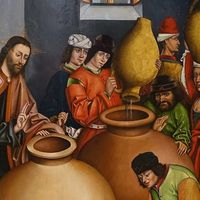
The transformation from water to wine is of course meant by John to signify the effect that Jesus can have, can still have today, on people’s lives. He came, as he says later, that we might have life...
Good Father, we thank you for inviting us to your table. You invite us to your heavenly feast, but we don’t show up to the party. Rather, we ignore your invitation, we get distracted by other work we ...
Theologian John S. Dunne tells of a group of early Spanish sailors who reached the continent of South America after an arduous voyage. Their caravels sailed into the headwaters of the Amazon, an expan...
Matthew 4:4, Daniel 10:3, Psalm 69:10, Acts 13:2-3, Joel 2:12, Isaiah 58:6
More than any other Discipline, fasting reveals the things that control us. … We cover up what is inside us with food and other good things, but in fasting these things surface. If pride controls us, ...
Uncontrolled temper is soon dissipated on others. Resentment, bitterness, and self-pity build up inside our hearts and eat away at our spiritual lives like a slowly spreading cancer.
One of the dangers of living in a constant state of distraction is that we never go to the bottom of our pain, our sadness, our emptiness, which means we never find that rock-bottom place of the peace...
Truly it is an evil to be full of faults; but it is a still greater evil to be full of them and to be unwilling to recognize them, since that is to add the further fault of a voluntary illusion.
There is a way to live in the wakefulness of true inner sobriety, and it begins with proper attachment to Christ, the Divine Love, the first light of the morning.
Distraction, at least the dangerous kind I’m referring to, is shifting our attention from something of greater importance to something of lesser importance. Our fundamental and most dangerous problem ...
According to the groundbreaking book The Power of Habit by Charles Duhigg, his research tells us that cravings drive our “habit loops.” Some of us crave escape or relaxation through the habit of a g...