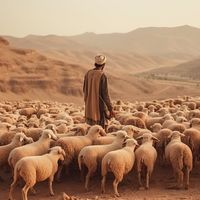
For most of the late twentieth century, political scientists embraced blank-slate theories in which people soaked up the ideology of their parents or the TV programs they watched. Some political scien...
It’s an argument that may never be fully resolved, but scientific research has shown what most of us probably already suspected: there is some truth to both perspectives. One study focused on factors ...
Even though Carl Jung first introduced the terms introvert and extravert back in 1921 (in his now-classic volume Psychological Types), the concepts—especially introversion—crashed into the public’s co...
Most of us have genes that make us as hardy as dandelions: able to take root and survive almost anywhere. A few of us, however, are more like the orchid: fragile and fickle, but capable of blooming sp...
Current research indicates that personality traits are hardwired; they’re largely hereditary and remain relatively constant throughout our lives.1 If we’re outgoing or reserved, energetic or subdued, ...
Proverbs 16:9, Psalm 37:23-24, Isaiah 30:21, Luke 16:10, Matthew 6:34, Ecclesiastes 9:11
The pioneering work of Israeli psychologists Daniel Kahneman and Amos Tversky has been popularized in recent years by the gamut of notable thinkers, including Malcolm Gladwell (Blink) and, in this cas...
Compared to earlier generations, we are emotionally closer to our kids, they confide in us more, we have more fun with them, and we know about the science of child development. But we are too indulgen...
Medical doctor Paul Brand, who is best known for discovering the cause of leprosy and developing a treatment for it, reflects on the nature and design of the universe. The more I delve into natural l...
Medical doctor Paul Brand, who is best known for discovering the cause of leprosy and developing a treatment for it, reflects on the nature and design of the universe. The more I delve into natural l...
Did you know that we are more or less likely to act with prejudice according to the time of day? Daniel Pink, in his excellent work, “When: The Scientific Secrets of Perfect Timing” draws from recent...
Context matters. According to the Terman Study, which followed one thousand study participants from childhood until their death, the people we surround ourselves with are who we become. We see those a...
As popularized in Richard Thaler and Cass Sunstein’s fascinating book by the same name, nudges are small changes in the environment around us that make it easier for us to make the choices we want to ...
I am not perfect, and I will struggle with the “old Jim,” who was and is influenced by American culture, narratives and values. But the key is that identity comes before behavior. We almost always do ...
Exodus 1:15–21, Daniel 3:16–18 , 1 Kings 3:16–28 , Matthew 4:1–11, Galatians 1:6–10, Psalm 73:
Pragmatism may be defined simply as the approach to reality that defines truth as “that which works.” The pragmatist is concerned about results, and the results determine the truth. The problem with t...
On a trip to Russia I bought one of those Matryoshka “nested dolls” that break apart at the waist to reveal smaller and smaller dolls inside…it occurred to me to me later that each of us, like the nes...
Have you ever wondered the impact noise can have on our cognitive ability? Psychologist Arlene Bronzaft was curious to find out. Studying Public School 98 on the northern tip of Manhattan, Bronzaft fo...
The concept of humanity’s being divisible into different races has no scientific validity. This has always been the case, even before the advent of rapid global travel enabled the further mixing of pe...
Researchers at the University of Kentucky and University of Central Florida who explored the neurobiology of the selfish-selfless spectrum found that most of us are neither extremely selfish (which re...
Nassim Nicholas Taleb, a best-selling statistician, argues that it is not even mere resilience we need, but what he calls antifragility . He groups things into three categories. First, fragile...
In his excellent book, Strong & Weak , Andy Crouch discusses the unique phenomenon of nakedness, something, as he will argue, no other species really experiences. “Nakedness” has, for good reas...
Now, technology is everywhere. I don’t mean just glowing screens and digital devices; I mean the whole apparatus of “easy everywhere” that has come into existence in just over the span of one human li...
Contemporary society assumes that we make a choice: one member of a household will be the “homemaker” and the other the “breadwinner” (i.e., in the marketplace generating income to sustain the home). ...
The great danger is to always single out some aspect of God’s good creation and identify it, rather than the alien intrusion of sin, as the villain. Such an error conceives of the good-evil dichotomy ...
To be nice means to silence ourselves in some way, and in doing so, we compromise our authenticity and give up freedom to act and speak. On the other hand, niceness may facilitate the shedding of resp...
Sharan Merriam and Carolyn Clark, in their fine study Lifelines , effectively show that life is fundamentally about two things—our work and our relationships. And maturity is found in having the c...
Proverbs 22:6, Hosea 1:1-4, Matthew 18:1-5, Ephesians 6:4, Psalm 127:3
There’s a story about philosopher John Dewey walking with his young son on a cold, wet, and windy day. The boy, barefoot, was gleefully splashing in a puddle despite the weather. A concerned friend pa...
Split second decisions can reveal prejudices that we aren't aware of ourselves. This is particularly important in split-second decisions with life-or-death consequences, such as police officers ha...
In the 1940s, two black psychologists who were married to each other, Kenneth and Mamie Clark, were instrumental in the civil rights movement, conducting important research about the effects of race a...
A fascinating study recently revealed differences in brain structure correlate with political orientation. The study demonstrated that greater conservatism was associated with increased gray matter vo...
Desire is primal: to be human is to want. Consider that wanting is the earliest language we learn. As infants, when we’re yet incapable of forming words on our tongue, we’re infinitely good at knowing...