Many of us are aware that the Trinity is not specifically referred to in scripture, though it would eventually become accepted among all major branches of the Christian faith as an authentic interpret...
Ezekiel 144:6, Colossians 3:5, 1 John 5:21, 1 Corinthians 10:14, Jeremiah 10:14-15, Matthew 22:34-40, Exodus 20:3
Tertullian was an early church leader (a bishop in Carthage) in North Africa. His voluminous writing and ministry have led many to acknowledge him as the father of Latin Theology/Western Theology. Ter...
Matthew 22:39, Philippians 2:3-4, 1 Corinthians 10:24, Romans 15:1-2, Galatians 6:10, Romans 12:10, Acts 20:35, Matthew 25:35-40, Isaiah 58:6-7, Proverbs 19:17, Luke 10:30-37, James 2:15-16, 1 John 3:17, Proverbs 31:8-9, Matthew 25:40, Acts 11:29-30, 2 Corinthians 8:13-15, Acts 2:44-45, Acts 4:32-35, 1 Corinthians 12:25-26
Pursuing the common good has been a strong marker of the Christian church from the very beginning. The early church had many habits that they became known for, of course—including meeting frequently, ...
Matthew 13:, Exodus 14:21-31, Daniel 3:13-30 , 1 Kings 18:20-40, Luke 15:11-32, Psalm 23:
In the second century before Christ the great rival to Roman power in the Mediterranean world was Carthage, the Phoenician city-state located on the north African coast. It had been founded in 822 B.C...
Romans 12:2, Galatians 6:1, Proverbs 9:10, James 1:4, Isaiah 61:3
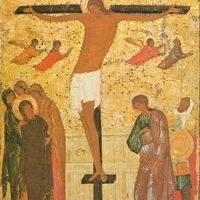
Think of an ancient icon of Christ. Imagine that a thousand-year-old Christ Pantocrator painted on a wooden panel is discovered in some forgotten monastery. The image of Christ is there, but it’s cove...
One of the gifts John Wesley left the church is the Quadrilateral. The Wesleyan Quadrilateral refers to the four ways we come to know something as true: Scripture (what the Bible teaches), tradition (...
1 Corinthians 7:1-9, Matthew 19:3-12 , Psalm 139:13-16 , Genesis 2:18-25, Song of Solomon 4:1-16, Proverbs 5:15-19, Genesis 2:18
James Nelson describes sexuality as the central clue to what God is up to in the world. While this might seem a little over the top, when you think about it, sexuality factors integrally in our relati...
Have you heard the acronym “K. I. S. S”? It stands for “Keep It Simple, Stupid.” Paul doesn’t exactly call the Corinthians stupid (in 1 Cor. 15), though elsewhere Paul sounds tempted to do so, when ...
Many in the church have turned their back on serious study, and have embraced an anti-intellectualism which refuses to learn anything from scholarship at all lest it corrupt their pure faith. It is ti...
The current context of cultural and religious pluralism magnifies this development. After the disintegration of Christendom-a historical topical apparatus that gave cultural pride of place to Christia...
Matthew 13:1-23, Isaiah 6:8, 1 Peter 3:15, Galatians 6:9-10, John 13:34-35, Colossians 4:5-6
Father, as we go to our homes and our work this coming week we ask you to send the Holy Spirit into our lives. Open our ears- to hear what you are saying to us in the things that happen to us and i...
In antiquity, the Greek word μυστήριον could mean “something secret” or “hidden,” or a “secret rite” of initiation.Mystery terminology was operative in philosophy, asin the works of Plato. Only those ...
In the first century, children enjoyed little esteem and virtually no respect. While families appreciated their own children, society merely tolerated them. The very language of the day reveals this f...
Father God, too often we show preference to those who appear to have it all together, to those whom we consider complete: the self-motivated, self-made, and self-sufficient. We honor the rich and look...
Isaiah 57:15, Mark 10:43-45, James 4:6, Ephesians 4:2, Micah 6:8, Matthew 23:12
In the Greco-Roman world of Paul’s day, humility was a despised trait. They viewed it as a sign of weakness. And our culture today is no different from that world of two thousand years ago. Maybe it’s...
Thomas Aquinas, the famous medieval theologian, created one of the greatest intellectual achievements of Western civilization in his Summa Theologica. It’s a massive work: thirty-eight treatises, thre...
Augustine said that we were all born into the world of “common grace” [i.e., available to all]. Before one is baptized, or even if one never is, such grace meets one in God’s creation. There is grace ...
Truth-oriented Christians love studying Scripture and theology. But sometimes they’re quick to judge and slow to forgive. They’re strong on truth, weak on grace. Grace-oriented Christians love forgive...
Matthew 13:, Mark 4:1-20, Luke 8:4-15, Mark 4:30-32, Matthew 13:47-50, Luke 18:1-8, Matthew 13:44
Parables were the means Jesus used most frequently to explain the kingdom of God and to show the character of God and the expectations that God has for humans.
Dearest Brothers and Sisters, the One who was rejected by family, friend, and neighbor, is the One who expresses love for sinners like us. He epitomizes the love of which Paul wrote to the Corinthian ...
We can “know” something to be true, and then find it is not true after all. I recall confidently assertive to a student that, of course, the name of the region Perea (to the east of the Dead Sea) appe...
The New Testament makes it clear that the early Church’s message always …had two aspects—one theological, the other ethical: (i) the Gospel which the apostles preached; and (ii) the Commandment, growi...
A contemplative politics entails a two-part movement, one that parallels Thoreau’s injunction to be wary of trivia and devoted to eternal truths. The first involves an askesis, a kind of self-discipli...
Occasionally we talk about our Christianity as something that solves problems, and there is a sense in which it does. Long before it does so, however, it increases both the number and the intensity of...
Matthew 5:48, 1 John 3:2-3, Galatians 5:16-17, Philippians 3:13-14, Colossians 3:1-2, Ephesians 4:22-24
The scholastics used to say: Homo non proprie humanus sed superhumanus est —which means that to be properly human, you must go beyond the merely human.
Western Christianity has long taught that we are changed by what we believe and what we choose—that is, by the human will responding to God. Attachment to God would functionally replace the will as th...
John 4:7-26, 1 Corinthians 2:12, 1 Peter 12:12-23, John 6:1-15, Galatians 4:21-31, Psalm 42:7, Psalm 121:null
New Testament Mountains Like the Old Testament, the New Testament has plenty of references to mountains. There’s the Sermon on the Mount, obviously. Jesus often went onto hills or mountains to pray...
John 4:23-24, Matthew 25:35-40, Romans 12:1-2, Psalm 96:7-9, Matthew 6:9-13, Hebrews 10:19-20
Ancient worship . . . does truth. All one has to do is to study the ancient liturgies to see that liturgies clearly do truth by their order and in their substance. This is why so many young people tod...