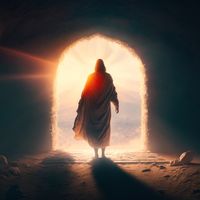
Matthew 28:5-7, John 20:19-20, Acts 2:24, Romans 6:4, Revelation 1:18, Psalm 16:10
There is no form of early Christianity known to us- though there are some that have been invented by ingenious scholars- that does not affirm at its heart that after Jesus’ shameful death God raised h...
Matthew 22:39, Philippians 2:3-4, 1 Corinthians 10:24, Romans 15:1-2, Galatians 6:10, Romans 12:10, Acts 20:35, Matthew 25:35-40, Isaiah 58:6-7, Proverbs 19:17, Luke 10:30-37, James 2:15-16, 1 John 3:17, Proverbs 31:8-9, Matthew 25:40, Acts 11:29-30, 2 Corinthians 8:13-15, Acts 2:44-45, Acts 4:32-35, 1 Corinthians 12:25-26
Pursuing the common good has been a strong marker of the Christian church from the very beginning. The early church had many habits that they became known for, of course—including meeting frequently, ...
Matthew 16:25, Romans 8:17-18, Philippians 1:21, 2 Corinthians 4:17, Psalm 116:115, Daniel 3:, Daniel 6:
How many modern Christians consider dying to be the worst thing that can happen to them? We pray for safety, healing, and protection, and rightly so. However, do we live in the truth that death has tr...
John 4:23-24, Matthew 25:35-40, Romans 12:1-2, Psalm 96:7-9, Matthew 6:9-13, Hebrews 10:19-20
Ancient worship . . . does truth. All one has to do is to study the ancient liturgies to see that liturgies clearly do truth by their order and in their substance. This is why so many young people tod...
Most people today imagine that the point of Christianity is “to go to heaven when you die.” That’s what most believers believe. It’s what most unbelievers unbelieve. It’s certainly what journalists, b...
John 10:6, John 17:21, 1 Corinthians 3:11, 1 Corinthians 1:10-13, Revelation 7:10
Before he was a household name, C. S. Lewis was a hardened atheist. From his teens to his early thirties, he vocalized many of the objections to Christianity that animate doubt in our age. After his s...
1 Corinthians 7:1-9, Matthew 19:3-12 , Psalm 139:13-16 , Genesis 2:18-25, Song of Solomon 4:1-16, Proverbs 5:15-19, Genesis 2:18
James Nelson describes sexuality as the central clue to what God is up to in the world. While this might seem a little over the top, when you think about it, sexuality factors integrally in our relati...
The New Testament makes it clear that the early Church’s message always …had two aspects—one theological, the other ethical: (i) the Gospel which the apostles preached; and (ii) the Commandment, growi...
Ezekiel 144:6, Colossians 3:5, 1 John 5:21, 1 Corinthians 10:14, Jeremiah 10:14-15, Matthew 22:34-40, Exodus 20:3
Tertullian was an early church leader (a bishop in Carthage) in North Africa. His voluminous writing and ministry have led many to acknowledge him as the father of Latin Theology/Western Theology. Ter...
In the book of Hebrews (and elsewhere in the New Testament and theology, generally), the Greek and Jewish worlds collide. A funny parallel may be drawn between this and George's complete meltdown ...
Psalm 22:, Matthew 27:46, Mark 15:34, Hebrews 2:12
Ancient lens What’s the historical context? A Structured Complaint The Psalmist organizes his complaint against God in three sections. The first two sections dramatize the complaint (vv. 1-11 and...
While sexual sin, financial scandals, and toxic work environments hurt pastoral credibility, a more subtle, and probably more common danger is carelessness with the truth. Intellectual integrity matte...
The following article was originally written for the author’s denominational newsletter as part of the celebration of Asian Pacific American Heritage Month. It is meant to provide some insights into t...
The early Christian writers used some stunning expressions of delight and gratitude when they mentioned Jesus’s death. Think of Paul saying, “He loved me and gave himself for me” (Gal. 2:20), or “The ...
In 1882—seven years before his descent into madness—Friedrich Nietzsche published a parable called The Madman . In the parable, a madman comes into a village on a bright, sunny morning holding al...
An experienced gardener knows the value of not watering their tomatoes. Well, there's a little more to it, but that's the headline. Suppose you go to the nursery in the spring and get a tom...
What the early Christians did not have to deal with to the same extent that we do today is how race has become an idol. On both sides of the racial divide, so much is twisted by the social constructs ...
Editors Note: This is perhaps less a review as a jumping off part to articulate some thoughts I developed while reading The Minority Experience. For a full review of the title, a cursory google search...
A few years ago, a pastor of an evangelical-fundamentalist church with whom I’m acquainted announced on the Sunday after Easter that he had become an atheist. He told his stunned congregation that he ...
Many of us are aware that the Trinity is not specifically referred to in scripture, though it would eventually become accepted among all major branches of the Christian faith as an authentic interpret...
1 Corinthians 12:8-12, John 1:, John 17:18, Philippians 2:6-11, 1 John 1:7, Romans 8:1, Colossians 1:13-14
The Cave One of the most famous passages in Plato's Republic is his "Allegory of the Cave," which is found at the beginning of book seven . Socrates imagines the human condition al...
Friends, the Lord is our strength and our defense. He has become our salvation. In the life, death, and resurrection of His Holy One, the repercussions of our sin are shattered. We have been brought w...
The solution to gender, race and social divisions is not to eradicate our differences but to see them in light of Jesus. The Pentecostal movement in the United States in the early twentieth century wa...
Genesis 12:1–3, Exodus 3:1–12, Isaiah 53:, Matthew 22:15–22 , John 4:1–42 , Acts 17:16–34
The world of Jesus was not the Old Testament Hebrew world. Like the United States now, Israel was multicultural, including a combination of Aramaic, Greek, and Roman influences. The people looked Jewi...
The true Church has never sounded out public expectations before launching her mission. Her leaders heard from God, they knew their Lord's will and did it. Their people followed them - sometimes t...
When Christianity first arose in the world it was not called a religion. It was the non-religion. Imagine the neighbors of early Christians asking them about their faith. “Where’s your temple?” they’d...
Leader: “Now there are various kinds of gifts, but the same Spirit. There are various kinds of service, and the same Lord.” People: “ For as the body is one, and has many members, and all the members...
Leader: Therefore, brothers and sisters, since we have confidence to enter the holy places by the blood of Jesus, All: by the new and living way that he opened for us through the curtain, that is, t...
In the first century, children enjoyed little esteem and virtually no respect. While families appreciated their own children, society merely tolerated them. The very language of the day reveals this f...