Some of us are interested in religious studies because we are interested in people. People do religious things; they symbolize and ritualize their lives and desire to be in a community. What piqued my...
In 1927 Bruce Barton wrote a multi-faceted parable that is believed to be based on a true story. This story is related to the work of Sir Christopher Wren, whose design of St. Paul’s Cathedral in Lond...
Ephesians 2:20, Isaiah 28:16, 1 Peter 2:6-8, 1 Corinthians 3:11, Hebrews 12:27-28, Psalm 118:22, Matthew 21:42, Mark 12:10-11, Luke 20:17
The cornerstone was a critical element of ancient architecture, the anchor that the rest of the building relied on. The cornerstone was the stone that set the alignment of the entire building. Every o...
God’s garden, made “in the beginning,” does not lie behind us, but ahead of us, in hope, and, in the meantime, all around us as our place of work. History without gardens would be a wasteland. What th...
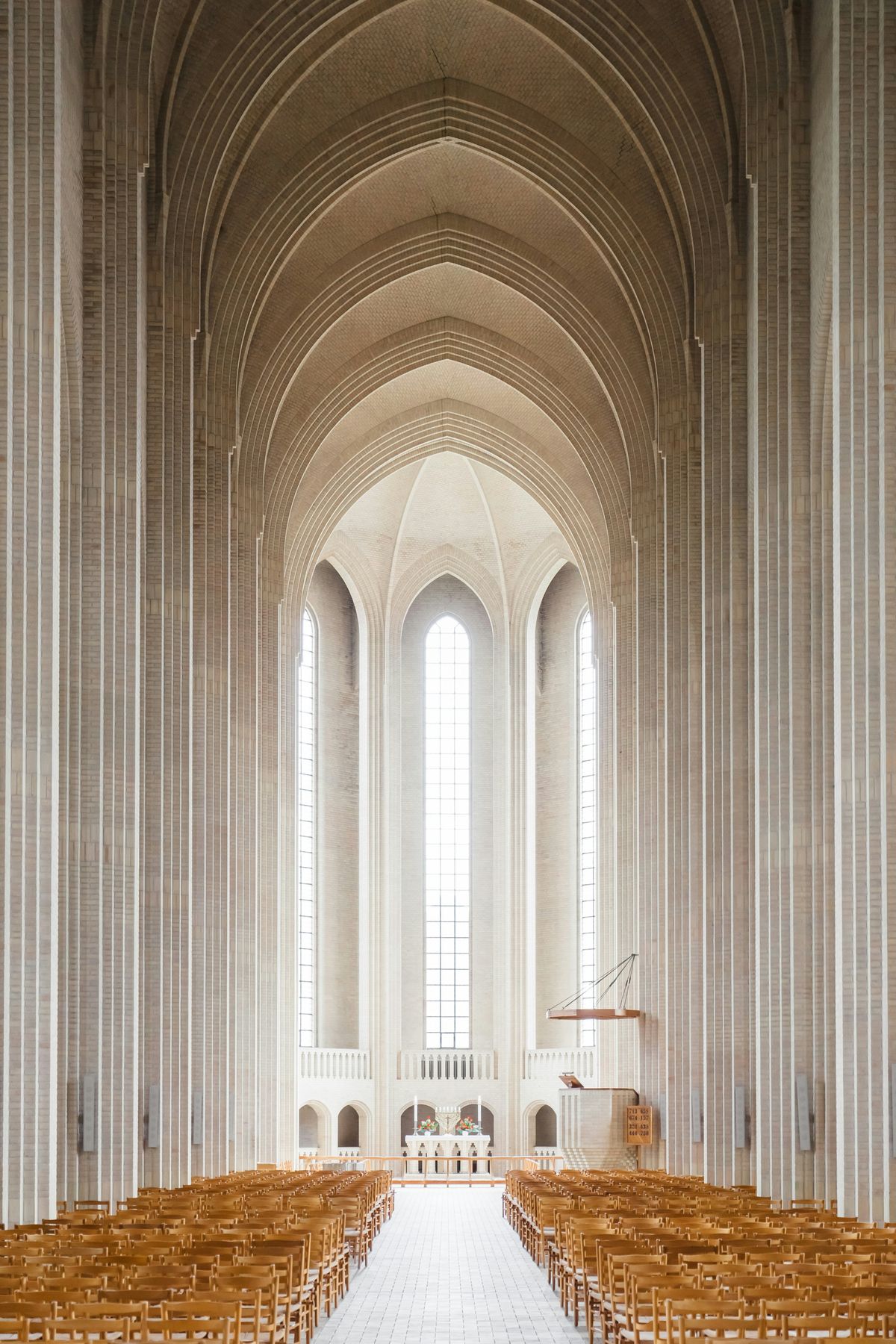
The cathedral lay at the center of a society. Its structure told the story of the Christian narrative and the human journey. In its shadow people were formed inside a story about how life was best liv...
The noted English architect Sir Christopher Wren was supervising the construction of a magnificent cathedral in London. A journalist thought it would be interesting to interview some of the workers, s...
When a person is confused and things refuse to fit together, she sometimes announces a need to get out of noise and turbulence, to get away from all the hassle and “get my head together.” When she suc...
Imagine that you are creating a fabric of human destiny with the object of making men happy in the end... but that it was essential and inevitable to torture to death only one tiny creature ... And to...
The accumulated body of scientific knowledge can tell us all about the canvas, oils, and minerals that combine to make a work of art, but they cannot tell us why it takes our breath away.
Too often we give real estate to things in our lives that either haven’t earned their land or were never meant to occupy important space in the first place.
One discovery was a time-released revelation to me. On my way to classes each week, I had been passing Emerson Hall, the building that houses the philosophy department at Harvard. The enormous inscrip...
But works of imagination come of an impulse to transcend the limits of experience or provable knowledge in order to make a thing that is whole. No human work can become whole by including everything, ...
To frame is to put a language boundary around our experience. It is to name what happens in particular ways, to say how we see the world, and to see the world how we say it is. Framing includes tellin...
[A gardener cultivates soil more than plants.] He lives buried in the ground. He builds his monument in a heap of compost. If he came into the Garden of Eden he would sniff excitedly and say: ‘Good Lo...
Neuroimaging has shown that as we age, our cognitive center of gravity shifts from the imaginative right brain to the logical left brain. At some point, most of us top living out of imagination and st...
Exodus 3:11-14, Isaiah 6:5-8 , 1 Kings 19:11-13 , John 15:4-5 , Luke 10:38-42 , Psalm 46:10
Historically the West has tended to throw its chief emphasis upon doing and the East upon being. . . . Were human nature perfect there would be no discrepancy between being and doing. The unfallen man...
O God, whose reason rules the world, who formed the starry heights above, timeless, time’s chain far forth you hurled, unmoved, gave all things power to move. Prevailed on by no outside cause to fashi...
How much curious and loving attention was expended by the first man who looked hard enough at the insides of trees, the entrails of cats, the hind ends of horses, and the juice of pine trees to realiz...
The most carefully crafted language in our culture tends to be poetry. And poetry at its finest moments subverts our best attempts at hiding from reality... The poetry of liturgy has just this power. ...
The next time you see Auguste Rodin’s famous statue The Thinker, or a copy of it, look at it closely. Rodin described his great figure in these terms: “What makes my Thinker think is that he thinks no...