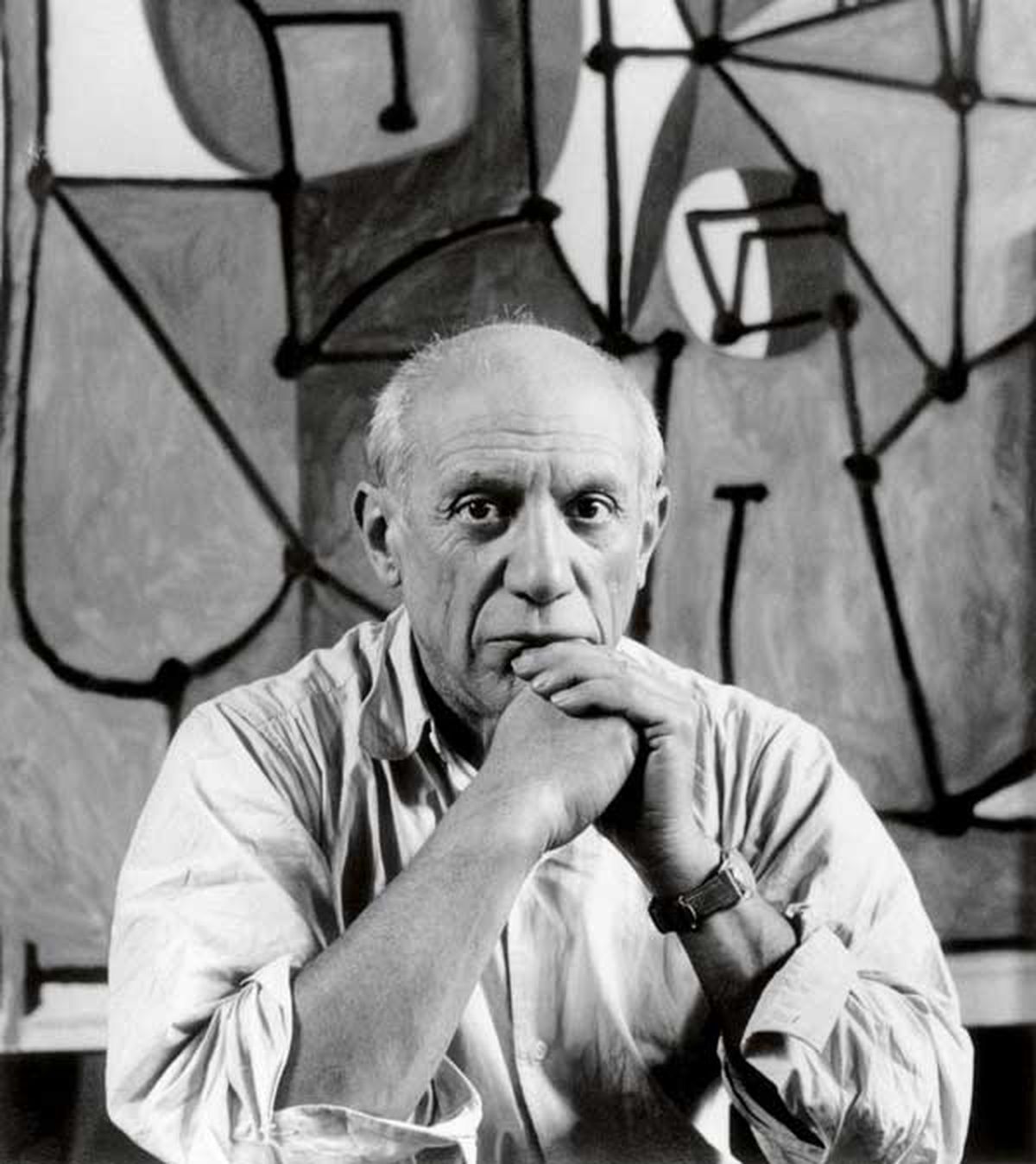
Pablo Picasso
Pablo Picasso (1881–1973) was a Spanish painter, sculptor, and one of the most influential artists of the 20th century. Renowned for his innovation and creativity, Picasso’s career spanned over seven decades, during which he profoundly transformed modern art. He was born in Málaga, Spain, to an artist father who recognized and nurtured his prodigious talent from a young age. Picasso’s formal art education began early, but his restless experimentation soon led him to break away from traditional techniques.
Picasso’s artistic career is often divided into distinct periods, reflecting his evolving style and emotional state. The Blue Period (1901–1904), marked by somber tones and melancholic themes, gave way to the Rose Period (1904–1906), characterized by warmer colors and a focus on performers and circus life. In 1907, Picasso co-created Cubism alongside Georges Braque. This revolutionary movement deconstructed objects into geometric shapes, challenging conventional notions of perspective and representation. Masterpieces like Les Demoiselles d’Avignon exemplify this radical shift.
Picasso was a prolific artist who worked across mediums, including painting, sculpture, ceramics, and printmaking. Iconic works like Guernica (1937) expressed his political engagement, serving as a haunting anti-war statement during the Spanish Civil War. His artistic influence extended beyond fine art, shaping modern design, theater, and even fashion.
Beyond his artistic achievements, Picasso led a dramatic personal life. He had several relationships that inspired much of his work, and his vibrant personality became legendary. A global celebrity, he spent his later years in France, where he continued creating until his death.
Pablo Picasso’s unparalleled contributions to art and his relentless pursuit of innovation solidified his legacy as a pioneer of modern art and a creative force who reshaped the cultural landscape of the 20th century.