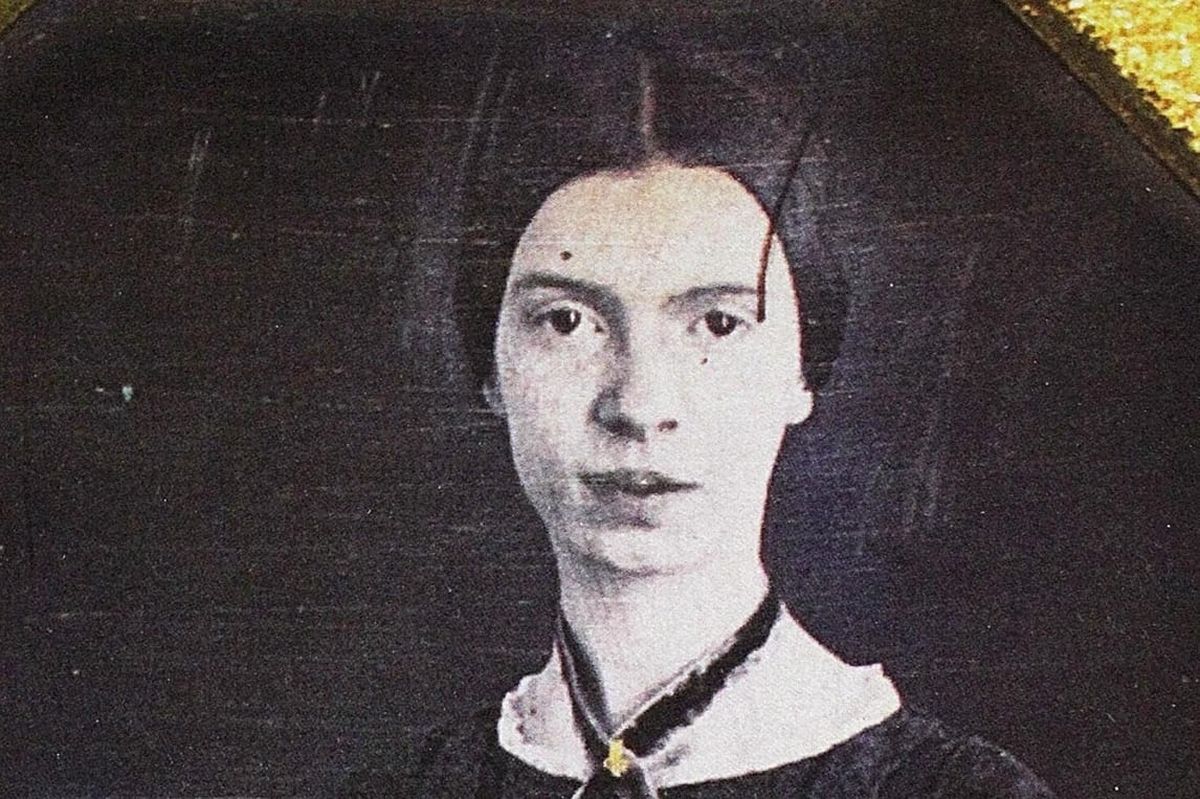
Emily Dickinson
Emily Dickinson (1830–1886) was a reclusive yet profoundly influential American poet whose innovative style and introspective themes transformed the landscape of modern poetry. Born in Amherst, Massachusetts, Dickinson lived much of her life in her family’s home, rarely venturing beyond its boundaries. Despite her isolation, she was deeply attuned to the complexities of human emotion, nature, mortality, and the divine, themes that permeate her work.
Dickinson’s poetry is characterized by its brevity, unique punctuation, and striking imagery. She often employed slant rhyme and unconventional syntax, which set her apart from her contemporaries and gave her verse an intimate, haunting quality. Among her most famous poems are “Because I could not stop for Death,” “Hope is the thing with feathers,” and “I’m Nobody! Who are you?” Though she wrote nearly 1,800 poems, only a handful were published during her lifetime, often anonymously and heavily edited to fit conventional standards.
Much of Dickinson’s life remains shrouded in mystery, but her correspondences with friends and family reveal a sharp intellect, a deep curiosity, and a vivid inner life. After her death, her sister Lavinia discovered her trove of poems, leading to posthumous publications that introduced her genius to the world.
Today, Emily Dickinson is celebrated as one of America’s greatest poets. Her work resonates with readers across generations, offering profound insights into the human experience. Dickinson’s ability to distill the vastness of existence into compact, powerful verse continues to inspire and challenge poets, scholars, and admirers around the globe. Her Amherst home is now a museum, preserving the legacy of a woman whose quiet life belied the immense impact of her words.