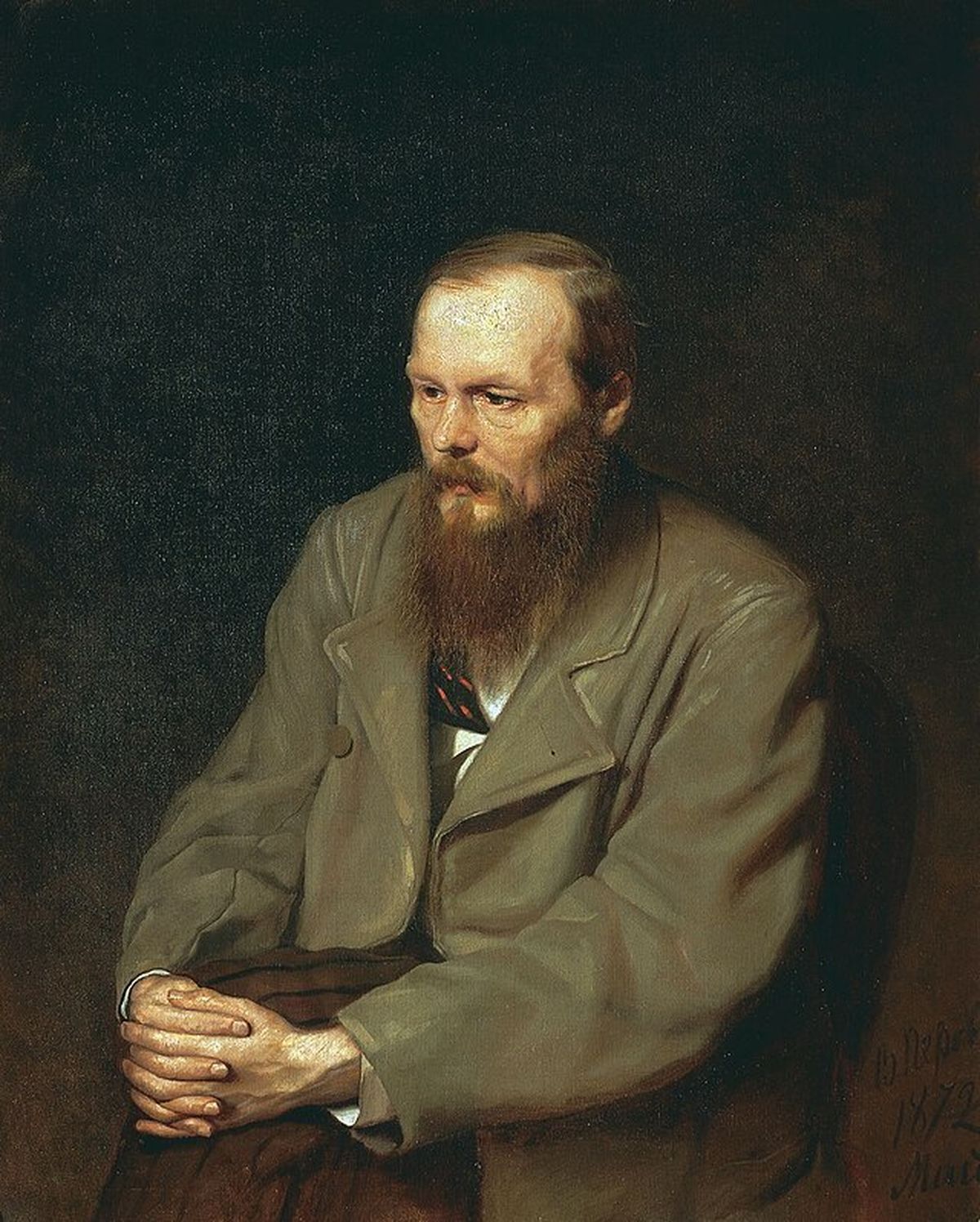
Fyodor Dostoyevsky
Fyodor Dostoyevsky (1821–1881) was a towering figure in Russian literature and philosophy, celebrated for his profound exploration of psychological depth, moral dilemmas, and existential themes. His literary masterpieces, including Crime and Punishment, The Brothers Karamazov, The Idiot, and Notes from Underground, grapple with timeless questions of faith, free will, guilt, redemption, and the human condition. His narratives delve into the intricacies of the human psyche, presenting characters who embody the tension between spiritual aspirations and earthly struggles.
Born in Moscow, Dostoyevsky experienced tragedy early in life, losing his mother to tuberculosis and his father under mysterious circumstances. These formative losses, combined with a strict upbringing, shaped his introspective nature. As a young man, he showed a passion for literature and graduated as a military engineer before dedicating himself to writing.
Dostoyevsky’s life was marked by profound personal and social upheaval. Arrested in 1849 for participating in a politically subversive group, he was sentenced to death but reprieved at the last moment and exiled to Siberian labor camps. This harrowing experience profoundly shaped his outlook, reinforcing his belief in the transformative power of suffering and the necessity of faith.
His works often reflect the social, political, and spiritual tensions of 19th-century Russia. Through vivid characters like Raskolnikov, Prince Myshkin, and Ivan Karamazov, Dostoyevsky explored the extremes of human behavior, from altruism and love to nihilism and despair. His writing style, characterized by intense dialogue and intricate psychological analysis, remains a benchmark in world literature.
Dostoyevsky’s legacy endures as one of the greatest literary minds of all time. His works continue to inspire and challenge readers, offering insights into the enduring complexities of human nature and the search for meaning amidst suffering.









![If [an unbeliever] is confronted with a](https://a-us.storyblok.com/f/1016915/1920x1080/5a5e8bd9ab/changing_the_water_into_wine-fernando_gallego.jpg/m/200x200/smart)