Many of us are aware that the Trinity is not specifically referred to in scripture, though it would eventually become accepted among all major branches of the Christian faith as an authentic interpret...
Ezekiel 144:6, Colossians 3:5, 1 John 5:21, 1 Corinthians 10:14, Jeremiah 10:14-15, Matthew 22:34-40, Exodus 20:3
Tertullian was an early church leader (a bishop in Carthage) in North Africa. His voluminous writing and ministry have led many to acknowledge him as the father of Latin Theology/Western Theology. Ter...
Genesis 3:1-7 , Exodus 32:1-6 , Ecclesiastes 2:1-11, Psalm 73:25-26, Matthew 4:1-11 , James 1:13-15
The church fathers consistently acknowledged the beauty and goodness of desire (e.g., Augustine, above), but they were not naive to the potential for desire to be bent by sin. They knew that our longi...
Revelation 2:10, Psalm 71:20-21, Philippians 3:10-14, Luke 21:16-19, 2 Corinthians 4:17-18, Romans 8:17-18, James 1:12
One of the great leaders of the first generation after the apostles was a man named Polycarp. Polycarp, it is believed, was discipled by the apostle John and carried out a long and fruitful ministry i...
This concept [the parish system] has helped Christians understand how interconnected all the pieces within a community are and the importance of pursuing the common good there. Jesus’ call to be peace...
Isaiah 55:1-3, John 3:1-5, Matthew 1:25-27, John 3:16-17, Psalm 145:8-9
Justin Martyr (ca. 100–165), the most renowned apologist of the second century, dedicated his life to defending Christianity as the one true philosophy. Engaging the Greek philosophers and intellectua...
At the beginning of the third century in North Africa, persecution of Christians broke out in Carthage. One of the catechumens taken into custody was Perpetua, a noblewoman still nursing her son. Whe...
Matthew 22:37-39, Matthew 25:35-40, Luke 3:11, Ephesians 5:2, Acts 2:42-47, James 2:14-17, Galatians 2:10, Psalm 72:12-14
A passage often referred to in order to describe the sacrificial, countercultural quality of the early church comes to us interestingly enough, from one of its strongest critics, known later to histor...
What was the popular Religion of the first Christians? It was, in one word, the Religion of the Good Shepherd. The kindness, the courage, the grace, the love, the beauty of the Good Shepherd was to th...
It was this…intention that made the primitive Christians such eminent instances of piety, that made the goodly fellowship of the Saints and all the glorious army of martyrs and confessors. And if you ...
Matthew 5:10-12, John 15:18-20, 2 Timothy 3:12, Acts 14:22, Romans 8:35-37, 1 Peter 4:12-14, 2 Corinthians 12:9-10, Acts 1:8, Romans 8:11, Isaiah 41:10
What is the witness of the church in times of persecution? The historical record demonstrates that persecutions of Christians were regular and prolific in the first centuries of the church, especially...
1 Corinthians 9:25-27, Genesis 39:7-12, 1 Kings 3:16-28, Esther 4:, Titus 2:11-12, Daniel 1:8-16, Joshua 1:9
In his book On the Morals of the Catholic Church, Augustine reinterpreted the classical virtues through the distinctly Christian lens of love: I hold that virtue is nothing other than the perfect lo...
Matthew 22:39, Philippians 2:3-4, 1 Corinthians 10:24, Romans 15:1-2, Galatians 6:10, Romans 12:10, Acts 20:35, Matthew 25:35-40, Isaiah 58:6-7, Proverbs 19:17, Luke 10:30-37, James 2:15-16, 1 John 3:17, Proverbs 31:8-9, Matthew 25:40, Acts 11:29-30, 2 Corinthians 8:13-15, Acts 2:44-45, Acts 4:32-35, 1 Corinthians 12:25-26
Pursuing the common good has been a strong marker of the Christian church from the very beginning. The early church had many habits that they became known for, of course—including meeting frequently, ...
God intended man to have all good, but in . . . God’s time; and therefore all disobedience, all sin, consists essentially in breaking out of time. Hence the restoration of order by the Son of God ha...
Reaching back to the tradition of virtues and vices can also give us fresh eyes and expose new layers of meaning in our reading of scripture. Before I read Aquinas on sloth, I would have associated it...
These disciples turned the world upside down because they saw a dead man come back to life by the power of God. And whatever that “knowing” and “seeing” did in them, it did it at a deep level because ...
Karl Barth (1886-1968), the famous Swiss theologian, once wrote that all human sin finds its roots in three basic human problems. He included pride (hubris), dishonesty and slothfulness in his list of...
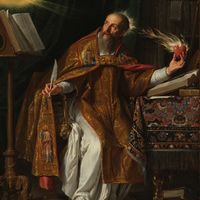
Augustine of Hippo's (63AD-114) Confessions is widely considered to be one of the most important books ever written, some consider it the world’s first biography. Augustine's early life was ch...
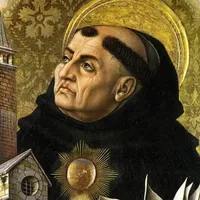
Of the medieval church’s many intellectual leaders, none has had more influence than the philosophical theologian Thomas Aquinas. He was born to a noble family near Naples, Italy, and joined the Domin...
Martin of Tours was a 4th century Frankish soldier who, after a personal encounter with Jesus, left the Roman army and became a hermetic monk and later a bishop. Dozens of stories of his life have cir...
Proverbs 28:20, Revelation 2:10, Matthew 5:10-12, Matthew 10:22, 2 Corinthians 4:8-10, 1 Peter 4:12-14, Romans 8:35-37, John 15:18-20, Psalm 31:23, Matthew 25:21, 1 Corinthians 4:2, 1 Timothy 6:12, Matthew 24:45-46
Pliny, a Roman Governor serving around 112 AD, faced a challenging situation regarding Christianity. Many Church historians believe that by his time, it had become illegal to profess the Christian fai...
Matthew 19:21, Philippians 3:8, Luke 9:23, Romans 8:29, 2 Corinthians 4:17, Hebrews 12:11, Isaiah 58:6-7
Given life’s unpredictability and the inevitability of pain and hardship, what do we do when that pain and hardship show up on our doorsteps? In roughly AD 270, there was a man in Lower Egypt named An...
Matthew 6:19-21, Malachi 3:10, Acts 20:35, Luke 6:38, Proverbs 3:9-10, 2 Corinthians 9:6-7
John Chrystostom was an early church father and Bishop of Constantinople from 347-407. The name “Chrysostom” is not a surname, but rather an epithet “golden tongued,” given to him because of his excel...
Spiritual timekeeping is nourished by Jesus’s promise that the Spirit will guide us into all truth across time… This stands in contrast to what I’ll call the “primitivism” of so much American Christia...
1 Kings 20:40, Matthew 6:34, Romans 7:19, Romans 8:11-14
One common mistake is assuming that everyone else finds faith easy, while we alone struggle. Yet there is comfort in recognizing that we are not alone in our pursuit of Christ in the midst of a broken...
Revelation 7:17, Luke 15:1-7, John 10:1-18, Psalm 23:1-3, Matthew 4:19, John 15:5, John 10:11
At the same time Church historian Philip Schaff was writing his 8-volume history of the Church, the Roman catacombs were being discovered. Schaff had this to say about symbols Christians used to adorn...
Acts 16:30-33, Romans 8:38-39, Hebrews 7:25, John 5:24, John 15:6-8, 1 Thessalonians 5:16-18, Ephesians 6:18, Jeremiah 33:3, Psalm 86:3, John 15:1-10
For the most part, when we think of saints or heroes of the faith, we think of people who are altogether different than we are. They seem to embody a quality of communion with God that is impossible f...
Isaiah 55:8-9, Jonah 4:1-11, Numbers 22:21-34, Matthew 9:10-13, Mark 2:23-28, Psalm 19:12-14
It takes a great deal of freedom and love to be therapeutic with a group. Many years ago when Emil Brunner, the great Swiss theologian, was lecturing in this country, it was reported that when he prea...
James 1:27, Isaiah 1:17, Psalm 68:5, Matthew 25:34-40, 1 Timothy 5:3-4, Zechariah 7:9-10, Matthew 12:48-50, Romans 8:14-17, Luke 4:18, Acts 4:34-35, James 2:15-16
Christianity revitalized life in Greco-Roman cities by providing new norms and new kinds of social relationships able to cope with many urgent urban problems. To cities filled with the homeless and im...
Deuteronomy 13:1-3, 1 Kings 22:19-23, Isaiah 53:3-5, Matthew 24:23-25, John 20:27, Psalm 34:18, John 20:25, 1 Corinthians 1:23; 2:2, Galatians 1:8-9
St. Martin of Tours was a Frankish soldier in the Roman army who abandoned his military post to follow Jesus at a time when Christianity had only begun to take root in France. He later became the bish...