2 Corinthians 11:2, Acts 13:50, James 4:13-15, Philippians 2:3-4, Romans 12:17-19, 1 Peter 2:23, 2 Timothy 4:2, 1 Peter 5:2-3, John 21:15-17, 2 Corinthians 4:5, 1 Corinthians 2:1-5
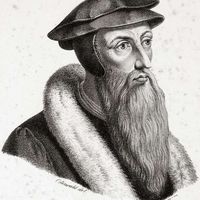
The Protestant Reformer John Calvin (1509-1564) arrived in Geneva to lead the city’s church in 1536, but not, as we might imagine, to universal acceptance. Rather, there was significant resistance and...
When we watch cartoons, it is fun to see the way we can so easily allow some of the craziest stuff to just be taken at face value. Movements that don’t follow the laws of physics? Sure. Talking animal...
1 Corinthians 13:2, James 2:19-20, 1 Corinthians 8:1-2, Ecclesiastes 1:18, 1 Corinthians 2:5, Philippians 3:10, Matthew 7:21, 24-27, James 1:22
The Oxford scholar and apologist C. S. Lewis... once closed a lecture to a group of apologists like this: I have found that nothing is more dangerous to one’s own faith than the work of an apologis...
Mark 10:42-45, Matthew 20:25-28, 1 Corinthians 1:12-13, 1 Timothy 4:12, John 7:16, Galatians 1:10, 2 Timothy 4:3-4, 2 Corinthians 4:5, John 3:30, 1 Corinthians 2:1-2
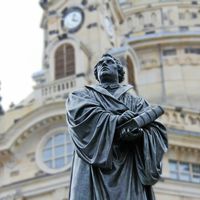
When Martin Luther discovered that some had begun calling the first Protestants “Lutherans,” he strongly objected. It is funny to think that some 500 years later, many are still known by his name: ...
James 1:22, Matthew 7:24-27, 1 Corinthians 2:4-5, Isaiah 55:2
You might have heard the story about the dog food company. They launched a new line of dog food, stocking it on shelves nationwide, but it didn’t sell well at all. Sales plummeted and the leadership d...
Before Columbus crossed the Atlantic, many believed the world ended somewhere beyond Gibraltar, reflected in Spain’s royal motto: “Ne Plus Ultra,” meaning, “there is no more beyond.” But when Columb...
The average adult brain consists of more than 10 billion neurons communicating with one another through more than 10 trillion synaptic connections. (Synaptic connections are the junctions or gaps betw...
I’ve served on staff at a few different churches throughout Silicon Valley for the last decade and a half, including a medium-sized church, a young church plant, and a multisite megachurch. At each, w...
Matthew 13:13-15, Luke 8:10, Isaiah 6:9-10, John 9:39, 1 Corinthians 2:14, 2 Corinthians 4:4, Ephesians 1:18
Christopher Chabris and Daniel Simons conducted an experiment at Harvard University more than a decade ago that became infamous in psychology circles. Their book The Invisible Gorilla popularized it...
1 Corinthians 2:14, 2 Corinthians 4:4, Matthew 13:13-15, Acts 28:27, Hebrews 3:7-8, Jeremiah 7:24, John 10:27, Mark 6:52
Jesus is clear that it is dangerous to close one’s ears, eyes, and heart to the leadings of the Holy Spirit. In The Magician’s Nephew , a novel from C. S. Lewis’ Chronicles of Narnia series, Narnia i...
1 Corinthians 2:10-12, Romans 8:14, Acts 13:2-4, John 15:26, John 14:16-17
The Celtic Christians had a name for the Holy Spirit that has always intrigued me. They called Him An Geadh-Glas , or “the Wild Goose.” I love the imagery and implications. The name hints at the myst...
Titus 3:4-5, Ephesians 2:8, Luke 15:11-32, 1 Corinthians 2:9, Psalm 30:5, Ruth 4:13-17
J. R. R. Tolkien coined the term "eucatastrophe" to refer to the unexpected happy ending at the end of a fairy tale, achieved by grace rather than effort. The consolation of fairy-stories,...
Matthew 19:29, Revelation 21:1-2, 1 Corinthians 2:9, Hebrews 11:16, Philippians 3:20, John 14:2-3, Matthew 6:19-21
There once lived a peasant in Crete who deeply loved his life. He enjoyed tilling the soil, feeling the warm sun on his naked back as he worked the fields, and feeling the soil under his feet. He love...
Matthew 28:19-20, 1 Corinthians 2:4-5, Ephesians 6:19-20, 2 Corinthians 4:2-4, Romans 1:16, Mark 16:15
With his fabulous tale to proclaim, the preacher is called in his turn to stand up in his pulpit as fabulist extraordinary, to tell the truth of the Gospel in its in its highest and wildest and holies...
A strong church once inscribed these words on an archway leading to the churchyard. Over time, two things happened: the church lost its passion for Jesus and His gospel, and ivy began to grow on the a...
Thomas Aquinas, the famous medieval theologian, created one of the greatest intellectual achievements of Western civilization in his Summa Theologica. It’s a massive work: thirty-eight treatises, thre...
If we accept Genesis 1 as ancient cosmology, then we need to interpret it as ancient cosmology rather than translate it into modern cosmology. If we try to turn it into modern cosmology, we are making...
1 Corinthians 2:16, Matthew 22:37, Proverbs 4:23, James 1:5, Colossians 3:2, Philippians 4:7, Romans 12:2
According to the ancient Greek philosopher Aristotle, the function of the brain was to keep the body from overheating. In The Parts of Animals, he noted that that the brain was a “compound of earth an...