Anti-Intellectualism has been a problem in the church for some time now. Consider the words of the 17th century English clergyman Joseph Glanvill, who had this to say about the role of reason in faith...
Proverbs 2:2–6, Romans 12:1–2, Isaiah 1:18, Daniel 1:17–20, Matthew 22:37, Psalm 119:97–100
At a Christian high school, a theology teacher strode to the front of the classroom, where he drew a heart on one side of the blackboard and a brain on the other. The two are as divided as the two sid...
In the land whose founding metaphor was the mutuality of John Winthrop’s seventeenth-century vision of a “city set on a hill,” we live more and more in estranged, hostile, exclusive enclaves, linked o...
In 1889, the French novelist Paul Bourget penned The Disciple , where he depicted the life of a renowned philosopher and psychologist, whose existence was marked by a seemingly monotonous routine...
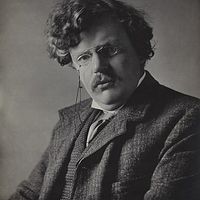
G. K. Chesterton was well-known (and iconoclastic) in his defense of tradition in a time when progress was all the rage in Western Europe- in technology, in the sciences, in philosophy. Chesterton, on...
Like-minded, homogeneous groups squelch dissent, grow more extreme in their thinking, and ignore evidence that their positions are wrong. As a result, we now live in a giant feedback loop, hearing our...
Exodus 24:15–18, 1 Kings 19:9–12, Isaiah 30:15, Mark 1:35, Luke 5:15–16, Psalm 2:1–2
Recently a professor shared with me a college student’s reflections in response to my earlier writings on solitude and silence: I was not born into a world relatively unaffected by technology lik...
1 Samuel 3:1-10, Ecclesiastes 12:1 , Proverbs 2:1-11, Mark 10:17-22 , 1 Timothy 4:12 , Psalm 119:9-11
I have been moved to a different course of action, however, inspired largely by my daily exposure to college students in a great university during the course of a preaching and teaching ministry that ...
Melville Weston Fuller (1833–1910), a prominent U.S. lawyer and Chief Justice of the Supreme Court (1888–1910), once presided over a church conference where a speaker passionately denounced higher edu...
Many have heard of the polymath and famous atheist Bertrand Russell (1872-1970), whose career as a public intellectual touched on a variety of disciplines, including philosophy (he is considered one o...
Modernity slowly weakened spirituality, by design and accident, in favor of commerce; it downplayed silence and mere being in favor of noise and constant action. The reason we live in a culture increa...
In this excerpt, author David Zahl challenges the common belief that religion is “in decline.” He argues that while Westerners, particularly younger generations, may be distancing themselves from the ...
Our 24/7 culture conveniently provides every good and service we want, when we want, how we want. Our time – saving devices, technological conveniences, and cheap mobility have seemingly made life muc...
In his book The Allure of Gentleness , Dallas Willard includes a thought-provoking excerpt from Richard Robinson, a prominent atheist thinker from the mid-20th century. In his work An Atheist’...
In Redeeming Productivity , Reagan Rose tells his own story to illustrate the two ways in which the idea that “it’s my life” leads to two very different and disordered outlooks on productivity. When ...
The blunt fact is that America's grand promotion of debt-leveraged consumerism has stood Max Weber's famous thesis about the rise of capitalism on its head. It has scorned the early-American s...
Charles William Eliot (1834–1926), was an educator and long-time president of Harvard College(1869–1909). During his many years at Harvard, Charles W. Eliot frequently expressed reservations about spo...
We were created for goodness and perfection. That’s why we innovate, progress, and change. But if our progress loses its purpose, it cannibalizes our humanity, leaving us distracted and disoriented.
Genesis 15:1-6, Exodus 14:10-14, Joshua 1:9, Psalm 23:, James 2:14-26
There’s no shortage of the religiously faithless who seem eager to tell us what faith is. Many of these characterizations of faith are reminiscent of Mark Twain’s precocious schoolboy who quipped, “Fa...
Proverbs 22:1, Luke 16:10, Philippians 2:4, Romans 12:10, Psalm 15:2
In his book A Better Way to Think about Business, the late business philosopher Robert Solomon, a student of business jargon, speaks of having been struck by the imagery that peppers many [business] p...
Exodus 5:1–2, 1 Kings 18:21–39, Daniel 3:16–18, Matthew 5:14–16, Acts 4:19–20, Psalm 2:1–2, 10–12
Most secularists are too politically savvy to attack religion directly or to debunk it as false. So what do they do? They consign religion to the value sphere—which takes it out of the realm of true a...
Our cities’ gleaming spires point to the greatness that mankind can achieve, but also to our hubris.... Urban innovation can destroy value as well as create it.
Let’s talk about how our beliefs shape our actions, especially when fear is involved. You've probably heard the phrase, "ideas have consequences," right? It's easy to see this in act...
Whether we are easily swamped or nearly waterproof, there’s one wiring challenge we all face: Bad is stronger than good. Psychologist Jonathan Haidt elaborates: “Responses to threats and unpleasantnes...
The biggest deception of our digital age may be the lie that says we can be omni-competent, omni-informed, and omni-present. . . . We must choose our absence, our inability, and our ignorance—and choo...
In Hillbilly Elegy the author tells of Bob, who worked with him at a tile warehouse with his girlfriend. Bob missed work once a week, was chronically late, and took many breaks each day, lasting ove...