Modernity slowly weakened spirituality, by design and accident, in favor of commerce; it downplayed silence and mere being in favor of noise and constant action. The reason we live in a culture increa...
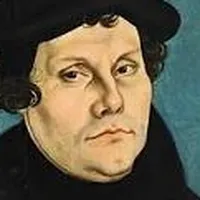
Noteworthy in this regard is the contribution of the Reformers, particularly Martin Luther, though John Calvin’s contribution is also very significant. Both called for a spirituality in the world that...
Our 24/7 culture conveniently provides every good and service we want, when we want, how we want. Our time – saving devices, technological conveniences, and cheap mobility have seemingly made life muc...
In the land whose founding metaphor was the mutuality of John Winthrop’s seventeenth-century vision of a “city set on a hill,” we live more and more in estranged, hostile, exclusive enclaves, linked o...
We were created for goodness and perfection. That’s why we innovate, progress, and change. But if our progress loses its purpose, it cannibalizes our humanity, leaving us distracted and disoriented.
Exodus 24:15–18, 1 Kings 19:9–12, Isaiah 30:15, Mark 1:35, Luke 5:15–16, Psalm 2:1–2
Recently a professor shared with me a college student’s reflections in response to my earlier writings on solitude and silence: I was not born into a world relatively unaffected by technology lik...
In this excerpt, author David Zahl challenges the common belief that religion is “in decline.” He argues that while Westerners, particularly younger generations, may be distancing themselves from the ...
One of the many technological transformations of the twentieth century took place right on our dinner plates. Because of its cheapness and convenience, most Americans quickly accepted new ways of eati...
Multitasking is the drive to be more than we are, to control more than we do, to extend our power and our effectiveness. Such practice yields a divided self, with full attention given to nothing.
Our cities’ gleaming spires point to the greatness that mankind can achieve, but also to our hubris.... Urban innovation can destroy value as well as create it.
We just philosophize, complain of boredom, or drink vodka. It's so clear, you see, that if we're to begin living in the present, we must first of all redeem our past and then be done with it f...
Our madly rushing, neurotic society needs the therapy of the silence and quietness that flows from a day kept holy, really holy. A day when our thoughts are of God, our actions are tempered by a desir...
We cannot deal with industrialism or unemployment unless we lift work out of the economic, political and social spheres and consider it also in terms of the work's worth and the love of the work, ...
Ecclesiastes 7:10, Colossians 2:8, Matthew 9:17, 1 Thessalonians 5:21, Romans 12:2, Mark 7:8-9, Isaiah 43:19
It’s funny how sometimes members of the church can associate anything new with “heresy.” We often make the mistake of confusing technological innovations or scientific discoveries for changes to the g...
Because of the modern rhythms of work that are mediated through personal computers and phones, people, in the words of one cultural commentator, “leave the office, but they do not leave their work. Th...
Did you know that the first group of people to use clocks were Christian monks? Monks desired the ability to pray around a rigorous and exact prayer schedule. Benedict of Nursia, the great architect o...
The blunt fact is that America's grand promotion of debt-leveraged consumerism has stood Max Weber's famous thesis about the rise of capitalism on its head. It has scorned the early-American s...
Precisely because our frenzy is fundamentally aimless while remaining driven, we set ourselves goals whose main purpose is to keep the frenzy going until it consummates itself in sloth. If at present ...
An understanding and living of Sabbath time can help support a sane and holy rhythm of life for us. With it, we are given an alternative to the culture’s growing movement between driven achievement an...
In contrast (and contradiction) to cultural mindlessness (that can hardly be underestimated!): The Sabbath and its observance may cultivate a theological mindfulness. . . . How so? The Sabbath sanctif...
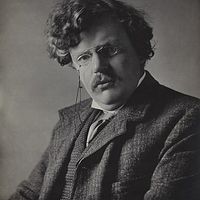
G. K. Chesterton was well-known (and iconoclastic) in his defense of tradition in a time when progress was all the rage in Western Europe- in technology, in the sciences, in philosophy. Chesterton, on...
In 1889, the French novelist Paul Bourget penned The Disciple , where he depicted the life of a renowned philosopher and psychologist, whose existence was marked by a seemingly monotonous routine...
The biggest deception of our digital age may be the lie that says we can be omni-competent, omni-informed, and omni-present. . . . We must choose our absence, our inability, and our ignorance—and choo...
Sabbath ceasing means to cease not only from work itself, but also from the need to accomplish and be productive, from the worry and tension that accompany our modern criterion of efficiency, from our...
As early as April 2020, a debate raged about the responsibilities of those of us turned safely inside during this global storm. For those time privileged enough to find their calendars suddenly cleare...
Are these hyperscheduled, overactive individuals really creating anything new? Are they guilty of passion in any way? Do they have a new vision for their government? For their community? Or for themse...
When we fight this work-six-days, Sabbath-one-day rhythm, we go against the grain of the universe. And to quote the philosopher H. H. Farmer, “If you go against the grain of the universe, you get spli...