Let’s talk about how our beliefs shape our actions, especially when fear is involved. You've probably heard the phrase, "ideas have consequences," right? It's easy to see this in act...
In his book The Allure of Gentleness , Dallas Willard includes a thought-provoking excerpt from Richard Robinson, a prominent atheist thinker from the mid-20th century. In his work An Atheist’...
In this excerpt, author David Zahl challenges the common belief that religion is “in decline.” He argues that while Westerners, particularly younger generations, may be distancing themselves from the ...
Isaiah 25:6-9, Daniel 7:13-14, Zechariah 8:4-5, Luke 24:36-43, Revelation 21:1-5, Psalm 16:11
One day when George MacDonald, the great Scottish preacher and writer, was talking with his son, the conversation turned to heaven and the prophets’ version of the end of all things. “It seems too goo...
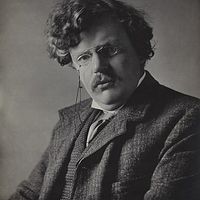
G. K. Chesterton was well-known (and iconoclastic) in his defense of tradition in a time when progress was all the rage in Western Europe- in technology, in the sciences, in philosophy. Chesterton, on...
Genesis 15:1-6, Exodus 14:10-14, Joshua 1:9, Psalm 23:, James 2:14-26
There’s no shortage of the religiously faithless who seem eager to tell us what faith is. Many of these characterizations of faith are reminiscent of Mark Twain’s precocious schoolboy who quipped, “Fa...
Daniel 6:10–23, 1 Kings 18:17–39, Esther 4:12–16, Matthew 10:28–33, Acts 6:8–7:60 , Psalm 15:1–2
The hymnwriter and theologian F. W. Faber writes with beautiful prose the challenges that each one of us faces when it comes to living a life faithfully according to the truth that is within us: M...
More often than not, park-it-at-the-door thinking [about religious faith] has less to do with hostility to faith than with the avoidance of risk, for many employer’s fear that any hint of religion is ...
Daniel 3:16–18, 2 Chronicles 33:10–13 , Isaiah 50:7, Luke 22:61–62, Psalm 51:10–13 , 1 Peter 3:11-17
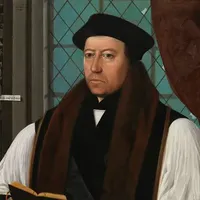
Facing imminent death, Thomas Cranmer—the Archbishop of Canterbury who crafted the foundational Book of Common Prayer for Anglican worship—succumbed to terror and signed a document renouncing hi...
Daniel 3:, Job 1:, Matthew 10:32-33, 2 Timothy 1:7, Psalm 31:24
Thomas Cranmer (1489–1556), the archbishop of Canterbury from 1532 to 1556, played a pivotal role in the English Reformation. A key figure in Henry VIII’s break with the Roman Catholic Church, Cranmer...
Daniel 3:16-18, 1 Kings 18:21, Isaiah 55:8-9 , Romans 14:5-8, Psalm 119:105, Matthew 7:15-16
First, most Christians attach their convictions to Christ personally. In other words, we form our convictions in order to please Jesus, not ourselves. Convictions do not express what we think or feel ...
Galatians 6:9, John 3:8, Ecclesiastes 11:5, Isaiah 55:10-11, John 6:44
Writing about ministering to postmodern skeptics, Don Everts and Doug Schaupp share a helpful insight into the mystery of God's movement: The first lesson they have taught us about the path to f...
“I believe that what we become depends on what our fathers teach us at odd moments, when they aren't trying to teach us. We are formed by little scraps of wisdom.”
Only faith survives; faith which is not a work, not even a negative work; not an achievement, not even the achievement of humility. . . . Faith is the ground, the new order, the light. . . . Faith is ...
1 Peter 2:12, Genesis 2:15-20, Colossians 3:22-24, John 5:17, 1 Corinthians 7:17
Myths about Faith and Work Faith is to be lived out 24-7-52. For many Christians this involves living out our faith at work. But several myths about faith and work can prevent us from being effecti...
Proverbs 2:2–6, Romans 12:1–2, Isaiah 1:18, Daniel 1:17–20, Matthew 22:37, Psalm 119:97–100
At a Christian high school, a theology teacher strode to the front of the classroom, where he drew a heart on one side of the blackboard and a brain on the other. The two are as divided as the two sid...
If you think of your identity and heart as an engine, you could say there is a kind of fuel that powers it cleanly and efficiently—and a kind of fuel that is not only polluting but also destroys the e...
Anti-Intellectualism has been a problem in the church for some time now. Consider the words of the 17th century English clergyman Joseph Glanvill, who had this to say about the role of reason in faith...
Have you ever noticed how closely the words longing and belonging are connected? I’m not sure of their exact etymology, but I do believe that our deepest longing in life is to be-...