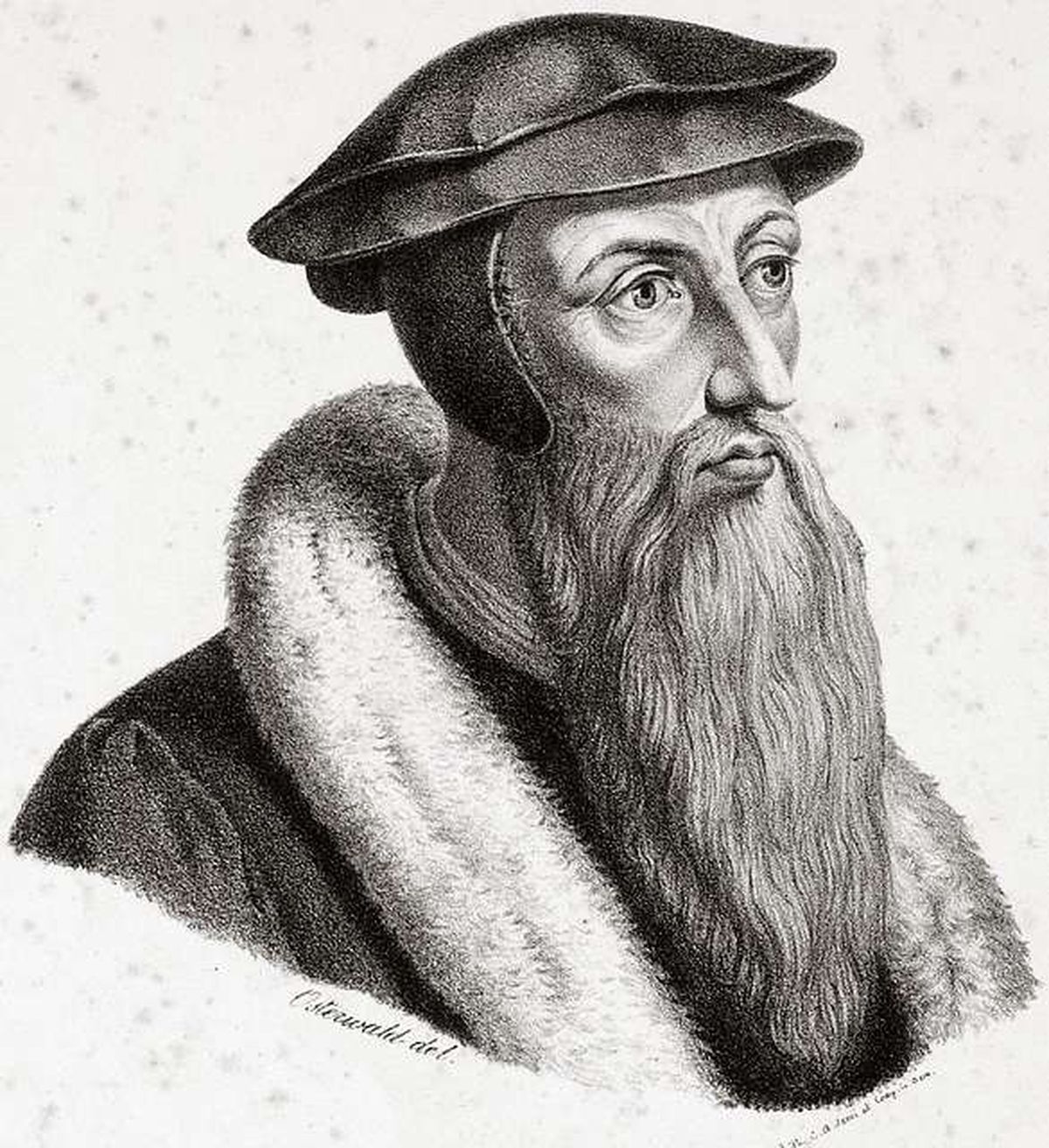
John Calvin
John Calvin (1509–1564) was a French theologian, pastor, and reformer who played a pivotal role in the Protestant Reformation and is widely regarded as one of its most influential figures. Born in Noyon, France, Calvin's early education in law eventually led him to study theology, where he began to develop the theological framework that would underpin much of the Reformed tradition.
His most significant theological work, Institutes of the Christian Religion, first published in 1536, systematically laid out his beliefs on Christian doctrine, articulating a vision of God’s sovereignty and the nature of salvation that challenged the teachings of the Catholic Church. Calvin’s doctrine of predestination, which emphasized the belief that God has eternally chosen the elect for salvation, became one of the defining features of his theology. Alongside this, he stressed the idea of salvation by grace through faith—that human beings are justified before God not by works but through faith in Christ alone.
In 1541, Calvin became the pastor of St. Pierre's Church in Geneva, where his influence spread not only through his preaching but also in his guidance of religious and civic reforms. He advocated for the establishment of a theocratic system in Geneva that promoted moral discipline and religious order, which became a model for other Protestant communities throughout Europe.
Calvin’s theological impact extended far beyond Geneva, with his teachings spreading across Europe and influencing the rise of Presbyterianism and other branches of Reformed Christianity. His emphasis on the Bible as the final authority, along with his ideas on church governance and Christian living, has had a lasting influence on Protestant thought and practice. Today, Calvinism continues to shape the theology and structure of many Christian denominations, making Calvin a key figure in the history of Christianity.