Modernity slowly weakened spirituality, by design and accident, in favor of commerce; it downplayed silence and mere being in favor of noise and constant action. The reason we live in a culture increa...
Exodus 5:1–2, 1 Kings 18:21–39, Daniel 3:16–18, Matthew 5:14–16, Acts 4:19–20, Psalm 2:1–2, 10–12
Most secularists are too politically savvy to attack religion directly or to debunk it as false. So what do they do? They consign religion to the value sphere—which takes it out of the realm of true a...
In this excerpt, author David Zahl challenges the common belief that religion is “in decline.” He argues that while Westerners, particularly younger generations, may be distancing themselves from the ...
Since 1991, the adult population in the United States has grown by 15%. During that same period, the number of adults who do not attend church has nearly doubled, rising from 39 million to 75 million—...
Genesis 2:1-3, Exodus 20:8-11, Deuteronomy 5:12-15, Mark 2:27-28, Matthew 12:8, Luke 6:5
For the most part, contemporary Christians pay little attention to the Sabbath. We more or less know that the day came to reflect, in U.S. culture, the most stringent disciplinary faith of the Puritan...
Sabbath ceasing means to cease not only from work itself, but also from the need to accomplish and be productive, from the worry and tension that accompany our modern criterion of efficiency, from our...
More often than not, park-it-at-the-door thinking [about religious faith] has less to do with hostility to faith than with the avoidance of risk, for many employer’s fear that any hint of religion is ...
To a man who lives unto God nothing is secular, everything is sacred. He puts on his workday garment and it is a vestment to him: he sits down to his meal and it is a sacrament; he goes forth to his l...
Anti-Intellectualism has been a problem in the church for some time now. Consider the words of the 17th century English clergyman Joseph Glanvill, who had this to say about the role of reason in faith...
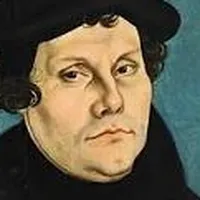
Noteworthy in this regard is the contribution of the Reformers, particularly Martin Luther, though John Calvin’s contribution is also very significant. Both called for a spirituality in the world that...
Our madly rushing, neurotic society needs the therapy of the silence and quietness that flows from a day kept holy, really holy. A day when our thoughts are of God, our actions are tempered by a desir...
The spiritual rest, which God particularly intends in this Commandment, is this: that we not only cease from our labor and trade, but much more, that we let God alone work in us and that we do nothing...
In contrast (and contradiction) to cultural mindlessness (that can hardly be underestimated!): The Sabbath and its observance may cultivate a theological mindfulness. . . . How so? The Sabbath sanctif...
The command to celebrate the Sabbath, and therefore to cease and abstain from all our own knowledge, work and volition, even from all our arbitrary surrenders and inactivity, from all arbitrary quiesc...
Sabbath keeping is a spiritual strategy: it is a kind of judo. The world's commands are heavy; we respond with light moves. The world says work; we play. The world says go fast; we go slow. These ...
Sabbath is that ancient idea and practice of intentional rest that has long been discarded by much of the church and our world. Sabbath is not new. Sabbath is just new to us. Historically, Christians ...
God always and eternally intended the Sabbath to be a lifestyle—an attitude, a perspective, an orientation for the living that enables us to govern our lives and steer clear of bondage.
The early church had no single answer to the question of the relevance of the Sabbath commandment to Christians. The churches of the New Testament period included a variety of views.
The Sabbath day is a holy day. Interestingly, the only thing God deems as qadosh, or “holy,” in the creation story is the Sabbath day. The earth, space, land, stars, animals — even people — are not de...
Keeping sabbath may involve us in relinquishing certain kinds of power on behalf of other kinds. If we allow it, sabbath may bring us to true authority, true power. The road is that of letting go, rat...
The discussion of the sabbath leads to an interesting reflection. Some of our economies and cultures actually are put together in such a way that the poor either struggle to get enough work or have no...
The Sabbath...is more than an armistice, more than an interlude; it is a profound conscious harmony of man and the world, a sympathy for all things and a participation in the spirit that unites what i...
I find my thoughts drifting to the Sabbath, the day of rest, the seventh day of the week, and perhaps the seventh day of one’s life as well, when one can feel that one’s work is done, and one may, in ...
Six days a week the spirit is alone, disregarded, forsaken, forgotten. Working under strain, beset with worries, enmeshed in anxieties, man has no mind for ethereal beauty. But the spirit is waiting f...