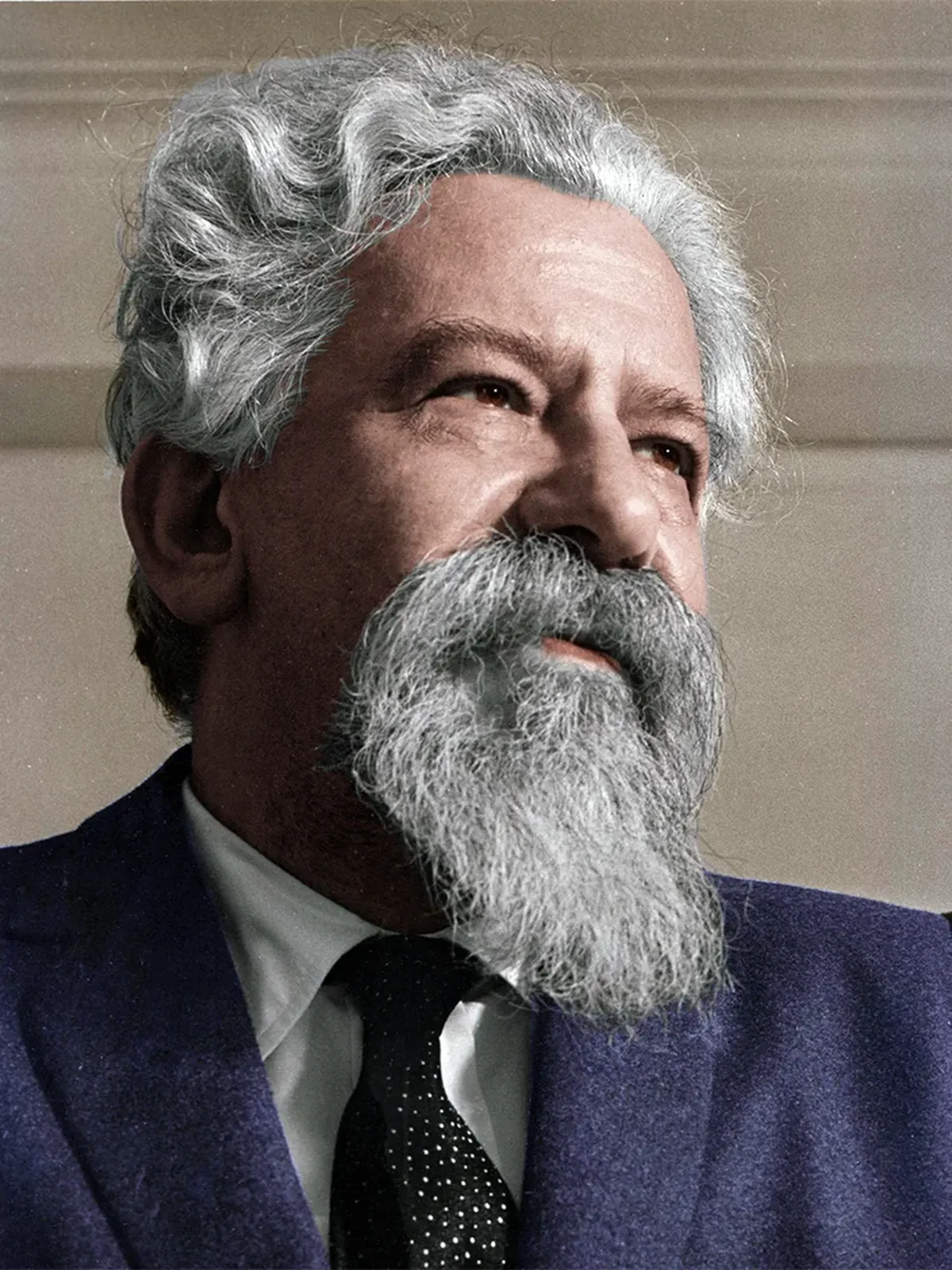
Abraham J. Heschel
Abraham J. Heschel (1907–1972) was a renowned Jewish theologian, philosopher, and activist whose profound writings on religion, ethics, and social justice have left a lasting impact on both Jewish thought and interfaith dialogue. Born in Warsaw, Poland, Heschel immigrated to the United States in 1940, escaping the turmoil of World War II. He became a prominent professor at the Jewish Theological Seminary in New York, where he taught until his death.
Heschel’s intellectual journey was deeply influenced by his Jewish heritage, his studies in European philosophy and theology, and his commitment to understanding the intersection of spirituality and human experience. He is perhaps best known for his emphasis on the importance of a personal relationship with God, the concept of “radical amazement” before the divine, and the need for religion to engage with social issues. Heschel believed that theology should not merely be an abstract academic discipline but a living practice that transforms individuals and society.
His most famous works include God in Search of Man, The Prophets, and Man Is Not Alone. In these books, Heschel explores the nature of God, the role of the prophet in Hebrew tradition, and the relationship between human beings and the divine. Heschel’s writing blends profound theological reflection with a deep sensitivity to the struggles of humanity, urging readers to live lives of justice, compassion, and holiness.
Heschel was also a passionate advocate for civil rights and social justice. He marched alongside Dr. Martin Luther King Jr. during the 1965 Selma to Montgomery march, and his writings on social responsibility continue to resonate today.
Abraham Heschel’s legacy as a scholar, spiritual leader, and activist remains a beacon for those seeking a faith that connects deeply with both the divine and the world’s suffering. His work continues to inspire those who wish to understand the depths of faith and the call to social action.


