Worship gives us a workable structure for life. The psalm says, “Jerusalem, well-built city, built as a place for worship! The city to which the tribes ascend, all God’s tribes go up to worship.” Jeru...
In most cities, statues are reserved for founders and the famous, but in Stockholm, Sweden, things are a bit different, at least in one place. Stockholm’s town hall stands as a masterpiece of architec...
In their excellent book, Invitation to a Journey , M. Robert Mulholland and Ruth Haley Barton describe the foundation of life as being spiritual in nature. This means we are constantly be “form...
Proverbs 4:23, 1 Samuel 15:22, Matthew 7:24-27, 1 Corinthians 3:11, Psalm 127:1
The Great Wall of China was an immense and costly project, built with tremendous effort and resources, designed to provide security and protection. Yet, within a few years of its completion, it was br...
The lesson that games can teach us is simple. Games aren’t appealing because they are fun, but because they are limited. Because they erect boundaries. Because we must accept their structures in order...
Contracts. We all have them, by the dozens. In business, government, and in our personal lives, contracts provide structure and order for relationships that are essential to all of life. Contracts tel...
In one generation, the place of Christianity within culture dramatically shifted as we experienced what theologians and sociologists of religion call the “death of Christendom.” Christendom isn’t Chri...
The ways that social structures and institutions systematically work against the interest of people of color is called institutional racism. Institutional racism and historic racism are not unrelated ...
Leviticus 25:10-12, Isaiah 58:6-7, Acts 2:44-45, Micah 6:8, Luke 4:18-19, Matthew 25:35-40, Acts 4:32-35, Romans 12:9-21, 1 John 3:17-18, 2 Corinthians 8:1-4
From the outside Calvary Church in Holland, Michigan, looks like a typical large church that many Americans attend. The church developed the typical way: it started small and then began to grow. As th...
The “world” of 1 John 2:15 doesn’t refer to the created order or to the blessings that come from living in a modern society, such as modern conveniences or medical and scientific advances. For God cre...
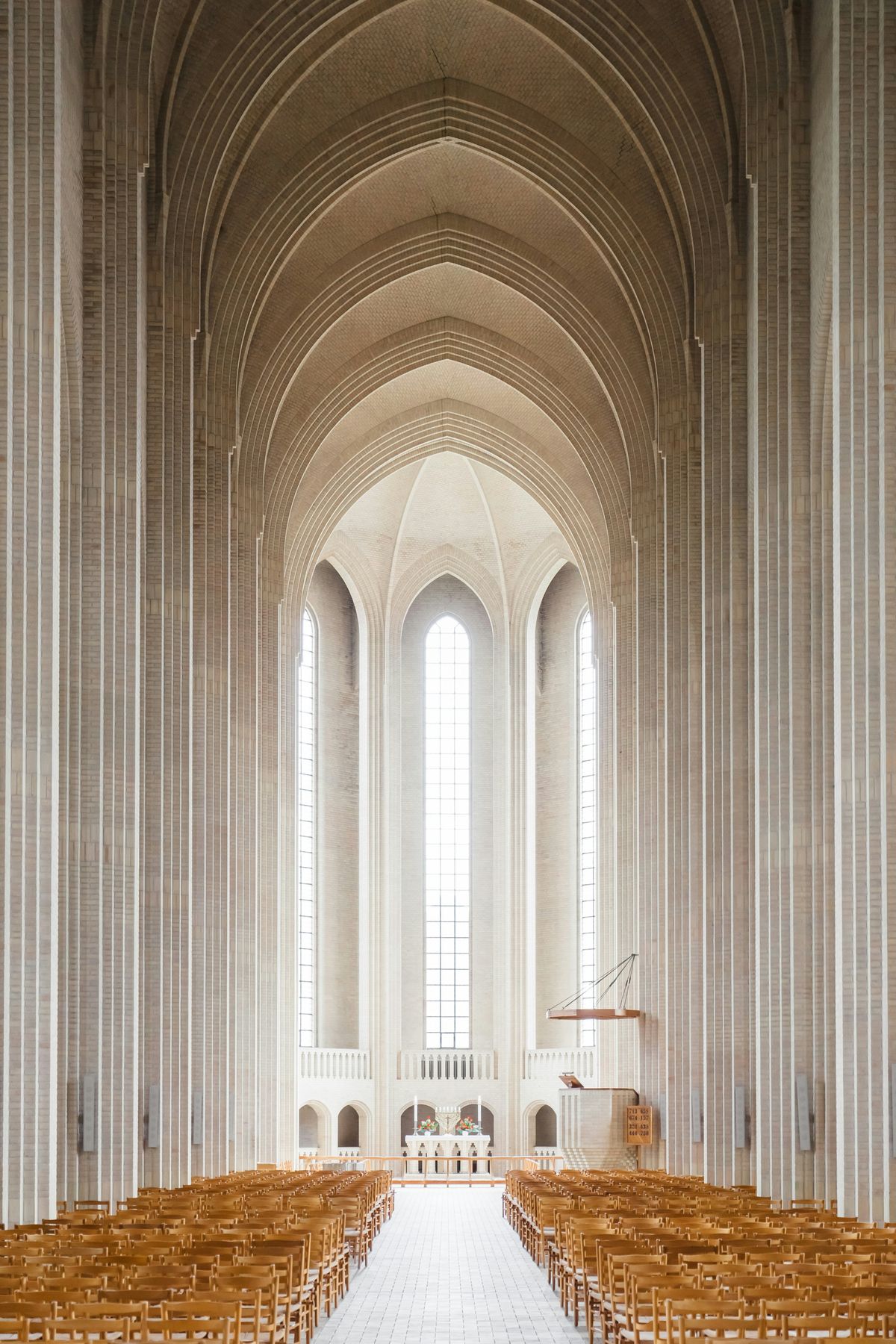
I was in London browsing one of the ubiquitous British tabloids and an advertisement for a new health club grabbed my attention. The picture was of a magnificent gothic church sanctuary that had been ...
“The Kilauea Volcano in Hawaii erupted on May 17, 2018, at 4:17 a.m., spewing lava more than a thousand feet in the air. Homes and other structures in the wake of the lava flow and the eruption’s rela...
In his excellent book, An Unhurried Life, Alan Fadling contrasts our overly busy lives with a vision of the kingdom from Isaiah chapter 61: Isaiah envisioned a kingdom in which those people in need ...
Years ago, during a vacation in New Hampshire, Jonathan and I climbed Mount Washington, which is notorious for erratic weather. It can change from sunny and warm to snowing in a few hours. The wind is...
As a study assistant to the Anglican pastor and writer John Stott during my early years as a believer, I witnessed John’s faithfulness in public and private, as a highly visible speaker and as a nearl...
I love watching young boys and girls build things with Legos. Their small, creative masterpieces cannot help but reflect their image-bearing nature and remind us we were all made to make things. When ...
Some of us are interested in religious studies because we are interested in people. People do religious things; they symbolize and ritualize their lives and desire to be in a community. What piqued my...
Why a story? We all think of our lives as stories, each with a main character (us) theme, and plot (interesteing so far, but as yet unfinished). We also love to hear stories about others and even abou...
When Tara and I learned we were pregnant for the first time, we went right out and bought a crib. You might have done the same. The act of selecting, purchasing, and assembling a crib is deeply cathar...
In his book, A Short History of Nearly Everything, author Bill Bryson details the complexity within the human body: No one really knows, but there may be as many as a million types of protein in the ...
When a person is confused and things refuse to fit together, she sometimes announces a need to get out of noise and turbulence, to get away from all the hassle and “get my head together.” When she suc...
The term patrilineal has to do with tracing ancestral descent (and therefore tribal affiliation and inheritance) through the male line. In Israel the possessions of a particular lineage were carefully...
Everything that is exists by and through and unto the relationship between God the Father and Jesus, his Son. One of the great teachers of the ancient church, St. Augustine, had a very helpful way of ...
Almost everything we do touches a relationship in some way. Just think about your day. Whether you’re at home or at work, driving your car, playing, exercising, shopping, vacationing, worshipping at c...
Shakespeare was right—a person’s life is made up of many acts. As a book writer, though, I prefer to see these acts as chapters. If you look back on your life, you’ll likely see them too. There is the...
The advantage that cities and traditional neighborhoods have over sprawling suburbs with respect to interdependence is that they allow people of a greater variety of ages to participate meaningfully i...
“Act” is a good word. Baptism and Communion are like mini-dramas. And we are not just in the audience; we are part of the cast. We do not look on from afar, merely learning information. We participate...
Maleness and femaleness is the fundamental way we carry our relational design. Interestingly, the English word sexuality comes from the Latin word sexus, which means “being divided, cut off, separated...
The French sociologist Pierre Bourdieu put it this way. Each of us has what he called a habitus: a set of dispositions to respond more or less spontaneously to the world in particular ways, without mu...
Edward T. Hall likened the effects of culture to an iceberg. Some aspects of a culture are overt, in clear view above the waterline, so to speak. But most are hidden deep below the surface, forming th...