Luke 14:12-14, Deuteronomy 10:19, Titus 1:8, Matthew 25:35, 1 Peter 4:9
Scripture calls us to offer a radical welcome to strangers, but we are not able to give what we do not have. Before we can love our neighbor, we must love and care for ourselves so we can have somethi...
The following article was originally written for the author’s denominational newsletter as part of the celebration of Asian Pacific American Heritage Month. It is meant to provide some insights into t...
One of the costliest requirements of Christlike love is Jesus’s call to “love your enemies and pray for those who persecute you” (Matt. 5: 44). What does this look like for Christians in today’s world...
Exodus 5:1-21, 1 Samuel 8:4-22, Isaiah 1:10-17 , Matthew 23:23-28 , Galatians 3:26-29, Psalm 146:3-9
One of the gravest dangers to the Christian faith is its wholesale appropriation of the larger culture. When this happens, the citizens of those places cannot recognize the difference between their cu...
Did you know that apartheid in South Africa was based in large part on theological doctrines that were formed at Stellenbosch University in the 1930s and 1940s? Isn’t that chilling? Many of the intell...
Oftentimes, when I encounter someone who makes me feel afraid, I instantly put up barriers. I put them up with my big words and opinions. I construct them to protect myself. Barriers make me feel righ...
While I was born much too late to be the legal property of a person in America, I have been the recipient of racism. When a classmate called me a racial epithet in my first year of college, I was deva...
“If there’s just one kind of folks, why can’t they get along with each other? If they’re all alike, why do they go out of their way to despise each other?”
Matthew 25:31-46, Hebrews 13:2, Matthew 8:19-20, Luke 9:57-58, John 14:2-3, Revelation 21:3
In her book Keeping Place: Reflections on the Meaning of Home , Jen Pollock Michel reflects on the nature of home in a transient age. In this short excerpt, Michel focuses on what life is like with...
Philippians 4:8, Exodus 32:, Ecclesiastes 12:13, Matthew 19:16-30, Proverbs 4:23, Romans 12:2, 1 John 2:15-17
Orwell feared we would become a captive culture. Huxley feared that we would become a trivial culture. . . . Orwell feared that what we hate will ruin us. Huxley feared that what we love will ruin us.
We used to hate and destroy one another and refused to associate with people of another race or country. Now, because of Christ, we live together with such people and pray for our enemies.
In order to justify colonialism, an idea like white supremacy was needed. The concept that whites were chosen by God and superior to people of color, who were less intelligent, less deserving, and sav...
There was a solemn article in the local paper seriously advocating systematic exterminating of the entire German nation as the only proper course after military victory: because, if you please, they a...
Matthew 25:40, Jeremiah 22:3, James 2:1, Psalm 82:3-4, Micah 6:8
Frederick Douglass describes how the evils of slavery and racism acts as a sap on the integrity of both our country and our faith in a God where there is neither Jew nor Greek, slave nor free: Fello...
Matthew 25:40, Leviticus 19:15, Galatians 3:28, James 2:8-9, Amos 5:24, Micah 6:8, Isaiah 1:17
When did the topic of justice become important to you?” Gideon Strauss posed that question to two dozen people crammed into our living room one fall evening in Swarthmore, Pennsylvania. Some of us wer...
Matthew 28:18-20, Acts 1:8, Acts 10:34-35, Galatians 3:28, Romans 1:16, John 4:21-24, Psalm 22:27-28
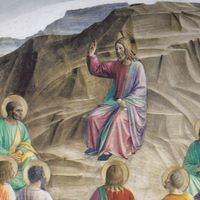
[Speaking of the early church] A cosmopolitan spirit grew, particularly in the cities, that transcended national barriers. Old tribal distinctions and identities were breaking down, leaving people rip...
If anything, there appears to be an inverse relationship between our growing obsession with the home as a totem object and the disintegration of families that has become the chief social phenomenon of...
Our hunger is the exile’s hunger, but it is also the first step in our homecoming. We hunger, and in doing so learn the shape of our emptiness is the world’s great emptiness in or to prepare room for ...
There was a time when adults were neatly categorized into one of two groups: you were either neurotic or psychotic. Psychotic meant that you were out of touch with reality and afraid; neurotic meant t...
As people seek out the social settings they prefer—as they choose the group that makes them feel the most comfortable—the nation grows more politically segregated—and the benefit that ought to come wi...
Across all barriers of land and language, wealth and poverty, knowledge and ignorance, we are one, created from the same dust, subject to the same laws, and destined for the same end. With this compas...
Former cultures, whatever their faults, understood the imperialistic nature of energy, especially of spiritual, erotic energy. For the most part, they feared energy, particularly sexual and religious ...
We may be “connected,” but we’re lonely, we’re isolated from each other, and we’ve become afraid of each other. That fear has produced acts of violence that are becoming all too common.
Matthew 6:14-15, Matthew 18:21-35, Ephesians 4:32, Colossians 3:13, John 8:10-11, Psalm 103:12, Isaiah 1:18
The pastor R.C. Sproul was studying in the Netherlands in the last 1960s and randomly struck up a conversation with a Dutch woman. The conversation was a common, enjoyable interaction, but when it was...
Christians in America must come to terms with how institutional racism has infected us. Few white persons in twenty-first-century America see themselves as racist. (Even fewer Asian, Latino, or Africa...
Matthew 7:1-2, John 7:24, Proverbs 3:5, Ecclesiastes 7:9
A man named Jack was driving on a dark country road one night when he got a flat tire. He saw a cabin in the woods and began to walk towards it. He told himself that the person who answered the door w...










![[Speaking of the early church] A](https://a-us.storyblok.com/f/1016915/1200x801/ed572a4861/the-early-church.jpg/m/200x200/smart)


![[Alienation is] “the state of mind that](https://images.unsplash.com/photo-1614613727148-5e3935cf4daf?ixid=M3w1NzU0OTZ8MHwxfHNlYXJjaHwxfHxMb25lbGluZXNzfGVufDF8Mnx8fDE3MTA1MzM1NzJ8MA&ixlib=rb-4.0.3&q=80&auto=compress&fit=crop&w=200&h=200)