Genesis 22:1-14 , Daniel 3:16-28 , Esther 4:14-16 , Philippians 1:20-24 , Luke 9:23-25 , Psalm 31:14-15
In Four Quartets , T. S. Eliot writes that “any action is a step to the block.” He means that our actions always draw us closer to death, and in that sense every action we take is a wager of our ...
Justification is a legal or forensic term, belonging to the law courts. Its opposite is condemnation. Both are the pronouncements of a judge. In a Christian context they are the alternative eschatolog...
As long as we continue to live as if we are what we do, what we have, and what other people think about us, we will be filled with judgments, opinions, evaluations, and condemnations. We will remain a...
With a graciousness and an understanding of human weakness that only God can exhibit, Jesus liberates us from alienation and self-condemnation and offers each of us a new possibility. He is the Savior...
To have Abraham-like faith brings blessing (v 9). The result of living by the law is that we are “under a curse” (v 10). This “curse” has two aspects. Theologically, anyone who says-. I can be saved b...
Proverbs 18:21, Genesis 3:1-6 , Numbers 13:30–14:4, James 3:5-10 , Matthew 12:36-37 , Psalm 141:3
The book of Proverbs is, in ways, a treatise on talk. I would summarize it this way: words give life; words bring death—you choose . What does this mean? It means you have never spoken a neutral ...
Hebrews 13:20, Genesis 1:26-28, Genesis 1:26, Genesis 3:14-19, Genesis 3:14, Genesis 8:20-9, Genesis 9:5-6, Genesis 12:1-3, Galatians 3:16, John 8:56-58, 2 Corinthians 3:7-9, Deuteronomy 30:1-10, Deuteronomy 30:1, 2 Samuel 7:4-17, Luke 1:31-33, Acts 1:6, Revelation 19:16, Matthew 26:28, Mark 14:24, Luke 22:20, Hebrews 8:8-12, Galatians 3:13-20
Eternal covenant, Heb 13:20—The redemptive covenant before time began, between the Father and the Son. By this covenant we have eternal redemption, an eternal peace from the ‘God of peace’, through th...
In his excellent book on the desert fathers, Where God Happens , former Archbishop of Canterbury Rowan Williams tells of an encounter between two monastic fathers. The first was Macarius, famous in...
Isaiah 9:2, 6-7, Isaiah 40:3-5, Luke 1:68-79, John 1:5, 9-14, Revelation 21:1-4, Romans 13:11-12
Is Advent a preparatory fast in preparation for the liturgical commemoration of the historical birth of Jesus in Bethlehem, or is Advent a season unto itself. A sacrament of the end of time begun in t...
If you read through G.K. Chesterton’s writings, it will not be long before you recognize the recurring theme of joy. Joy, Chesterton believed, ought to be a central experience of the one who realizes ...
Confession reminds us that none of us gather for worship because we are “pretty good people.” But we are new people, people marked by grace in spite of ourselves because of the work of Christ. Our com...
Did you follow the shaming of sorority girls that were caught on camera taking selfies during an Arizona Diamondbacks baseball game? The male television announcers bemoaned “every girl locked into the...
In the interior silence that contemplation opens, Merton recognizes his own complicity in the injustices of society. While the news-as-scoreboard model invites us to view ourselves as the “good guys” ...
A number of years ago I was discipling a young man who had recently been released from the state’s juvenile detention center. As a teenager he had been hooked on drugs, and he had resorted to stealing...
The book of Proverbs is, in ways, a treatise on talk. I would summarize it this way: words give life; words bring death—you choose. What does this mean? It means you have never spoken a neutral word i...
Let me first tell you what I mean by the word “blessing.” In Latin, to bless is benedicere. The word “benediction” that is used in many churches means literally: speaking (dictio) well (bene) or sayin...
Its [Romans] message is not that ‘man was born free, and everywhere he is in chains’, as Rousseau put it at the beginning of The Social Contract (1762); it is rather that human beings are born in sin ...
“God is against you,” Satan says. “He is not really for you. How can you believe He is for you when you see the things that are happening in your life?” “I have accusations I will bring against you b...
Colossians 2:13-14, 1 Corinthians 6:19-20, 1 Peter 1:18-19, Psalm 49:7-8, 2 Corinthians 5:15, John 8:36
Suppose I sell you a piece of commercial property on which I am already behind in my mortgage payments. You not only pay me a fair price for the property but also pay my overdue payments. Now the prop...
Roman citizens were exempt from crucifixion, except in extreme cases of treason. Cicero in one of his speeches condemned it as crudelissimum taeterrimumque supplicium, ‘a most cruel and disgusting pun...
Daniel 3:, Job 1:, Matthew 10:32-33, 2 Timothy 1:7, Psalm 31:24
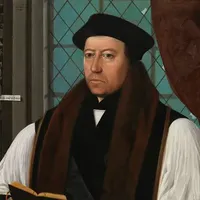
Thomas Cranmer (1489–1556), the archbishop of Canterbury from 1532 to 1556, played a pivotal role in the English Reformation. A key figure in Henry VIII’s break with the Roman Catholic Church, Cranmer...
Genesis 32:22-32, Exodus 5:1-21, 2 Samuel 12:1-14, Matthew 18:15-17, John 21:15-19, Psalm 141:5
The Latin term for confrontation means “to turn your face toward, to look at frontally.” It merely indicates that you are turning toward the relationship and the person. You are face-to-face, so to sp...
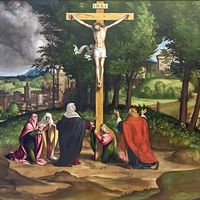
Exposed to public view like slabs of meat hung from a market stall, troublesome slaves were nailed to crosses…past. No death was more excruciating, more contemptible, than crucifixion. To be hung nake...
Leviticus 19:15, Proverbs 18:17, 1 Kings 3:9, Matthew 7:1–5, John 7:24, Psalm 141:5
At a recent gathering of seminary professors, one teacher reported that at his school the most damaging charge one student can lodge against another is that the person is being “judgmental.” He found ...
Daniel 3:16–18, 2 Chronicles 33:10–13 , Isaiah 50:7, Luke 22:61–62, Psalm 51:10–13 , 1 Peter 3:11-17
Facing imminent death, Thomas Cranmer—the Archbishop of Canterbury who crafted the foundational Book of Common Prayer for Anglican worship—succumbed to terror and signed a document renouncing hi...
Philippians 2:3-4, James 4:10, John 15:12, Colossians 3:14, Romans 12:12
Did you know that ever since 1811 (when someone who had defrauded the government anonymously sent $5 to Washington D.C.) the U.S. Treasury has operated a Conscience Fund? Since that time almost $3.5 m...
Since Jesus isn’t attached to the same things we are, he can take the God-view, which is about more than redeeming our individual lives. God means to redeem the world, which is going to require some m...
Think of a contract. Think perhaps of an employment contract or a memorandum of sale or an IOU. What you hold in your hand is a sheet of paper with a series of commitments written on it. This is what ...
To illustrate how the racial oppression of previous generations has benefited European Americans, we can look at the fate of Native Americans. When Europeans arrived in North America, Indians owned al...
When asked to recant of his writings, Luther replied, “Unless I am convinced by sacred Scripture or by evident reason, I cannot recant. For my conscience is held captive by the word of God and to act ...