We rationalize to make life with ourselves possible in a morally challenging world. Often the motivation for rationalization, though, is quite different. In recent decades, psychologists have argued c...
In The Sickness unto Death , Kierkegaard describes a “moment” familiar to all of us. It is the “little tiny transition from having understood to doing.” Here’s what he says about it: …if a person d...
We are all capable of believing things which we know to be untrue, and then, when we are finally proved wrong, impudently twisting the facts so as to show that we were right. Intellectually, it is pos...
There is a television show that has one of those beginnings that stick with you long after you’ve seen it. And it starts like this…A man, dressed like a cowboy enters an ultra sleek Miami club, lookin...
Jeremiah 17:9, Psalm 41:9, Proverbs 14:12, Matthew 23:27-28, Luke 12:2-3
To me one of the most terrifying scenes in all of literature is in Arthur Miller’s play Death of a Salesman . Willy Loman is a traveling salesman who feels that he is largely a failure. His self-pity...
When we observe evil, sinful behavior from a distance, the inclination is simply to see people as acting with malicious intent. We assume they are “bad people.” But often the motivations that lead to ...
Our rationality is not in charge at all. We’re kidding ourselves. Our rationality is the rider. The elephant goes where it wants. Our emotions and intuitions lead us. Instead of being guided by reason...
John 15:4-5, 1 John 3:18-19, Matthew 7:21, Romans 10:9-10, Hebrews 11:1, Galatians 2:20
I do not put much stock in "believing in God." The grammar of "belief" invites a far too rationalistic account of what it means to be a Christian. "Belief" implies propos...
Reason and emotion are not separate and opposed. Reason is nestled upon emotion and dependent upon it. Emotion assigns value to things, and reason can only make choices on the basis of those valuation...
Part of the suspicion of desire undoubtedly has to do precisely with the fact that it threatens a rational, controlled, and protected understanding of a mature human being.
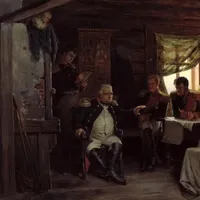
In this excellent little character study, Tolstoy describes the inner monologue of the character Pierre Bezuhov from War & Peace , who is able to justify and convince himself that a promise made ...
The more complicated the landscape, the more the wanderer relies on patience. The more confusing the scene, the more tolerant his outlook becomes. He not only has an awareness of his own ignorance, bu...
...Descartes described us to be: thinking things that are containers for ideas. What if that is actually only a small slice of who we are? And what if that’s not even the most important part? In the r...
Bumper stickers—and their counterparts on social media—make Simplicism seem virtuous: “Look at me! I’m a good and brave person for distilling this complex issue down to its essence and righteously tak...
Dissonance theory predicts that we will eventually (and conveniently) forget good arguments made by opponents just as we forget silly arguments we made ourselves. . . . It’s motivated by our need to b...
The disappearance of moral knowledge, in the manner reviewed, is not an expression of truth rationally secured, but is the outcome of an historical drift, with no rational justification at all or only...
We will often stop at nothing to avoid cognitive dissonance. We will twist logic, bend reason, conveniently forget facts, invent new stories, even destroy relationships—all in the name of preserving o...
The answer to decision-making is not putting the Lord to the test by ascribing arbitrary significance to events in his providence ... God has not authorized us to make oracles of events.






![[The decay of Logic results from an]](https://images.unsplash.com/photo-1709399610754-921b7a9ef3b7?ixid=M3w1NzU0OTZ8MHwxfHNlYXJjaHw0NXx8bG9naWN8ZW58MHwwfHx8MTcxMjA3NTI4Mnww&ixlib=rb-4.0.3&q=80&auto=compress&fit=crop&w=200&h=200)