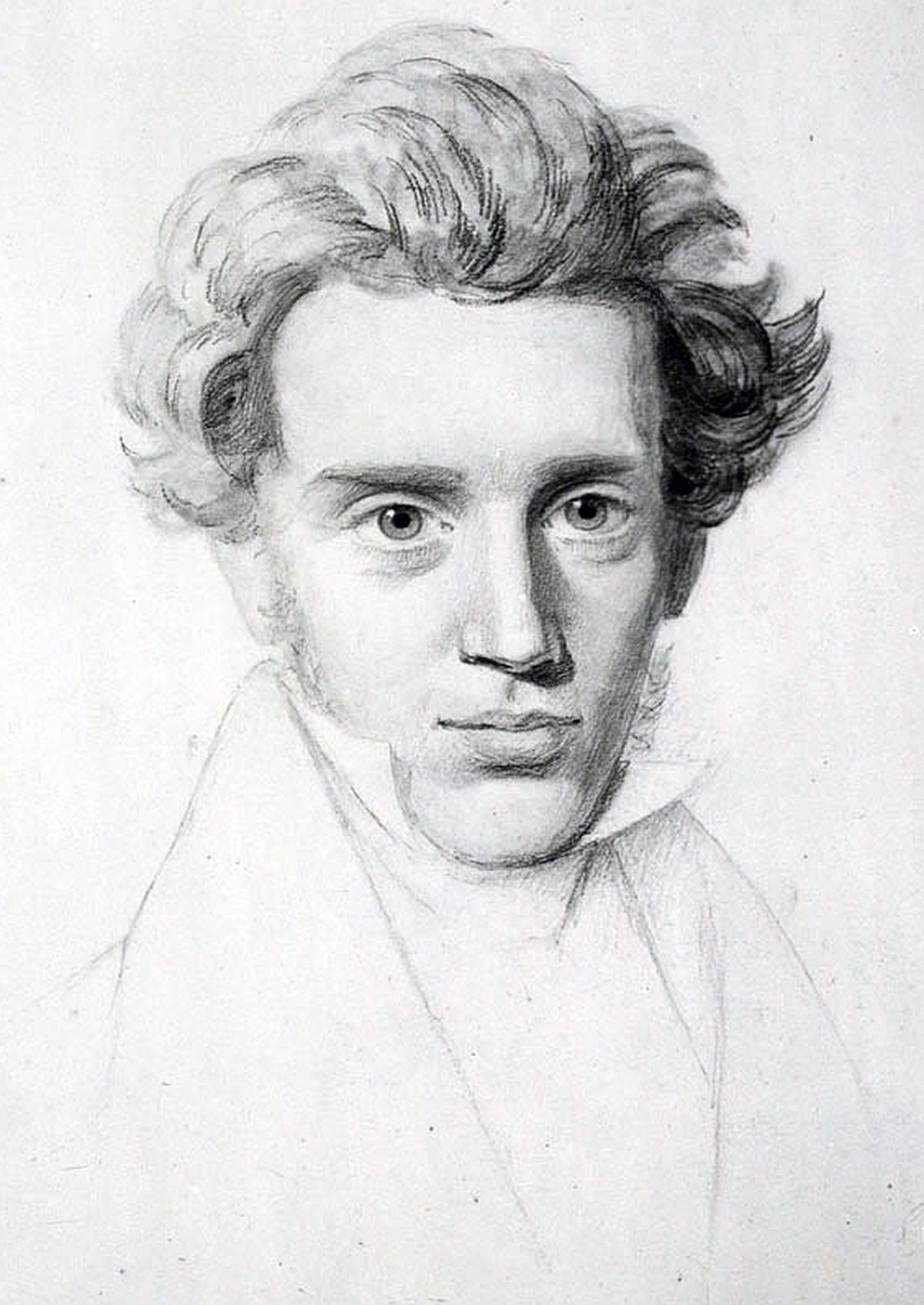
Søren Kierkegaard
Søren Kierkegaard (1813–1855) was a Danish philosopher, theologian, and writer, often regarded as the father of existentialism. His works laid the foundation for much of modern existential and Christian thought, exploring deep themes of faith, individuality, and the human condition. Living during a time of growing secularism and societal change, Kierkegaard challenged both the religious establishment and the broader societal norms of his era. His philosophy stressed the importance of personal choice, subjectivity, and the necessity of making an authentic commitment to one’s faith.
Kierkegaard's work is particularly known for its exploration of the individual's relationship with God. He was critical of institutionalized religion, arguing that faith should not be reduced to mere rituals or societal conventions. Instead, he called for a deeply personal, passionate relationship with God, one that requires an individual to confront the existential questions of life and embrace the "leap of faith." His writing on these topics emphasizes that true Christian faith involves a commitment that goes beyond rational understanding and human reason.
His most famous works, Fear and Trembling and Either/Or, examine existential dilemmas such as anxiety, despair, and the need for an individual to make choices that reflect their personal commitment to God. Kierkegaard's concept of "the leap of faith" underscores the notion that belief in God requires a decision that transcends reason and rests on trust.
Though often misunderstood during his lifetime, Kierkegaard's ideas have had a profound and lasting impact on both philosophy and Christian theology. His insights into the nature of existence, freedom, and faith have shaped existentialism and continue to influence contemporary discussions on the human experience and spiritual growth. His life and thought challenge individuals to confront their deepest fears, desires, and beliefs with authenticity and courage.