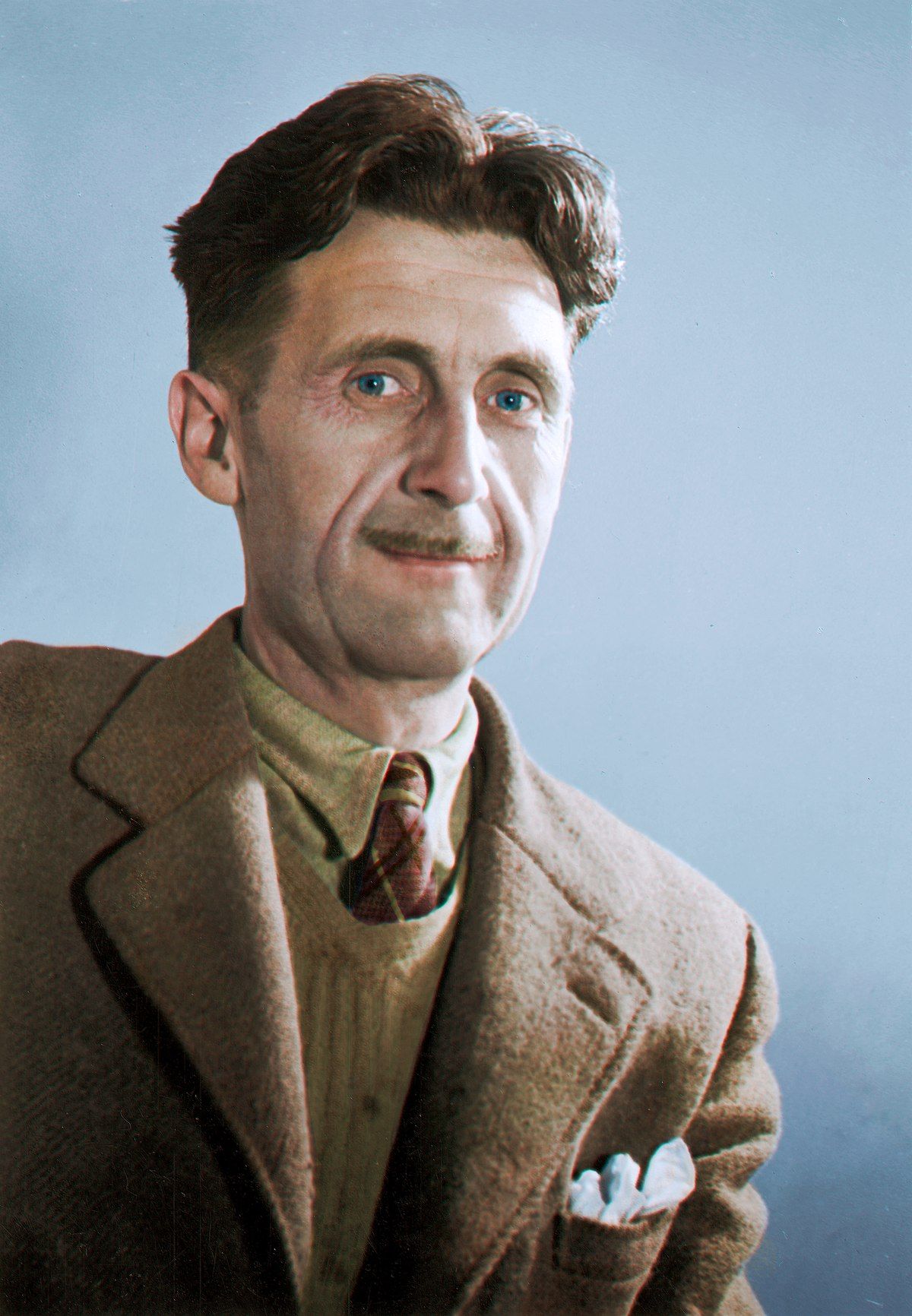
George Orwell
George Orwell (1903–1950), born Eric Arthur Blair, was a British author, journalist, and essayist renowned for his sharp critiques of totalitarianism, social injustice, and political oppression. His works, including Animal Farm and 1984, remain some of the most influential and widely read texts of the 20th century.
Born in Motihari, British India, Orwell was educated in England, attending Eton College on a scholarship. He began his career in the British Imperial Police in Burma, an experience that deepened his disdain for colonialism and inspired his first novel, Burmese Days (1934). After resigning, he lived in poverty in London and Paris, experiences he chronicled in his memoir Down and Out in Paris and London (1933).
Orwell’s political and social awareness grew during the 1930s. He traveled to Spain to fight in the Spanish Civil War, siding with the anti-fascist forces. This experience, detailed in Homage to Catalonia (1938), profoundly shaped his views on totalitarian regimes and the betrayal of revolutionary ideals.
His allegorical novella Animal Farm (1945) satirized the corruption of socialist ideals under Stalinism, and his dystopian masterpiece 1984 (1949) warned against the dangers of surveillance, propaganda, and totalitarianism. These works solidified Orwell’s reputation as one of the 20th century’s most important political thinkers and writers.
Orwell was also a prolific essayist, tackling subjects ranging from language and politics to cultural criticism. Essays like "Politics and the English Language" and "Shooting an Elephant" demonstrate his clarity of thought and commitment to truth.
Plagued by ill health throughout his life, Orwell died of tuberculosis at the age of 46. His legacy endures through his incisive writing, which continues to provoke thought and spark discussions about freedom, power, and the human condition.