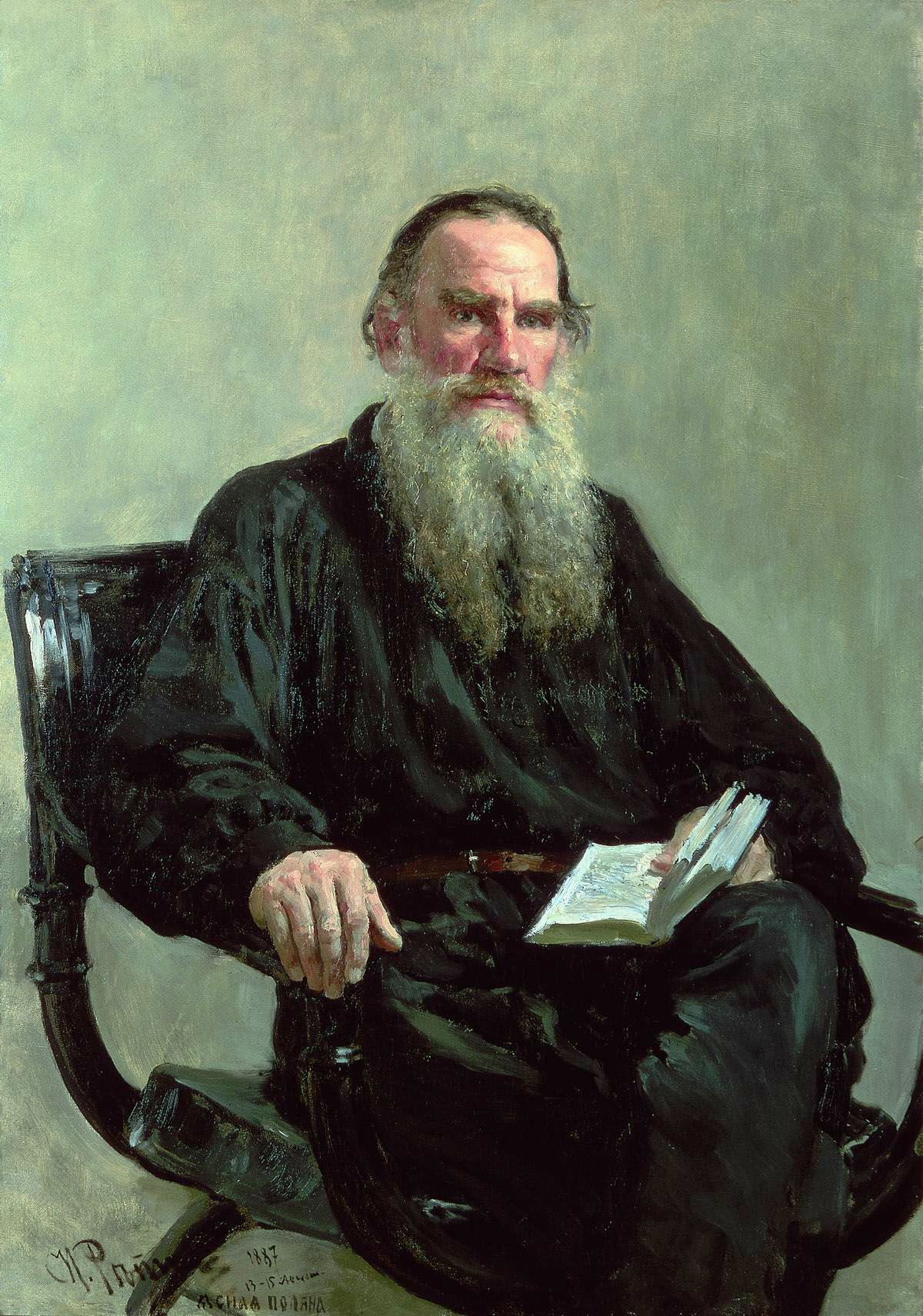
Leo Tolstoy
Leo Tolstoy (1828–1910) was a Russian novelist, philosopher, and moral thinker whose works are among the most celebrated in world literature. Born into an aristocratic family in Yasnaya Polyana, Russia, Tolstoy experienced a privileged yet tumultuous upbringing, marked by the early loss of his parents. He pursued studies in law and languages at Kazan University but left without completing his degree, preferring to educate himself through extensive reading and travel.
Tolstoy’s early literary success came with Childhood, Boyhood, and Youth, semi-autobiographical works that showcased his emerging talent. However, it was his monumental novels War and Peace (1869) and Anna Karenina (1877) that cemented his reputation as one of the greatest writers of all time. These epic works delve deeply into human nature, morality, love, and the impact of historical events on individual lives, blending detailed realism with profound philosophical insight.
In midlife, Tolstoy underwent a spiritual crisis, leading him to reject his aristocratic lifestyle and embrace a life of simplicity and moral rigor. He became deeply interested in Christian ethics, particularly the teachings of Jesus in the Sermon on the Mount, which he interpreted as a call to nonviolence, love, and humility. These beliefs inspired his later works, such as The Kingdom of God Is Within You (1894), which influenced figures like Mahatma Gandhi and Martin Luther King Jr.
Tolstoy’s advocacy for pacifism, social reform, and spiritual renewal brought him admiration worldwide but also conflict with the Russian Orthodox Church and the government. Despite his fame, he spent his later years seeking spiritual clarity, often at odds with his family and society.
Tolstoy’s legacy endures as a literary genius and a moral visionary whose exploration of human existence continues to inspire readers and thinkers around the world.










![[A good host treats his guest so] that](https://a-us.storyblok.com/f/1016915/5760x3840/1a17969656/pexels-andrew-neel-5840868.jpg/m/200x200/smart)
