Galatians 6:9, John 3:8, Ecclesiastes 11:5, Isaiah 55:10-11, John 6:44
Writing about ministering to postmodern skeptics, Don Everts and Doug Schaupp share a helpful insight into the mystery of God's movement: The first lesson they have taught us about the path to f...
Modernity slowly weakened spirituality, by design and accident, in favor of commerce; it downplayed silence and mere being in favor of noise and constant action. The reason we live in a culture increa...
In the land whose founding metaphor was the mutuality of John Winthrop’s seventeenth-century vision of a “city set on a hill,” we live more and more in estranged, hostile, exclusive enclaves, linked o...
Exodus 24:15–18, 1 Kings 19:9–12, Isaiah 30:15, Mark 1:35, Luke 5:15–16, Psalm 2:1–2
Recently a professor shared with me a college student’s reflections in response to my earlier writings on solitude and silence: I was not born into a world relatively unaffected by technology lik...
Our 24/7 culture conveniently provides every good and service we want, when we want, how we want. Our time – saving devices, technological conveniences, and cheap mobility have seemingly made life muc...
In this excerpt, author David Zahl challenges the common belief that religion is “in decline.” He argues that while Westerners, particularly younger generations, may be distancing themselves from the ...
In 1889, the French novelist Paul Bourget penned The Disciple , where he depicted the life of a renowned philosopher and psychologist, whose existence was marked by a seemingly monotonous routine...
We just philosophize, complain of boredom, or drink vodka. It's so clear, you see, that if we're to begin living in the present, we must first of all redeem our past and then be done with it f...
The biggest deception of our digital age may be the lie that says we can be omni-competent, omni-informed, and omni-present. . . . We must choose our absence, our inability, and our ignorance—and choo...
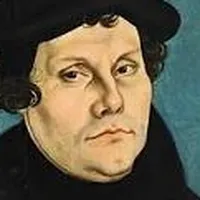
Noteworthy in this regard is the contribution of the Reformers, particularly Martin Luther, though John Calvin’s contribution is also very significant. Both called for a spirituality in the world that...
Anti-Intellectualism has been a problem in the church for some time now. Consider the words of the 17th century English clergyman Joseph Glanvill, who had this to say about the role of reason in faith...
1 Samuel 3:1-10, Ecclesiastes 12:1 , Proverbs 2:1-11, Mark 10:17-22 , 1 Timothy 4:12 , Psalm 119:9-11
I have been moved to a different course of action, however, inspired largely by my daily exposure to college students in a great university during the course of a preaching and teaching ministry that ...
Like-minded, homogeneous groups squelch dissent, grow more extreme in their thinking, and ignore evidence that their positions are wrong. As a result, we now live in a giant feedback loop, hearing our...
The blunt fact is that America's grand promotion of debt-leveraged consumerism has stood Max Weber's famous thesis about the rise of capitalism on its head. It has scorned the early-American s...
We cannot deal with industrialism or unemployment unless we lift work out of the economic, political and social spheres and consider it also in terms of the work's worth and the love of the work, ...
Exodus 5:1–2, 1 Kings 18:21–39, Daniel 3:16–18, Matthew 5:14–16, Acts 4:19–20, Psalm 2:1–2, 10–12
Most secularists are too politically savvy to attack religion directly or to debunk it as false. So what do they do? They consign religion to the value sphere—which takes it out of the realm of true a...
Ministers run the awful risk . . . of ceasing to be witnesses to the presence in their own lives — let alone in the lives of the people they are trying to minister to — of a living God who transcends ...
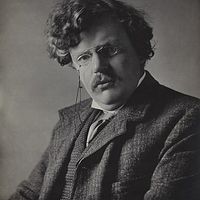
G. K. Chesterton was well-known (and iconoclastic) in his defense of tradition in a time when progress was all the rage in Western Europe- in technology, in the sciences, in philosophy. Chesterton, on...
An old joke can sum up the failure nicely: It’s said that Thomas Aquinas was once brought into a great city where he was to meet the pope. He saw huge churches, clerics in ornate garb, and great armie...
We were created for goodness and perfection. That’s why we innovate, progress, and change. But if our progress loses its purpose, it cannibalizes our humanity, leaving us distracted and disoriented.
Carl Jung, one of the early pioneers of modern psychology, wrote this from his years of experience as a therapist: The acceptance of oneself is the essence of the moral problem and the epitome of ...
Sabbath is that ancient idea and practice of intentional rest that has long been discarded by much of the church and our world. Sabbath is not new. Sabbath is just new to us. Historically, Christians ...
Genesis 3:1-24, Isaiah 6:1-8, Genesis 50:15-21, John 8:1-11, Luke 15:11-32, Psalm 51:1-17
In Guilt and Grace , Swiss physician and Christian, Paul Tournier, writes… I cannot study this very serious problem of guilt with you without raising the very obvious and tragic fact that rel...
Shalom is shattered by sin, by the intrusion of a lie, a distortion of the truth that mars the pleasure of being naked, transparent, trusting and true.
Ecclesiastes 7:10, Colossians 2:8, Matthew 9:17, 1 Thessalonians 5:21, Romans 12:2, Mark 7:8-9, Isaiah 43:19
It’s funny how sometimes members of the church can associate anything new with “heresy.” We often make the mistake of confusing technological innovations or scientific discoveries for changes to the g...
Are these hyperscheduled, overactive individuals really creating anything new? Are they guilty of passion in any way? Do they have a new vision for their government? For their community? Or for themse...
Isaiah 1:13-17, 1 Samuel 8:19-20 , Hosea 4:6, Romans 12:2, Matthew 23:27-28, Psalm 78:5-8
By failing to come to grips with how cultural dysfunctions deeply impact the health of the church, our leaders will continue to fail to discern an essential reality concerning the nature of change: Cu...