John 14:26, 2 Peter 1:12-13, Philippians 4:8, Luke 2:19, Proverbs 2:1-5
Memory researchers reveal that memory and creativity are linked historically. The Latin root inventio is the basis for two words in our modern English vocabulary: inventory and invention. And to ...
Ecclesiastes 7:10, Colossians 2:8, Matthew 9:17, 1 Thessalonians 5:21, Romans 12:2, Mark 7:8-9, Isaiah 43:19
It’s funny how sometimes members of the church can associate anything new with “heresy.” We often make the mistake of confusing technological innovations or scientific discoveries for changes to the g...
Here is the uncomfortable truth: Humans run to a much slower evolutionary clock than our inventions. To use an engineering term, we are the “gating factor” that keeps a process from running faster. It...
Did you know that the first group of people to use clocks were Christian monks? Monks desired the ability to pray around a rigorous and exact prayer schedule. Benedict of Nursia, the great architect o...
Sir Alexander Fleming (1881–1955), the British microbiologist and co-recipient of the 1945 Nobel Prize for Medicine for the discovery of penicillin, often credited his breakthrough to a fortunate acci...
According to legend, Archimedes had his most famous epiphany while stepping into a tub. As he stepped into the bath, he saw that the level of the water rose proportional to the amount of his body imme...
In 1918, a chemical-fueled fire destroyed the inventor Thomas Edison’s factory in West Orange, New Jersey.. The flames consumed much of his life’s work, causing over two million dollars in damage. Yet...
“Computers in the future may weigh no more than 1.5 tons.” “Popular Mechanics,” forecasting the relentless march ofscience, 1949 “I think there is a world market for maybe five computers.” Thomas Wat...
Have you ever heard of the forensic science theory known as Locard’s Exchange Principle? Named after the "Sherlock Holmes of France," the French criminologist Emile Locard, this theory sugge...
Now, technology is everywhere. I don’t mean just glowing screens and digital devices; I mean the whole apparatus of “easy everywhere” that has come into existence in just over the span of one human li...
Galileo Gallilei was a remarkable individual with a variety of talents, which he utilized effectively throughout his life. One day, while observing a swinging lamp in the cathedral at Pisa, he made a ...
Jesus’ first followers were at the forefront of a new kind of textual technology. From quite early on they used the codex, with sheets stuck together to comprise something like a modern book, rather t...
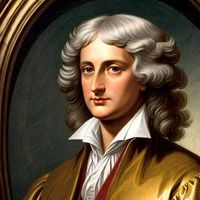
Sir Isaac Newton had a perfectly scaled down replica of the then known solar system built for his studies. A large golden ball represented the sun at the center, and the known planets revolved around ...
Sir Isaac Newton was one of the great scientists of all time. Most men of science today agree that his great book Principia is the greatest scientific book ever written. Yet of his achievemen...
Fifty years ago French sociologist/theologian Jacques Ellul warned that technology, in spite of its many lauded gifts, also presented great dangers. Its most important threat was its development into ...
When the Venetian botanist Prospero Alpini introduced the use of coffee to Europe from Egypt, the Vatican advocated against its infernal influence. That is, until Pope Clement VIII tried the foreign b...
In the crypt of the Capitol, there hangs a bronze plaque commemorating the inventor of telegraphy, Samuel Morse…In 1825, Morse returned to Washington to paint a portrait of the Marquis de Lafayette, t...
One of the many technological transformations of the twentieth century took place right on our dinner plates. Because of its cheapness and convenience, most Americans quickly accepted new ways of eati...
Charles Babbage (1792-1871) was a British mathematician and inventor known for his enjoyment of talking. At one particular dinner, Thomas Carlyle, the Scottish polymath was going on and on about the v...
In 1991, a yet-to-be-identified flea market enthusiast discovered a simple picture frame to his liking. Securing the purchase, the shopper returned home only to discover an ancient document hiding inc...
In 1867, Swedish chemist Alfred Nobel awoke one morning to read his own obituary in the local paper: “Alfred Nobel, the inventor of dynamite, who died yesterday, devised a way for more people to be ki...
The current understanding of the physical sciences, which contrasts sharply with the strictly mechanical perspectives prevalent in earlier centuries, aligns closely with the New Testament’s portrayal ...
We all know our world has sped up to a frenetic pace. We feel it in our bones, not to mention on the freeway. But it hasn’t always been this way. Let me nerd out on you for a few minutes just to show...
Here is the heart of the paradox: Technology is a brilliant, praiseworthy expression of human creativity and cultivation of the world. But it is at best neutral in actually forming human beings who ca...
Jesus also spent time—decades even—building stuff. Jesus was a tradesman. He is called a tekton (Mark 6:3), a builder who used his hands. God came to earth and apparently thought it worth his while to...
As a baby, Albert Einstein caused his parents some concern. His head seemed disproportionately large, and he did not start speaking until he was three. As a young man, his career faced setbacks, in...
Do any of you know the name of the inventor of dynamite? It might sound familiar once you hear it, it’s Alfred Nobel. In 1867, Nobel, Alfred Nobel, who was a Swedish chemist invented a new high explos...
In the land whose founding metaphor was the mutuality of John Winthrop’s seventeenth-century vision of a “city set on a hill,” we live more and more in estranged, hostile, exclusive enclaves, linked o...
A businessman well known for his ruthlessness once announced to writer Mark Twain, “Before I die I mean to make a pilgrimage to the Holy Land. I will climb Mount Sinai and read the 10 Commandments alo...
Find the room where your family spends the most time and ruthlessly eliminate the things that ask little of you and develop little in you. Move the TV to a less central location—and ideally a less com...