We rationalize to make life with ourselves possible in a morally challenging world. Often the motivation for rationalization, though, is quite different. In recent decades, psychologists have argued c...
In The Sickness unto Death , Kierkegaard describes a “moment” familiar to all of us. It is the “little tiny transition from having understood to doing.” Here’s what he says about it: …if a person d...
There is a television show that has one of those beginnings that stick with you long after you’ve seen it. And it starts like this…A man, dressed like a cowboy enters an ultra sleek Miami club, lookin...
Jeremiah 17:9, Psalm 41:9, Proverbs 14:12, Matthew 23:27-28, Luke 12:2-3
To me one of the most terrifying scenes in all of literature is in Arthur Miller’s play Death of a Salesman . Willy Loman is a traveling salesman who feels that he is largely a failure. His self-pity...
When we observe evil, sinful behavior from a distance, the inclination is simply to see people as acting with malicious intent. We assume they are “bad people.” But often the motivations that lead to ...
Our rationality is not in charge at all. We’re kidding ourselves. Our rationality is the rider. The elephant goes where it wants. Our emotions and intuitions lead us. Instead of being guided by reason...
Reason and emotion are not separate and opposed. Reason is nestled upon emotion and dependent upon it. Emotion assigns value to things, and reason can only make choices on the basis of those valuation...
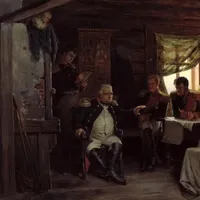
In this excellent little character study, Tolstoy describes the inner monologue of the character Pierre Bezuhov from War & Peace , who is able to justify and convince himself that a promise made ...
The more complicated the landscape, the more the wanderer relies on patience. The more confusing the scene, the more tolerant his outlook becomes. He not only has an awareness of his own ignorance, bu...
Bumper stickers—and their counterparts on social media—make Simplicism seem virtuous: “Look at me! I’m a good and brave person for distilling this complex issue down to its essence and righteously tak...
Genesis 15:1-6, Exodus 14:10-14, Job 1:42, Matthew 14:22-33, Psalm 23:
We should aim for rational confidence in these sorts of pursuits because certainty is a mere will-o’-the-wisp. Finite minds simply can’t pull it off. Though the distinction between aiming at certainty...
Exodus 32:1-6 , 1 Samuel 4:3-10, Isaiah 40:18-25, Matthew 16:13-20, Acts 5:1-11 , Psalm 115:4-8
A. W. Tozer once wrote, Left to ourselves we tend immediately to reduce God to manageable terms. We want to get Him where we can use Him, or at least know where He is when we need Him. We want a ...
In his book The Allure of Gentleness , Dallas Willard includes a thought-provoking excerpt from Richard Robinson, a prominent atheist thinker from the mid-20th century. In his work An Atheist’...
Exodus 1:15–21, Daniel 3:16–18 , 1 Kings 3:16–28 , Matthew 4:1–11, Galatians 1:6–10, Psalm 73:
Pragmatism may be defined simply as the approach to reality that defines truth as “that which works.” The pragmatist is concerned about results, and the results determine the truth. The problem with t...
If I were making a list of benefits like the one Mike McKinley imagines, only this time using the devil’s actual logic, it might look more like this: Experience the excitement of new romance. Get th...
In comparison to other societies, Americans and other North Atlantic peoples are naturalistic. Non-Western peoples are frequently concerned about the activities of supernatural beings . . . The wide-r...
1 Kings 3:16-28, Micah 6:8, Proverbs 3:5-7, Matthew 22:15-22 , James 1:5 , Psalm 119:105
Richard Mouw, the former president of Fuller Seminary and a professor of philosophy, shares an amusing anecdote from a lecture by the esteemed Catholic ethicist Charles Curran. During his talk, Curran...
To believe that you have already reached perfect sanctification, R. C. Sproul says you must do one of two things: 1. “reduce the demands of God’s law to such a low level that they can obey them” or 2....
Prudence is a form of wisdom. The ancients distinguished between two kinds of wisdom: speculative wisdom (sophia), related to the world of abstract ideas, and practical wisdom (prudentia), related to ...
Why do any of us get upset or tense when confronted? Why do any of us activate our inner lawyer and rise to our own defense? Why do any of us turn the tables and remind the other person that we are no...
The word righteous comes from the old Norse word rettviss and the old English word rihtwis, both of which mean “just, upright, virtuous.” This meaning has been carried into the modern English words ri...
When we look for larger, broader, more sustainable analyses of evil, we find of course that the major worldviews have all had ways of addressing it. The Buddhist says that the present world is an illu...
I have a neighbor who is obsessively neat. He lives on ten forested acres, and every time he drove up his long, winding driveway, the disorderly dead branches on the Ponderosa pine trees bothered him....
In an attempt to engage in critical thinking, scholars suggest asking whether our opinions are true by simply asking if the opposite could be true. This practice (I’m not joking) is named after on an ...
Luke 16:13, Matthew 6:21, 1 Corinthians 14:33, 2 Corinthians 5:17, Titus 2:11-12, 1 Peter 1:14-16
Less is more. Coined by Robert Browning and popularized by the German-born American architect Ludwig Mies van der Rohe, nothing could be further from the literal truth. But when people use this exp...
1 Corinthians 13:2, James 2:19-20, 1 Corinthians 8:1-2, Ecclesiastes 1:18, 1 Corinthians 2:5, Philippians 3:10, Matthew 7:21, 24-27, James 1:22
The Oxford scholar and apologist C. S. Lewis... once closed a lecture to a group of apologists like this: I have found that nothing is more dangerous to one’s own faith than the work of an apologis...
Those who give, receive back in turn. By spending ourselves for others’ well-being, we enhance our own standing. In letting go of some of what we own, we better secure our own lives. By giving ourselv...
There are few words in any language that can equal dikaiosis for theological depth and resonance. It has been at the center of scholarly debate for centuries. Known largely as “justification,” it is s...
Alvin Plantinga, the Christian philosopher, endorses a view inspired by Calvin and Aquinas, against which he anticipates the objection that the view is "fundamentalist. But isn’t all this just ...
A good story goes beyond just describing what actually happened. It tells us about how the world works more broadly, in ways that pertain to things that didn’t actually happen or at least haven’t happ...









![The Devils Logic [Part 2 of 2]](https://images.unsplash.com/photo-1635612717838-be24c0a2a424?ixid=M3w1NzU0OTZ8MHwxfHNlYXJjaHw1fHwlMjBuZXclMjByb21hbmNlfGVufDB8MHx8fDE3NTUzODM1MzJ8MA&ixlib=rb-4.1.0&q=80&auto=compress&fit=crop&w=200&h=200)