I know most Americans today do not worship Baal, but when I look at the church in America, I fear that we have our own Baals that demand our worship. I see so many people bowing down before prosperity...
Genesis 16:, 2 Samuel 9:, Jonah 3:4 , Luke 7:36-50, Matthew 9:9-13 , Psalm 146:7-9
In his book Breaking the Rules , Fil Anderson talks about the scandalous reputation of Jesus: He breaks all social etiquette in relating to people. He acknowledges no barriers or human divisions....
Exodus 18:13–27, Ecclesiastes 2:22–23 , Isaiah 40:28–31 , Luke 10:38–42, Matthew 11:28–30, Psalm 127:1–2
The picture shows cartoon villain Cruella de Vil, bloodshot eyes staring straight ahead, hands clutching the wheel of her infamous coupe, black-and-white hair waving wildly in the wind, oversi...
Since Jesus isn’t attached to the same things we are, he can take the God-view, which is about more than redeeming our individual lives. God means to redeem the world, which is going to require some m...
In Paul’s day the church quarreled over the Jewish law and over genealogies, over meat sacrificed to idols and sabbath practices, and over favoritism shown to the rich patrons and negligence shown to ...
Desegregation was one of the big goals of the civil rights movement. “Separate but equal” in the South became “separate and unequal.” The disparities were in things as small as water fountains and as ...
Leviticus 13:45-46, Isaiah 53:3-5, 2 Samuel 9:3, 6-7, Mark 1:40-42, Luke 7:37-38, John 20:27
Sociologist Erving Goffman wrote in his classic study Stigma: Notes on the Management of Spoiled Identity that the term stigma originated with the ancient Greeks, roughly during Jesus’ tim...
1 Samuel 16:7, Micah 6:8, Proverbs 22:2 , James 2:1-4, Luke 14:12-14 , Psalm 146:3-7
Impostors draw their identity not only from achievements but from interpersonal relationships. They want to stand well with people of prominence because that enhances a person’s résumé and sense of se...
Romans 12:16, John 13:14-15, Luke 6:20-21, Matthew 7:12, Proverbs 22:2
I read George Orwell’s book about class and working conditions in early-twentieth-century England, The Road to Wigan Pier . The book’s most famous passage considers smell: Here you come to the...
Culture, like the air we breathe, is a powerful force that cannot be seen but felt. In this short excerpt, the British writer George Orwell describes in The Road to Wigan Pier how his education includ...
One of the things that is interesting about Lloyd-Jones’s testimony is that he was a royal physician when he became a Christian; he worked for Lord Horder, the physician to the royal family. If he had...
Did you know that the history of the word “fellowship,” is, rather simply, a relationship among fellows? The idea of a fellowship being that two or more people have been bonded together in some signif...
While the second example is a bit dated (Titanic is over approaching its third decade in circulation!) the logic holds and can be applied to a variety of films set in a historical context: I think of...
…I started reading The Kindness of God by Catholic theologian and philosopher Janet Soskice. In her examination of the etymology of the word kindness, Soskice helped me see it for the first time as a ...
Truth be told, whether we realize it or not, we all harbor romantic notions of aristocracy. Though we claim equality as a cultural value, there is a part of us that dreams of leisure, luxury, comfort,...
Perhaps there is no object more desired than a house in America. Meghan Daum writes in her hilarious and poignant book Life Would Be Perfect If I Lived in That House, “There is no object of desire qui...
So if we want to get the church right, we have to learn to see it as a salad in a bowl, made the Right Way of course. For a good salad is a fellowship of different tastes, all mixed together with the ...
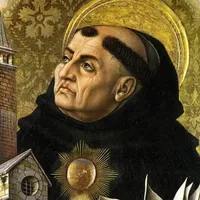
Of the medieval church’s many intellectual leaders, none has had more influence than the philosophical theologian Thomas Aquinas. He was born to a noble family near Naples, Italy, and joined the Domin...
One evening after a class in seminary, guest lecturer and Vineyard pastor John Wimber offered to have a prayer session for anyone in the class who needed prayer. Even though I was a student, I was alr...
One evening after a class in seminary, guest lecturer and Vineyard pastor John Wimber offered to have a prayer session for anyone in the class who needed prayer. Even though I was a student, I was alr...
No writer has had a greater impact on my understanding of cultural identity than Dr. Beverly Tatum. …When introducing cultural identity (or racial identity, a term she uses synonymously), Tatum tells...
My first conscious experience of hearing the voice of Jesus occurred when I was a college student. It grew out of a period of genuine frustration. Because of my poor academic training and a less-than-...
In her book, Grateful: The Subversive Practice of Giving Thanks , Diana Butler Bass provides an insightful reflection on how Zaccheaus rose to become chief tax collector of Jericho: Since Zacchaeu...
How much does a world-class violinist make? Well, that depends on how he markets himself. Have you ever heard of Joshua Bell? He’s one of the finest classical musicians in the world. He plays to pac...
In this excerpt from Jay Y. Kim’s book, Analog Church , the author shares about an experience at a local restaurant after being convicted of his own smartphone use at home, keeping him from being p...
James 1:25, Mark 4:19, Hebrews 2:1, Isaiah 55:2-3, Ecclesiastes 5:1
We say we turn to our phones when we’re “bored.” And we often find ourselves bored because we have become accustomed to a constant feed of connection, information, and entertainment. We are forever el...
While we are comparing, consider this. What we call “poverty” today would have been considered middle class just a few generations ago. In 2000, the average “poor” family had goods and services rivali...
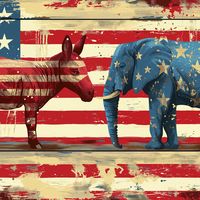
As people seek out the social settings they prefer—as they choose the group that makes them feel the most comfortable—the nation grows more politically segregated—and the benefit that ought to come wi...
We have conducted the previous exercise in dozens of middle-to-upper-class, predominantly Caucasian, North American churches. In the vast majority of cases, these audiences describe poverty differentl...
The French sociologist Pierre Bourdieu put it this way. Each of us has what he called a habitus: a set of dispositions to respond more or less spontaneously to the world in particular ways, without mu...