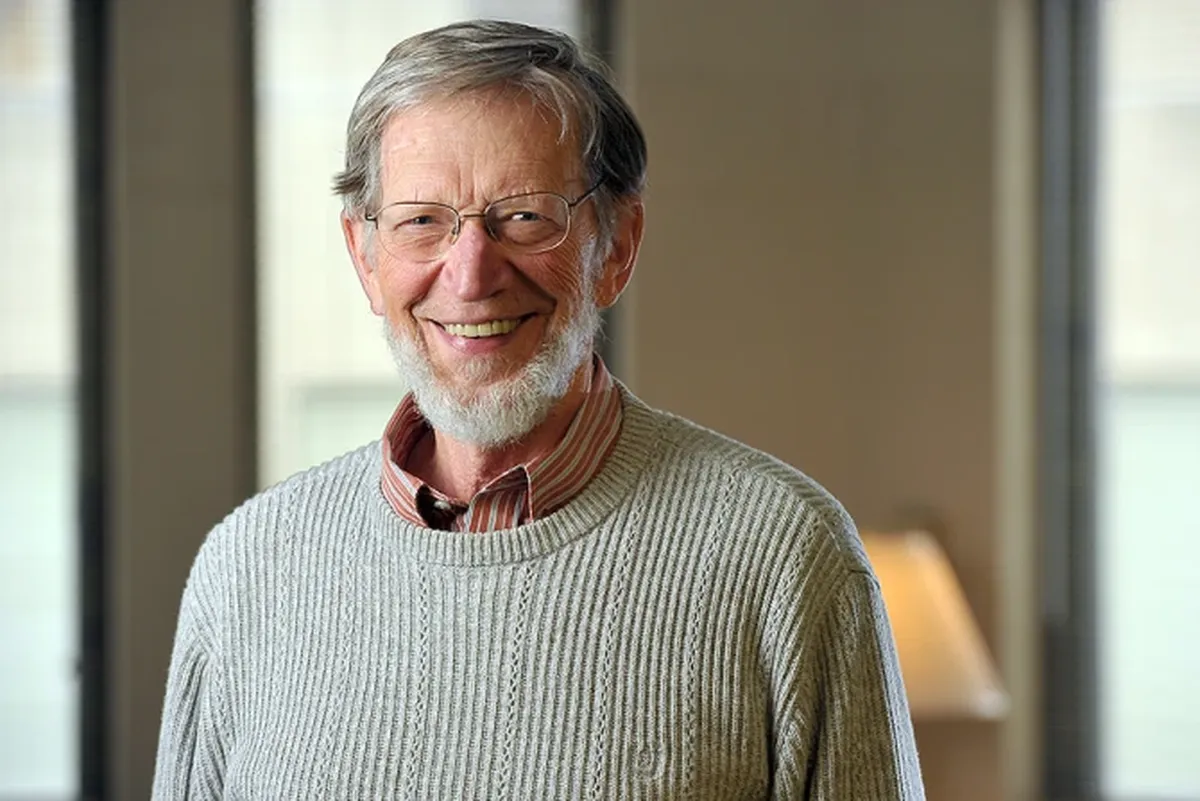
Alvin Plantinga
Alvin Plantinga is a highly influential American philosopher, widely regarded as one of the leading figures in the field of philosophy of religion and epistemology. Born in 1932, Plantinga’s work has significantly shaped contemporary Christian philosophy, particularly through his defense of the rationality of belief in God and the interplay between faith and reason. His contributions to philosophy have been recognized as groundbreaking, earning him numerous accolades and prestigious positions throughout his career.
Plantinga earned his undergraduate degree from Calvin College and went on to complete his PhD in philosophy from Yale University. He taught at a number of institutions, including Calvin College, the University of Notre Dame, and the University of Michigan. His academic focus has been primarily in epistemology, metaphysics, and the philosophy of religion, with particular attention to the philosophy of belief, the problem of evil, and the relationship between science and faith.
One of Plantinga’s most significant contributions is his development of the Evolutionary Argument Against Naturalism (EAAN), which challenges the view that evolutionary theory is compatible with naturalism. He also made major contributions to the Reformed Epistemology movement, arguing that belief in God can be rational and justified even without evidence or argument, proposing that belief in God is properly basic—a foundational belief similar to belief in other minds or the external world.
Plantinga has authored numerous influential books, including God and Other Minds, Warranted Christian Belief, and Where the Conflict Really Lies: Science, Religion, and Naturalism. His work has been pivotal in demonstrating that faith and reason are not necessarily in conflict but can complement each other in the search for truth.
Alvin Plantinga’s intellectual legacy has left a lasting impact on both the academic world and the broader Christian community, promoting thoughtful engagement with philosophy and faith. He has received several prestigious honors, including the Templeton Prize and election to the American Academy of Arts and Sciences.