Reconciliation. Let’s be honest. Reconciliation has become a trendy topic of conversation . . . which isn’t necessarily a bad thing. People are talking about it and that’s good. There are gatherings, ...
What exactly is racial reconciliation? If you asked ten different people, it’s likely you’d get ten different answers! At a gathering I attended of national multiethnic leaders—pastors, professors, di...
Paul described his work as a ‘ministry of reconciliation’ and his gospel as a ‘message of reconciliation’. He also made it quite clear where this reconciliation comes from. God is its author, he says,...
Contact Theory proposes that if diverse groups spend extended time together, their intergroup conflict and the negative effects of racism and ethnocentrism will gradually decrease and possibly even di...
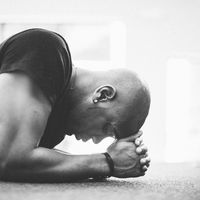
The first language of the church in a deeply broken world is not strategy, but prayer. The journey of reconciliation is grounded in a call to see and encounter the rupture of this world so truthfully ...
On a trip to South Africa, I met a remarkable woman named Joanna. She is of mixed race, part black and part white, a category known there as “Coloured.” As a student she agitated for change in aparthe...
Galatians 6:9-10, Proverbs 19:17, Hebrews 13:2, 1 John 3:17-18, James 2:15-16
In their thoughtful book on reconciliation, Emmanuel Katongole and Chris Rice share how Dorothy Day and the Catholic Worker movement showed up in the lives of the working poor, which ultimately enable...
Romans 12:18, Philemon 1:15-16, Matthew 18:15, Romans 5:10, Colossians 1:20, Matthew 5:23-24
What does true forgiveness and reconciliation look like? The world was given such an image the day Nelson Mandela was sworn in as President of South Africa. What was so significant was not just that a...
2 Corinthians 5:18-19, Matthew 6:14-15, Romans 12:18, Matthew 5:23-24, Colossians 3:13, Ephesians 4:32
God has given us all a message of reconciliation-that God, in Christ, has reconciled the world to himself (2 Corinthians 5:18-19). The first place we are invited to practice this reconciliation is wit...
In the Anglican liturgy the passing of the peace comes after confession and absolution, on the heels of our reminder that we are forgiven. This too is no coincidence. Our forgiveness and reconciliatio...
In his book Hope for Rwanda, Father Andre Sibomana notes how hard it was in the aftermath of genocide to bring Hutu and Tutsi together to talk about, even less agree on, the history of Rwanda. But the...
In his insightful work, Beyond Racial Gridlock, George Yancey provides a multi-faceted picture of both the brokenness of American race-relations, as well as a response couched in the gospel. In this e...
In her book Keeping Place: Reflections on the Meaning of Home , Jen Pollock Michel reflects on the nature of home in a transient age. In this short excerpt, Michel reflects on the Biblical doctrine...
Jeremiah 6:14, Jeremiah 8:11, Ezekiel 13:10, John 5:42
Peacekeepers are conflict avoiders, sweeping important issues under the carpet so no conflict manifests itself. This often happens in families and churches. This also happens between alienated ethnic ...
In their excellent book on reconciliation, Emmanuel Katongole and Chris Rice share a story about how small acts of beauty, done well, can lead to reconciliation: A friend told us of visiting a very ...
In their excellent book on reconciliation, Emmanuel Katongole and Chris Rice share the true story of Billy Neal Moore, who would both find Jesus in prison and ultimately find his victim’s parents to b...
In this excerpt from a sermon preached at Trinity Church, Boston, the Episcopalian Priest Fleming Rutledge describes the amazing work of Will Campbell: The last time I was here, your rector Sam Lloy...
Proverbs 16:7, James 3:17-18, Matthew 6:14-15, Colossians 3:13, 2 Corinthians 5:18-19, Romans 12:18
In her book Family Ministry, Diana Garland relates the following account by R.L. Honeycutt on the origin of the Irish expression “Chancing one’s arm”: On display in St. Patrick’s cathedral in Dublin...
Sometimes evil can feel so strong, so powerful, that its damage seems permanent and the final word on the subject. In this short excerpt from Philip Yancey, we see a reversal, perhaps a foretaste of w...
Matthew 5:9, James 2:8, Proverbs 21:3, Romans 12:21, Isaiah 1:17, Galatians 3:28
Most of us in the United States know the famous “I have a Dream” speech Martin Luther King Jr. gave at the Lincoln Memorial as part of the 1963 March on Washington. On a sweltering, humid day in the n...
Ernest Hemingway grasped some of the difficulty that characterizes relationships between fathers and sons in his short story, The Capital of the World . The story revolves around a father and his t...
James 5:16, 2 Corinthians 5:18-19, Luke 6:37, Colossians 3:13, Luke 17:3-4
In November of 1990, as the long struggle for freedom in South Africa was reaching its climax, a group of black and white spiritual leaders from almost all the churches in that land met at a hotel out...
In a letter of Justin Martyr, written in the second century, there is a remarkable passage. He writes to a friend and explains to him how essential it is that this man, who had sinned, should come bac...
Sometimes, the Christian faith can be confounding to the outside world. Enemies can become friends, even to the point of caring for and protecting each other. In this short story from the small Africa...
Romans 12:20-21, Luke 23:34, Matthew 18:21-22, Luke 6:37, Mark 11:25
“What happens here may be expressed by the quite simple and yet unfathomable word, ‘forgive.’ What occurs when I forgive another person? It does not mean . . . that I can ‘forget’ what he did to me. I...
Years ago, Rodney King was brutally and tragically beaten by Los Angeles police officers. The city exploded in riots for six days after three of the four police officers, each of whom were white, were...
In his book The Mystery of Christ , a series of fictionalized pastoral counseling sessions (based on actual events), the Episcopal priest Robert Farrar Capon shares a number of helpful ways of unde...
Isaiah 2:4, Matthew 5:9, Romans 12:18, Ephesians 2:14
Rabbi Jonathan Sacks tells a true story in one of his books about peacemaking in what is arguably one of the world's most difficult places to achieve it: the Middle East. One evening in the early ...
Colossians 3:12-14, 1 Peter 3:8-9, Philippians 2:3-4, James 1:19-20, Ephesians 4:2-3, Romans 12:16-18, Romans 3:23
In any polarized situation, the overriding human tendency is to draw a line with oneself and one’s allies on the good side and the opposing party on the wicked side, with very little attempt made by e...
Matthew 5:9, James 4:1-2, Ephesians 4:31-32, Colossians 3:12-13, Romans 12:18, 1 John 2:9-11
To become peacemakers, then, we must begin with ourselves. We must ask ourselves, “Why do I make cutting remarks to another person? Why do I make demeaning remarks about them?” We must also ask oursel...