Transition is one of the givens in our lives, and we only live well, we only manage our lives well, when we manage these transitions well. Our world changes; the circumstances of our lives change. The...
Exodus 16:3, Numbers 14:4, Luke 5:37-38, Isaiah 43:19, Joshua 1:9
Churches, seminaries, and nonprofit organizations are notorious for saying they need change and then resisting the very leader they called to bring it. One of my consulting clients told me that he cal...
Galatians 5:1, Numbers 14:4, Exodus 16:3, Luke 9:62, 2 Peter 2:22, Proverbs 26:11
There is a story about a farmer who had a few animals he kept in a barn that had gotten old, drafty, and leaky. Concerned for his animals' well-being, the farmer decided to build a new barn. He bu...
Churches, seminaries, and nonprofit organizations are notorious for saying they need change and then resisting the very leader they called to bring it. One of my consulting clients told me that he cal...
Resilience is not about becoming smarter or tougher; it’s about becoming stronger and more flexible. It’s about becoming tempered. Which takes us back to the blacksmith’s shop. Tempered. Let the word ...
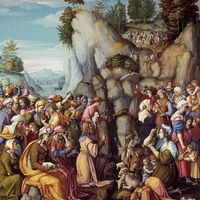
[Jonathan] Sacks comments on this passage, tying it back to his study of adaptive leadership concepts. In the first occasion, Moses was faced with a technical challenge: the people needed food. On the...
Daniel 1:8, Genesis 37:39–50, Exodus 2:4, 14–17, Matthew 4:1–11, 2 Corinthians 11:23–29, Psalm 46:
Resilience is not something that can be mustered in a moment of “rising to the occasion.” It is formed over a long period before the crisis of testing so that it can continue the transformation during...
Why did Moses strike the rock? He was a man of faith, whose life had been characterized by trust in God (see, for example, the description of Moses in (Heb 11:24-29). So why did he fall into unbelief ...
Matthew 13:, Exodus 14:21-31, Daniel 3:13-30 , 1 Kings 18:20-40, Luke 15:11-32, Psalm 23:
In the second century before Christ the great rival to Roman power in the Mediterranean world was Carthage, the Phoenician city-state located on the north African coast. It had been founded in 822 B.C...
Stop being so sure that you are always right, and others wrong. Don't trust your own opinion, when you find it contrary to that of older men, and especially to that of your own parents. Age gives ...
The animal behavior scientist Temple Grandin, who achieved significant success while struggling with autism, has this to say on the subject of progress: People are always looking for the single ma...
In the desert outside of Tucson, scientists dreamed up an experiment to re-create the conditions of earth for space, when and if the earth could not be made great again. The biosphere was a little wor...
Peter Drucker suggests that we should always sustain two streams of learning and self-improvement. And though he is speaking specifically about work and career, what he says is equally applicable whet...
Too many people hear the word capacity and assume it’s a limitation. They assume their capacity is set—especially if they’re beyond a certain age. People give up on the idea that their capacity or the...
On retreat we stop avoiding the pain of the disconnect between our deepest desires and the way we are actually living. We have time and space to reflect on our life rhythms to see if they are really w...
As a stranger walked down a quiet residential street, he noticed a man struggling with a washing machine at the doorway of his house. The homeowner was clearly having a hard time, so the passerby, wan...
In his Rule for monasteries, St. Benedict considered grumbling a serious offense against community life. He wrote, “If a disciple grumbles, not only aloud but in his heart … his action will not ...
We will have to start over, with a different and much older premise: the naturalness and, for creatures of limited intelligence, the necessity of limits.
On February 24, 1791, Christian revivalist and pastor John Wesley penned a letter to encourage a Christian walking through some faith challenges: Unless the divine power has raised you up . . . I...
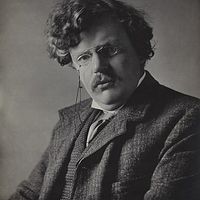
G. K. Chesterton was well-known (and iconoclastic) in his defense of tradition in a time when progress was all the rage in Western Europe- in technology, in the sciences, in philosophy. Chesterton, on...
Robert C. McFarlane was a well-known businessman in the Los Angeles area. He had moved to California from Oklahoma in 1970, and within just a few days of his arrival—due to a disastrous misunderstandi...
Statistics show that 80 percent of new pastors leave the ministry within five years. A friend once remarked, “If they were able to pastor churches without people, they might last ten years.” Most past...
As popularized in Richard Thaler and Cass Sunstein’s fascinating book by the same name, nudges are small changes in the environment around us that make it easier for us to make the choices we want to ...
James 3:17-18, 1 Timothy 3:2-3, John 8:32, Jeremiah 23:5, Isaiah 1:17, Proverbs 29:4, Exodus 18:21
If your success is defined as being well adjusted to injustice and well adapted to indifference, then we don’t want successful leaders. We want great leaders who love the people enough and respect the...
The challenge each of these faced in their deconstruction—and what we may face—is walking the tightrope between becoming our own person and honoring our past. In The Homeless Mind , sociologist P...
Exodus 3:7-8, James 2:15-17, Luke 10:25-37, Proverbs 3:27, Micah 6:8, Matthew 5:16
At the 5-mile mark in the Old Kent Riverbank Run a guy passing me said, “Hey buddy, you dropped your key.” There was no getting home without my key. Like a salmon swimming upstream I headed back into ...
Exodus 18:13-24 , Nehemiah 6:1-4, Ruth 1:16-17 , Matthew 6:24, Luke 10:38-42, Psalm 127:1-2, Luke 14:16-23
Jesus’ parable [of the banquet in Luke 14:16-23] makes it clear that there are business and career invitations . Some people had real estate that demanded attention, and others had invested in ox...
Living in a society governed by technique conditions us to believe that in every way life is easier than it ever has been. Technique is the use of rational methods to maximize efficiency, and we...