Exodus 3:7-10, Isaiah 58:6-7, Esther 4:13-16, Luke 4:18-19, Matthew 25:34-40, Psalm 82:3-4
I hold that in every situation of injustice and oppression, the Christian—who cannot deal with it by violence—must make himself completely a part of it as representative of the victims.
Isaiah 53:4-5, Exodus 12:21-23, Zechariah 12:10, John 1:29, 1 Peter 2:23-24, Psalm 22:16-18
Lamb of God, you take away the sin of the world. Have mercy on us. O Christ, in your humility, your lonely struggle and your agony, you share our suffering. Give us faith to trust your grace....
Have you heard the old spiritual “Down to the River to Pray” or “The Good Old Way”? It is most famous in popular culture because of Alison Kraus’s version of the song recorded for the movie O Broth...
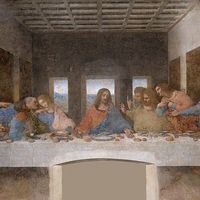
Holy One, on this night we remember Jesus gathering with his disciples for a Passover meal. You have delivered your people from slavery, and you call us to celebrate. Tonight we give thanks for the lo...
Exodus 3:7-10, Proverbs 31:8-9, Nehemiah 5:1-13, Luke 18:1-8, James 5:1-6, Psalm 82:3-4
The vast majority of violence oppressing the poor is not driven by the overwhelming power of the perpetrators—it’s driven by the utter vulnerability of the victims. Give the poor a strong, consistent ...
Proverbs 18:21, Numbers 13:31-33, Deuteronomy 1:28, James 3:5-6, Exodus 14:12
Learned Helplessness can be easily seen in a research study when participants are given a math test. In this study, some participants are told, “men don’t tend to do well on this test,” or “Millennia...
For years, Bible scholars have danced around the matter by saying slavery in Rome was far different from slavery in the first few centuries of American history. No doubt their observations carry a mea...
Whenever the gospel is invoked to diminish the dignity of any of God’s children, then it is time to get rid of the “so-called” gospel in order that we may experience the gospel.
God of mercy, deliver us from our fear in which we judge others. We pray for all who are oppressed, imprisoned, persecuted or rejected. To you who have delivered us from slavery we pray for the faith ...
Exodus 3:7–10, Isaiah 58:6–10 , Amos 5:21–24, Luke 4:16–21, James 2:1–7, Psalm 9:9–10
I can count on the fingers of one hand the number of times that I have heard a sermon on the meaning of religion, of Christianity, to the man who stands with his back against the wall. It is urgent th...
Isaiah 1:17, Micah 6:8, Exodus 22:22-23, Proverbs 14:31, Luke 4:18
In his excellent book, Just Courage , founder and CEO of the International Justice Mission, Gary Haugen articulates some of the realities behind the systemic oppression of the poor around the world...
Exodus 3:7-10, Micah 6:8, Matthew 25:40, Galatians 6:2, Psalm 82:3-4
In 1830, the Indian Removal Act led to what’s known as the Trail of Tears, in which almost fifty thousand indigenous people were removed from the southeastern United States and relocated west of the M...
Exodus 3:7-10, Isaiah 58:6-10, Micah 6:6-8, Matthew 23:27-28 , James 1:26-27, Psalm 146:7-9
A major stumbling block for many earnest seekers is the compelling evidence throughout history that terrible things have been done in the name of religion. This applies to virtually all faiths at some...
Ancient lens What's the historical context? Longing created by exile For the Israelites, who escaped enslavement and exile in Egypt, the experience at Mt. Sinai in Exodus 19 was formative. It...
Matthew 25:1-13, Luke 12:35, Hebrews 12:1-2, Exodus 3:7-8, Galatians 6:9, Revelation 21:4, Genesis 28:12
Have you ever sung "Keep Your Lamps Trimmed and Burning"? African American spirituals are among the great treasures of American worship. They are born out of the tragic (and, let's b...
Isaiah 65:17-25, Micah 4:1-4, Exodus 3:7-10 , Luke 4:18-19, Matthew 5:1-12, Psalm 146:7-9
Author and Episcopal priest Stephanie Spellers suggests that instead of imagining a kingdom, a better way for us to understand what Jesus had in mind when he spoke of this script, this new way of livi...
Pastor: As God’s chosen ones, beloved sons and daughters of God, hearts cleansed by Jesus’ blood, let us pray for the Church, for the world, and for all people according to their needs. Heavenly ...
Lent 2024: Do This in Remembrance Remembering Deliverance AIM commentary Ancient lens What's the historical context? Covenant first These words spoken by God to the people of Israel...
Advent 2020: Tear Down the Heavens Tear Down the Heavens Updated & expanded for 2023 AIM commentary Ancient lens What's the historical context? Longing created by exile For the...
One of the great problems of history is that the concepts of love and power have usually been contrasted as opposites, polar opposites, so that love is identified with a resignation of power, and powe...
The first thing to notice is that violence is intentional. For example, one of the most brutal forms of violence affecting millions of poor women and girls in our world is sex trafficking. Lured a...
Living in a society governed by technique conditions us to believe that in every way life is easier than it ever has been. Technique is the use of rational methods to maximize efficiency, and we...
A particularly brutal set of slave owners we recently encountered in South Asia held more than twenty slaves in a rice mill. They and their thugs beat the slaves, sexually assaulted the women, even do...
Exodus 1:15–22, 1 Samuel 1:20–28, 2 Kings 4:18–37, Matthew 2:16–18, Mark 10:13–16, Psalm 127:3–5
Pharaoh viewed the Hebrews as a growing threat to the Egyptian way of life, so he ordered all Hebrew baby boys killed. King Herod feared that a future king would arise from Bethlehem, so he ordered al...
Philippians 4:8, Exodus 32:, Ecclesiastes 12:13, Matthew 19:16-30, Proverbs 4:23, Romans 12:2, 1 John 2:15-17
Orwell feared we would become a captive culture. Huxley feared that we would become a trivial culture. . . . Orwell feared that what we hate will ruin us. Huxley feared that what we love will ruin us.
Exodus 5:1-21, 1 Samuel 8:4-22, Isaiah 1:10-17 , Matthew 23:23-28 , Galatians 3:26-29, Psalm 146:3-9
One of the gravest dangers to the Christian faith is its wholesale appropriation of the larger culture. When this happens, the citizens of those places cannot recognize the difference between their cu...
Too many people hear the word capacity and assume it’s a limitation. They assume their capacity is set—especially if they’re beyond a certain age. People give up on the idea that their capacity or the...