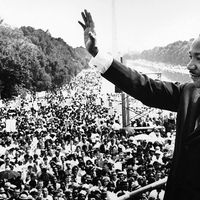
To frame is to put a language boundary around our experience. It is to name what happens in particular ways, to say how we see the world, and to see the world how we say it is. Framing includes tellin...
Genesis 4:1-14, Matthew 5:21-22, Exodus 20:13, 1 John 3:15, Deuteronomy 5:17, Romans 12:19, Genesis 9:6, Matthew 5:4, 9, Revelation 21:4
Notes on prayer: This prayer is designed for a leader and a congregation, but it could be further divided so that the Leader/People response sections are "voice 1" and "voice 2." ...
Genesis 4:1-14, Matthew 5:21-22, Exodus 20:13, 1 John 3:15, Deuteronomy 5:17, Romans 12:19, Genesis 9:6
Notes on prayer: This lament can be used as prayers of the people, but can be adapted for other uses as well. It is designed to be responsive, but it would also work if prayed in unison. Leader: ...
On retreat we stop avoiding the pain of the disconnect between our deepest desires and the way we are actually living. We have time and space to reflect on our life rhythms to see if they are really w...
Tony Reinke does a great job capturing the deep ambivalence many of us feel about our smartphones in this short excerpt: This blasted smartphone! Pesk of productivity. Tenfold plague of beeps and ...
Have you ever noticed geese soaring across the sky in a V formation? Scientists have uncovered the wisdom behind this flight pattern: as each bird flaps its wings, it creates an uplift for the one beh...
I did some of my Clinical Pastoral Education Units in Gastonia. One of the units that I served was the Emergency Department. If there was an incident that was suspected to be gang related, they would ...
“Empathy” literally means “in-feeling”—it is to project myself into another person’s feelings so that I begin to understand what it is like to have his experiences. If I want to gain empathy for a nei...
I once had the opportunity to speak briefly to a large Mormon audience at the Tabernacle in Salt Lake City. I told them that I feel badly about the fact that we evangelicals often tell Mormons what th...
As we become more intentional about living according to our deepest desires, it becomes increasingly important to notice the effects of technology on our mind, our soul and our relationships. The ...
I was sixteen when a white deputy sheriff shot and killed my twenty-five-year-old brother, Clyde, in New Hebron, Mississippi, where we had grown up. Clyde had returned home from fighting in World War ...
Exodus 23:2, Daniel 3:16-18, 2 Chronicles 24:20-21, Matthew 5:9-10, Romans 12:19-21 , Psalm 82:3-4
In the early fifth century, even as Rome had officially embraced Christianity, the brutal spectacle of gladiatorial combat continued in the Colosseum, drawing massive crowds. One day, a Christian herm...
As the place where the divine presence dwells, our bodies are worthy of care and blessing. . . . It is through our bodies that we participate in God’s activity in the world.
If there is one word that sums up how many of us feel about technology and family life, it’s Help! Parents know we need help. We love the way devices make our lives easier amid the stress and busy...
In an old joke, people refer to seminary as cemetery. Attending one does feel like that at times, so the last thing I expected to discover in a dingy classroom in the basement of a Pasadena seminary s...
Jim Rayburn, the founder of Young Life, a nationwide youth ministry, used to say, “It’s a sin to bore a kid with the gospel.” But what about adults? Is it okay to bore grownups with the gospel? I ask ...
The Sermon on the Mount contains some of the most difficult ethical injunctions in all of scripture. Many of us do not know how to love our enemies and pray for those who persecute us. Martin Luther K...
Within the Christian community this leads to a prominence of teaching on the will of God and how to know it. Russ Johnston draws upon his own wide experience to remark how this continues to be one of ...
Peter Ustinov, the British actor, director, and playwright, once received an indignant letter from the headmaster of his son’s school. The letter complained that his son frequently disrupted lessons b...
Introduction Believed to be some of Paul’s last words of his long ministry, 2 Tim. 4:6ff are Paul’s closing remarks to his beloved disciple, Timothy. Imprisoned in Rome by this point, Paul concludes ...
Preaching Commentary Introduction Believed to be some of Paul’s last words of his long ministry, 2 Tim. 4:6ff are Paul’s closing remarks to his beloved disciple, Timothy. Imprisoned in Rome by this...
[Jonathan] Sacks comments on this passage, tying it back to his study of adaptive leadership concepts. In the first occasion, Moses was faced with a technical challenge: the people needed food. On the...
Philippians 4:8, Exodus 32:, Ecclesiastes 12:13, Matthew 19:16-30, Proverbs 4:23, Romans 12:2, 1 John 2:15-17
Orwell feared we would become a captive culture. Huxley feared that we would become a trivial culture. . . . Orwell feared that what we hate will ruin us. Huxley feared that what we love will ruin us.
Classically, there are three ways in which humans try to find transcendence--religious meaning--apart from God as revealed through the cross of Jesus: through the ecstasy of alcohol and drugs, through...