Matthew 5:10, 2 Corinthians 4:8-9, James 2:15-17, Hebrews 13:3, Matthew 25:35-36, Philippians 4:12-13
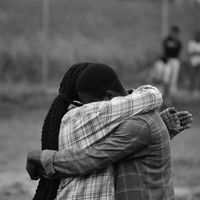
We who lived in concentration camps can remember the men who walked through the huts comforting others, giving away their last piece of bread. They may have been few in number, but they offer sufficie...
1 Peter 1:3, Luke 24:1-12, Mark 16:1-8, Matthew 28:1-10, John 11:25-26, John 20:1-18, 1 Corinthians 15:3-8, 1 Corinthians 15:54-55
Thus on Easter we celebrate Christ’s Resurrection as something that happened and still happens to us. For each one of us received the gift of that new life and the power to accept it and to live by it...
Matthew 5:9, James 4:1-2, Ephesians 4:31-32, Colossians 3:12-13, Romans 12:18, 1 John 2:9-11
To become peacemakers, then, we must begin with ourselves. We must ask ourselves, “Why do I make cutting remarks to another person? Why do I make demeaning remarks about them?” We must also ask oursel...
In her excellent book Liturgy of the Ordinary, pastor and author Tish Harrison Warren describes an encoutner her husband experienced while working on his PhD. While my husband, Jonathan, was getting...
Ephesians 5:2, 1 John 3:16, Philippians 2:8, Romans 5:8, Galatians 2:20, John 15:13
A chaplain was speaking to a soldier on a cot in a hospital. “You have lost an arm in the great cause,” he said. “No,” said the soldier with a smile. “I didn’t lose it–I gave it.” In that same way, Je...
James 1:22-25, Philippians 2:3-4, Romans 12:2, Ephesians 4:22-24, Colossians 3:12-14, Galatians 5:22-23, Matthew 25:21
The kingdom of God manifests itself in the modest changes in our attitudes and in the little improvements in our behavior that no one may notice, including ourselves. These are the mighty works of God...
It seems important to note that in the beatitudes ‘the meek’ come between those who mourn over sin and those who hunger and thirst after righteousness. The particular form of meekness which Christ req...
An attitude to life which seeks fulfillment in the single-minded pursuit of wealth - in short, materialism - does not fit into this world, because it contains within itself no limiting principle, whil...
What he was attempting to instill in his disciples was the attitude of a servant: humility and a willingness to put others ahead of oneself. In that culture, washing the feet of others would symbolize...
Philippians 2:3, Romans 12:10, Colossians 3:12, Galatians 5:13, 1 Peter 4:10, Matthew 23:11-12
What he [Jesus] was attempting to instill in his disciples was the attitude of a servant: humility and a willingness to put others ahead of oneself. In that culture, washing the feet of others would s...
To be always in a thankful state of heart before God is not to be considered a high plane of spirituality but rather the normal attitude of one who believes that "all things work together for goo...
My worldview, my philosophy, my attitudes, my relationships, my parenting, my marriage – everything has been transformed by my relationship with Christ.
If man tries to grasp at truth of himself, he tries to grasp at it a priori . But in that case he does not do what he has to do when the truth comes to him. He does not believe. If he did, he wou...
Father God: It is sometimes hard for us to understand what You do. We are in trouble. We want You to come rescue us right now, like the cavalry riding over a hill or the Lone Ranger appearing out of n...
A Special Kind of Story Most Christians have some idea of what a parable is. Ask an adult Sunday school class and you might hear: “It’s a story!” Another might chime in, “with a moral message!” Mer...
Christianity can be such a pretty faith. God calls us to wonderful things, to noble deeds, and to be a people of love. We are meant to be kind, joyful, brave, and good. These are attractive qualities ...
None of us are there yet, but if we each have this attitude, we will put to death our reactions to criticisms and offenses. And though we may still stumble, we will learn that carrying the cross is no...
In his classic book, Celebration of Discipline, Richard Foster shares 10 principles that can help you cultivate an attitude of simplicity over consumerism: Buy things for their usefulness rather than...
Years ago I was watching a daytime talk show which focused on interracial romantic relationships. On this show, the father of a white woman did not approve of his daughter’s engagement to a black man....
God always and eternally intended the Sabbath to be a lifestyle—an attitude, a perspective, an orientation for the living that enables us to govern our lives and steer clear of bondage.
The truth about significant soul transformation is this—change is possible, but it is harder than we want and takes longer than we expect…. real change requires more than willpower and easy, simple st...
Editors Note: This is perhaps less a review as a jumping off part to articulate some thoughts I developed while reading The Minority Experience. For a full review of the title, a cursory google search...
In 1933, as Hitler’s Nazi party rose to power in Germany, the Jewish artist Marc Chagall painted Solitude. In the foreground, a seated man sits wrapped in a tallit, or prayer shawl. His right hand sup...
In his insightful work, Beyond Racial Gridlock, George Yancey provides a multi-faceted picture of both the brokenness of American race-relations, as well as a response couched in the gospel. In this e...
The history of repentance is as old as humankind. We each carry the remembrance of wrongdoing in burdensome satchels, hoping that eventually someone will ease them off our back. We each know the feeli...
Repentance is a very unpopular word. But the first sermon Jesus ever preached was “Repent, for the kingdom of heaven is at hand” (Matthew 4:17). This was God speaking through His Son. Jesus had come w...