Mythology by its nature seeks to explain how the world works and how it came to work that way, and therefore includes a culture’s “theory of origins.” We sometimes label certain literature as “myth” b...
There is a tendency among readers and scholars of Genesis 2:16-17 to focus on the prohibition of verse 17: “but the tree of the knowledge of good and evil you shall not eat.” …I want to pause to cons...
Leader: In the beginning was the Word, and the Word was with God, and the Word was God. People: Jesus was in the beginning with God. All things came into being through Him, and without Him not one t...
In Genesis 1–2, God makes a home for his people. From the primeval wilderness and wasteland God begets beauty and form, building the grand house called Earth. God’s creative acts are not simply intend...
Whether the Hebrew Genesis account was meant to be science or not, it was certainly meant to convey statements of faith. As will be shown it is part of the biblical polemic against paganism and an int...
What is the very first thing God said to humanity after he created Adam and Eve and placed them in the garden of Eden? “You may surely eat of every tree of the garden” (Gen. 2:16). God’s first words a...
Sometimes great stories introduce the protagonist in the very first paragraph. In Charles Dickens’s Great Expectations, for example, we are immediately introduced to Pip, the central figure of the nov...
Genesis 2:8, Genesis 3:23-24, Exodus 15:27, Song of Solomon 4:12-15, John 18:1, Matthew 26:36
The Bible has its own garden path. It runs from Genesis to Revelation. In fact, some of the most important events in the Christian faith take place in Biblical gardens, evens around which Christianity...
Genesis 1:1, Genesis 1:14, Psalm 33:9, Isaiah 45:18, John 5:17
John Walton argues in The Lost World of Genesis One that rather than concerning material creation, the creation account in Genesis one concerns functional creation, because that is how ancient reade...
John Walton, in The Lost World of Adam and Eve, argues that the Garden of Eden should be seen as a sacred space (a kind of "Holy of Holies") set off from the rest of creation, with the seven...
Is God stingy? Mark D. Roberts observes that many writers and preachers focus on the prohibition of the Tree of the Knowledge of Good and Evil instead of Genesis 2:16: "You may freely eat of each...
Genesis 18:25, Leviticus 19:2, Deuteronomy 34:2, Romans 1:18-20, James 1:17
This capriciousness of the gods is diametrically opposed to the biblical view. The God of Creation is not at all morally indifferent. On the contrary, morality and ethics constitute the very essence o...
A physician, a civil engineer, and a politician were arguing about what was the oldest profession in the world. The physician remarked, “Well, in the Bible, it says that God created Eve from a rib tak...
Matthew 4:18-22, Luke 19:1-10, John 4:1-42, John 6:44, Ephesians 1:4-5
‘In the beginning God.’ The first four words of the Bible are more than a way of launching the story of creation or introducing the book of Genesis. They supply the key which opens our understanding t...
Galatians 6:7, John 15:5, Matthew 13:23, Isaiah 28:24-26, Proverbs 12:11, Genesis 2:15
One of my favorite sections of Home Depot is the power garden tool department. Even though I have all the tools I need, I still like browsing through Home Depot’s collection of power mowers, chainsaws...
The first garden (Eden) was perfection. In it was the possibility not only for the purest fulfillment of the human race but for all of creation. It was meant to be a paradise, which is, in fact, no di...
In Understanding Genesis , Nahum Sarna argues that a critical distinction between Genesis and the stories of contemporary pagan societies is that Genesis is not myth . Myth is associated with ritual...
Robinson's Winsome Faith I’ve been reading Marilynne Robinson's novels and essays for some time now. Of her fiction, I’ve read Gilead , reflections of a retired minister written for his ...
Genesis 3:15, Romans 5:18-19, Ephesians 1:5, Luke 15:11-32, 1 Corinthians 15:21-22, Genesis 22:8, Matthew 4:1-11
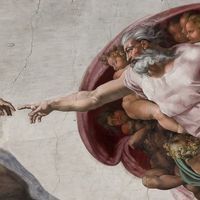
The hope is held out [in Genesis] that one day the Son would be a second Adam, born to answer the first. . . . And this second Adam would give us a second family to belong to—God’s.
Nahum Sarna writes in Understanding Genesis: Perhaps nowhere is the contrast between the mythological and the Israelite conceptions more striking and more illuminating than in their respective descr...
Contrast the creation of the first man according to Genesis 2 with the creation of the first human beings according to Mesopotamian tradition. Both start with dust or clay, but then the accounts vary....
In Understanding Genesis Nahum Sarna explodes the myth that in the story of Cain and Abel represents a biblical preference for the shepherd over the tiller of the soil. He points out that “there is no...
Nahum Sarna points out in Understanding Genesis that it is a remarkable fact that the Old Testament exists at all. Most ancient texts have not survived. Ancient Israel did not spread its works by mi...
In the beginning God created the heavens and the earth. The earth was formless and empty. Darkness was on the surface of the deep. And God’s Spirit was hovering over the surface of the waters. In ...
My first call to ministry was in Eastern Washington state. It turned out to be one of the most prolific winemaking regions in the country. One of the things I learned from a local winery was really qu...
Lord–You speak, and things happen. At the beginning—you spoke and creation happened; and you keep on speaking, giving us promises we can count on, and admonitions to heed. When we need comfort—you spe...
Because children have abounding vitality, because they are in spirit fierce and free, therefore they want things repeated and unchanged. They always say, "Do it again"; and the grown-up pers...
What is clear on all accounts is that a garden was an enclosed area designed for cultivation... [so] what we have, then, rather than an image of primitivism, is one of an area that is bounded, probabl...









![The hope is held out [in Genesis] that](https://a-us.storyblok.com/f/1016915/1200x800/7349bf221a/jesus-humanity.jpg/m/200x200/smart)