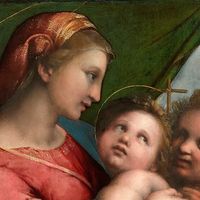
After the fall of our first parents, boundaries were something to push past, to transgress. It’s worth pausing to note how we use the word transgression for “sin.” With its Latin roots, “across” and ...
The problem we face today needs very little time for its statement. Our lives in a modern city grow too complex and overcrowded. Even the necessary obligations which we feel we must meet grow overnigh...
The bottom line is this: never grow complacent. Never grow tired of learning. As soon as we stop learning we lose the capacity to grow and mature in our work and our relationships. This continual lear...
What we need to realize, however, is that there is no such thing as autonomous or “self-grounding” knowledge. All systems of interpretation and all claims to true knowledge are ultimately grounded out...
Ephesians 2:20, Isaiah 28:16, 1 Peter 2:6-8, 1 Corinthians 3:11, Hebrews 12:27-28, Psalm 118:22, Matthew 21:42, Mark 12:10-11, Luke 20:17
The cornerstone was a critical element of ancient architecture, the anchor that the rest of the building relied on. The cornerstone was the stone that set the alignment of the entire building. Every o...
More enslaving than our occupations, however, are our preoccupations. To be pre-occupied means to fill our time and place long before we are there. This is worrying in the more specific sense of the w...
Perhaps we look to a screen because it’s too painful to remember we are mortal. To sit in our limits and let them wash over us. To embrace this body, this moment in time, this feeling, or this place. ...
What is our responsibility to our neighbor? This is a question many have asked, including the Medieval theologian Thomas Aquinas. Meditating on the topic he observed, “To patiently endure wrongs done ...
John 4:20-21, John 13:34-35, 1 John 3:17, Matthew 5:23-24, Hebrews 10:24-25
We cannot be closed off to one another and be open to God. That’s not how this works. Do you remember the commercial when the woman says “that’s not how this works, that's not how any of this work...
Matthew 3:1-12, Deuteronomy 8:2-3, Revelation 12:6, Job 12:7-10, Isaiah 35:1
Before I knew God, I knew nature. I knew the feeling of warmth from the sun on my skin. The crunch of leaves on the sidewalk. The sparkle of the fresh powder snow. It was not until I was a teenager th...
Matthew 7:7-8, Proverbs 27:17, Luke 15:4-7, Luke 19:10
The second lesson this group of new believers has shown us is that the postmodern path to faith is organic. Lostness, of course, looks different depending upon your perspective and personality. It is ...
Our 24/7 culture conveniently provides every good and service we want, when we want, how we want. Our time – saving devices, technological conveniences, and cheap mobility have seemingly made life muc...
Romans 3:10-12, James 2:10, Luke 18:9-14, Matthew 5:48, Ecclesiastes 7:20
To see with God’s eyes, suppose we were to compare one person’s morals to being in Death Valley, 280 feet below sea level; another person’s morals to being in Denver, the mile-high city; and another p...
Psalm 42:5, Romans 12:15, Ephesians 4:26, Lamentations 3:19-23, James 4:8-9
Too often we are given a choice—emotions or faith and belief. Yet as Dan Allender and Tremper Longman observe, Emotion links our internal and external worlds. To be aware of what we feel can open ...
The robbing of our lives occurs when the core story of who we are—created as “very good” (Gen 1:31) and never downgraded, and “beloved” of God (1 Jn 3:2)—is taken through specific memories and twisted...
Jonah 1:4, Genesis 3:8-19, Matthew 18:12-14, Luke 15:11-32, Psalm 23:
I once was significantly lost. When I was a college student in northern Wisconsin, my dad and I were hiking on a trail that was somewhat familiar to me. I had been on this trail just a few weeks befor...
Walter Brueggemann writes that the movement of the psalms is from orientation to disorientation and then to new orientation. The psalms give us a language for transformation in desert spaces: we move ...
Many people have misinterpreted the separation of church and state to mean that religious views shouldn’t play a role in public discussions and lawmaking. Someone might say, “We shouldn’t restrict abo...
Matthew 7:3-5, Luke 10:38-42, Psalm 139:23-24, Proverbs 12:15, Genesis 4:6-7
Lucy says to Charlie Brown: ‘You know what the whole trouble with you is, Charlie Brown?’ ‘No; and I don’t want to know! Leave me alone!’ ‘The whole trouble with you is you won’t listen to w...
John 20:24-29, Mark 9:24, Job 23:3-4, 8-10, Job 19:25-27, Psalm 23:4, Psalm 13:1-2, 5
When most of us grow up in a faith tradition, we begin with an assumption that faith is good, while having doubts is bad. As we mature however, we realize that faith and doubt are not opposites, but i...
The great danger is to always single out some aspect of God’s good creation and identify it, rather than the alien intrusion of sin, as the villain. Such an error conceives of the good-evil dichotomy ...
I have a nagging sense that when we read the word blessed , we either feel indifferent or suspicious. Both of these responses are likely the result of the way the term is (over)used in our day-to...
In his excellent book, Recapturing the Wonder: Transcendent Faith in a Disenchanted World , Mike Cosper explains the value in persevering through the difficult realities of practicing solitude. ...
What is the matter with us is a question as old as time. Many philosophers and prophets believe they have an answer, but so too does holy scripture. According to the Dutch-Canadian philosopher Al Wolt...
Culture is like gravity. We never talk about it, except in physics classes. We don’t include gravity in our weekly planning processes. No one gets up thinking about how gravity will affect their day. ...
Exodus 6:33, Exodus 20:3, Deuteronomy 6:5, 1 Corinthians 10:31, James 1:17, 1 Timothy 6:17, Luke 14:26-27, Philippians 3:8
We sometimes imagine surrender to God as emotional starvation. Every pleasure feels suspicious, and every passion feels in competition with our love of God. We think that the more miserable we are in ...
Romans 8:28, Romans 8:31-32, James 1:2-4, 2 Corinthians 4:17, 1 Peter 1:6-7, Jeremiah 29:11, Psalm 84:11
It’s easy to label what we consider “good things” in our lives as gifts from God and to welcome them with gratitude. But when difficult things happen, we don’t look at them as part of God’s good plan ...
Psalm 19:1, Romans 1:20, Isaiah 6:3, John 1:9-10, Colossians 1:16-17
"God's joy," said by the Persian mystic Rumi, "moves from unmarked box to unmarked box, from cell to cell. As rain water down into flower bed. As roses up from ground. Now it looks ...
Ministers run the awful risk . . . of ceasing to be witnesses to the presence in their own lives — let alone in the lives of the people they are trying to minister to — of a living God who transcends ...
Job 1:42, Genesis 18:10-15, Exodus 14:10-14, Psalm 73:, Mark 9:14-29
When we aim at certainty when it comes to our Christian beliefs, it sets us up for failure. …Imagine someone with a lot of time on their hands who painstakingly constructs a five-foot-high house of...