From a historical perspective it is atheism that was old and the Christian faith and its good news that burst on the world as new. Once commonly called “atomism,” the genealogy of atheism can be trace...
John Fiske, a Harvard scholar, once visited Herbert Spencer, regarded as one of the greatest philosophers of his time in England. During their conversation, Spencer asked about Mrs. Fiske and the chil...
Isaiah 55:1-3, John 3:1-5, Matthew 1:25-27, John 3:16-17, Psalm 145:8-9
Justin Martyr (ca. 100–165), the most renowned apologist of the second century, dedicated his life to defending Christianity as the one true philosophy. Engaging the Greek philosophers and intellectua...
1 Corinthians 12:8-12, John 1:, John 17:18, Philippians 2:6-11, 1 John 1:7, Romans 8:1, Colossians 1:13-14
The Cave One of the most famous passages in Plato's Republic is his "Allegory of the Cave," which is found at the beginning of book seven . Socrates imagines the human condition al...
In 1889, the French novelist Paul Bourget penned The Disciple , where he depicted the life of a renowned philosopher and psychologist, whose existence was marked by a seemingly monotonous routine...
Mark 8:35-36, Mark 10:25, Matthew 19:16-26, Luke 18:18-29
Those not familiar with ancient Greek philosophy may be surprised to find deep resonance with the teachings of Jesus. When on trial for his life, the 70-year-old Socrates pugnaciously responded that,...
Immanuel Kant was one of the greatest philosophers in history. The story goes that he was accustomed to taking long summer walks. One day, he stopped in a park, sat on a bench for several hours, and j...
What is the matter with us is a question as old as time. Many philosophers and prophets believe they have an answer, but so too does holy scripture. According to the Dutch-Canadian philosopher Al Wolt...
In an article entitled, What the New Atheists Don’t See , the British author Theodore Dalrymple shares his honest struggles with atheism. The subtitle of his article is fascinating, “To regret re...
In the first century, children enjoyed little esteem and virtually no respect. While families appreciated their own children, society merely tolerated them. The very language of the day reveals this f...
If you’ve been around a kid who’s just learned to ask “why?”, it can be a bit much. You’ll be asked, “why is grass green?” “Why do birds fly?” “Why do I get hungry?” and much, much, more. Pa...
Genesis 2:7, 1 Kings 19:4-8 , Ecclesiastes 12:7 , Matthew 11:28-30, 3 John 1:2, Psalm 43:5, Psalm 42:5
The soul can be difficult to define. The great theologian Karl Barth confessed, “We shall search the Old and New Testaments in vain for a theory of the relation between the soul and body.” Your soul i...
Reading Aquinas, I found the vices to have revealing and illuminating power. By contrast, many voices in contemporary culture, unfortunately, dismiss, redefine, psychologize, or trivialize them. Some...
Dan B. Allender, in his book Leading Character , notes that the Greek word “charaktér" was “used in connection with tools designed for engraving.” Greek philosophers noted that our past actions ...
This is in fact one of the many sharp edges of “the problem of evil.” Evil isn’t simply a philosophers’ puzzle but a reality which stalks our streets and damages people’s lives, homes and property. Th...
In this short introduction to the subject, psychologist Robert A. Emmons surveys the subject of gratitude in historical and modern research: What exactly is gratitude? The Oxford English Dictionary ...
Jonathan Edwards is one of America’s most influential philosophers and theologians. Edwards wrote dozens of books, sparked the First Great Awakening, and was influential in the lives of hundreds of mi...
I found what I was looking for and purchased a paperback copy of Dostoevsky’s The Idiot. The Idiot was published in 1868 and was Dostoevsky’s attempt to create a perfect soul in the character of Princ...
Exodus 1:15–21, Daniel 3:16–18 , 1 Kings 3:16–28 , Matthew 4:1–11, Galatians 1:6–10, Psalm 73:
Pragmatism may be defined simply as the approach to reality that defines truth as “that which works.” The pragmatist is concerned about results, and the results determine the truth. The problem with t...
One discovery was a time-released revelation to me. On my way to classes each week, I had been passing Emerson Hall, the building that houses the philosophy department at Harvard. The enormous inscrip...
Thomas Aquinas, the famous medieval theologian, created one of the greatest intellectual achievements of Western civilization in his Summa Theologica. It’s a massive work: thirty-eight treatises, thre...
Many have heard of the polymath and famous atheist Bertrand Russell (1872-1970), whose career as a public intellectual touched on a variety of disciplines, including philosophy (he is considered one o...
1 Samuel 16:7, Proverbs 11:3, Matthew 5:8 , Philippians 4:8, Psalm 15:1-2
Bernard de Fontenelle (1657–1757), was a French author and philosopher, and was once engaged in conversation with the “Sun King”, Louis XIV. Louis began expressing his skepticism about the existence...
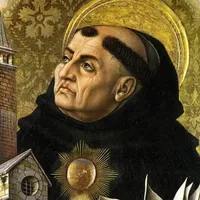
Of the medieval church’s many intellectual leaders, none has had more influence than the philosophical theologian Thomas Aquinas. He was born to a noble family near Naples, Italy, and joined the Domin...
In the Middle Ages there were theologians who wrote volumes on proofs of God. Anselm (1033–1109) came up with the ontological proof of God that there exists in our minds an idea of a being than which ...
1 Peter 3:8-9, Galatians 3:28, Proverbs 31:8-9, Matthew 5:9, Romans 12:18
Just as Socrates felt that it was necessary to create a tension in the mind so that individuals could rise from the bondage of myths and half-truths to the unfettered realm of creative analysis and ob...
1 Corinthians 13:2, James 2:19-20, 1 Corinthians 8:1-2, Ecclesiastes 1:18, 1 Corinthians 2:5, Philippians 3:10, Matthew 7:21, 24-27, James 1:22
The Oxford scholar and apologist C. S. Lewis... once closed a lecture to a group of apologists like this: I have found that nothing is more dangerous to one’s own faith than the work of an apologis...
Nietzsche belongs to a trinity of nineteenth-century thinkers that Paul Ricoeur called the “masters of suspicion.” These masters of suspicion—Friedrich Nietzsche, Karl Marx, and Sigmund Freud—were all...
1 Timothy 6:6-8, Proverbs 15:16, Matthew 6:19-21, Philippians 4:11-13, John 6:
The story is told of Socrates walking through the market in Athens, with its groaning abundance of options, and saying to himself, “Who would have thought that there could be so many things that I can...
The Athenian general and politician Themistocles eventually alienated a large number of Greek City-States that came under their rule in the late 6th and early 5th centuries B.C. With his fleet of ship...