Genesis 41:39-43 , Exodus 4:22-23, 2 Samuel 9:6-7, Luke 15:17-24, Galatians 4:6-7 , Psalm 103:13-14
When he [the prodigal son] found himself desiring to be treated as one of the pigs, he realized that he was not a pig but a human being, a son of his father. . . . Once he had come again in touch with...
In A Life Worth Living , C.A. Roberts tells of meeting W.C. Coleman, founder of the Coleman Lantern Company. At eighty-four, Coleman recalled how he went from pauper to millionaire overnight. ...
Genesis 18:10-14 , Isaiah 7:14 , Exodus 4:1-5, Psalm 139:13-16 , Luke 1:26-38, John 20:24-29, Matthew 1:22-25
To a twentieth-century mind the notion of a virgin birth is intrinsically and preposterously inconceivable. If a woman claims–such claims are made from time to time–to have become pregnant without sex...
The challenge each of these faced in their deconstruction—and what we may face—is walking the tightrope between becoming our own person and honoring our past. In The Homeless Mind , sociologist P...
Psalm 19:null, Psalm 1:null, Psalm 119:null, Exodus 20:2-3, Galatians 3:24-26, John 14:6, Matthew 22:37-40
Ancient Lens What can we learn from the historical context? The Books of the Psalms and David The Book of Psalms is divided into five books, like the five books of the Torah. While it is not obvi...
Psalm 19:, Psalm 1:null, Psalm 119:null, Exodus 20:2-3, Galatians 3:24-26, John 14:6, Matthew 22:37-40
Lent 2021: A 40-day Heart Restoration Nature, Law, & Holiness Bonus Content: Video prep session with Austin Hill on Psalm 19 . Password: %h+CNTJ7 AIM Commentary Ancient Lens What can we ...
The very nature of light provides contrast. In juxtaposition, differing levels of light illuminate in extraordinary ways, helping us to see what we’ve been missing. In the late 1400s, the art world ma...
Leviticus 23:, Exodus 15:1-21, Nehemiah 8:9-12, Luke 15:22-24, John 2:1-11, Psalm 100:1-2
People of our time are losing the power of celebration. Instead of celebrating we seek to be amused or entertained. Celebration is an active state, an act of expressing reverence or appreciation. To b...
Genesis 1:26-27 , Exodus 33:11-23 , Isaiah 43:1-4, John 10:1-15 , Luke 7:36-50, Psalm 139:1-6, 13-16
I am convinced that the scourge of our scientific and technological age is depersonalization. There is a heartbeat pulsating at the center of the universe, giving life and meaning to everything, but o...
Genesis 50:15-21 , Exodus 16:2-15 , Jonah 3:4, Psalm 103:8-12 , Matthew 20:1-16 , Luke 15:11-32
One of the biggest challenges in the Christian journey is grasping the heart of grace. Oftentimes there is an internal battle between our theology and our lived experience. In this short excerpt, Fred...
Exodus 3:11-14, Isaiah 6:5-8 , 1 Kings 19:11-13 , John 15:4-5 , Luke 10:38-42 , Psalm 46:10
Historically the West has tended to throw its chief emphasis upon doing and the East upon being. . . . Were human nature perfect there would be no discrepancy between being and doing. The unfallen man...
In 1889, the French novelist Paul Bourget penned The Disciple , where he depicted the life of a renowned philosopher and psychologist, whose existence was marked by a seemingly monotonous routine...
Noteworthy in this regard is the contribution of the Reformers, particularly Martin Luther, though John Calvin’s contribution is also very significant. Both called for a spirituality in the world that...
We will have to start over, with a different and much older premise: the naturalness and, for creatures of limited intelligence, the necessity of limits.
Genesis 1:1–3 , Exodus 20:1–17, Daniel 6:16–23, Luke 10:25–37, Romans 3:21–26, Psalm 119:105
In the sixteenth century the Reformers declared their total confidence in what they called the perspicuity of Scripture. What they meant by that technical term was the clarity of Scripture. They maint...
To enter into the realm of contemplation one must in a certain sense die: but this death is in fact the entrance into a higher life. It is a death for the sake of life, which leaves behind all that we...
Awe is more than an emotion; it is a way of understanding, insight into a meaning greater than ourselves. The beginning of awe is wonder, and the beginning of wisdom is awe.
Thus the incomparable George Herbert writes of our glorification in his poem “The Star”: Bright spark, shot from a brighter place, Where beams surround my Saviour’s face, Canst thou be any where ...
Ancient Lens What’s the historical context? Mixed Loyalties Diving straight into 2 Corinthians 4:3-6 without giving a nod to 2 Corinthians 3:1-4:2 gives a strange impression, because Paul’s point...
An attempt to wrest from God the prerogatives of absolute freedom and infinity leads to the inversion of Pentecost and what is in effect a new Babel. 'Postmodernism' represents that Babel perf...
While the search for the divine has been somewhat crowded out in modern times by our busy and overstimulated lives, it is still one of the most universal of human strivings. C. S. Lewis describes this...
Leadership is lifting a person’s vision to higher sights, raising of a person’s performance to a higher standard, of building a personality beyond its normal limitations.
Exodus 3:7-12 , Esther 4:12-16, Jeremiah 20:7-11, Luke 8:43-48, Mark 14:32-36, Psalm 27:13-14
A fourteenth-century definition of courage is “to speak one’s mind by telling all of one’s heart.” Courage is connecting one’s heart back to one’s mind, stitching together the separated parts of ourse...
Judges 6:11-24, Exodus 3:1-6, Isaiah 6:1-5 , Matthew 2:1-12 , John 2:1-11, Luke 2:8-10
Epiphanies in Scripture are met with reactions of disbelief (Gideon), awe (the Magi), amazement (Cana), or—most often—“fear and trembling.” It is precisely for this reason that the biblical angels are...
Pastor: Arise, shine, for your light has come, People: and the glory of the Lord has risen upon us. Pastor: Be strong in the Lord and in the strength of his might. Go out into t...
Exodus 17:1-7, 2 Kings 4:1-7, John 2:1-11, Matthew 25:14-30 , Psalm 19:1
John Dryden (1631–1700), an English critic and poet laureate, often skipped classes at Westminster School in London and rarely prepared his lessons. One day, when tasked with writing a poem on the gos...
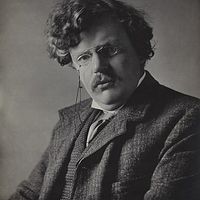
G. K. Chesterton was well-known (and iconoclastic) in his defense of tradition in a time when progress was all the rage in Western Europe- in technology, in the sciences, in philosophy. Chesterton, on...
“Empathy” literally means “in-feeling”—it is to project myself into another person’s feelings so that I begin to understand what it is like to have his experiences. If I want to gain empathy for a nei...