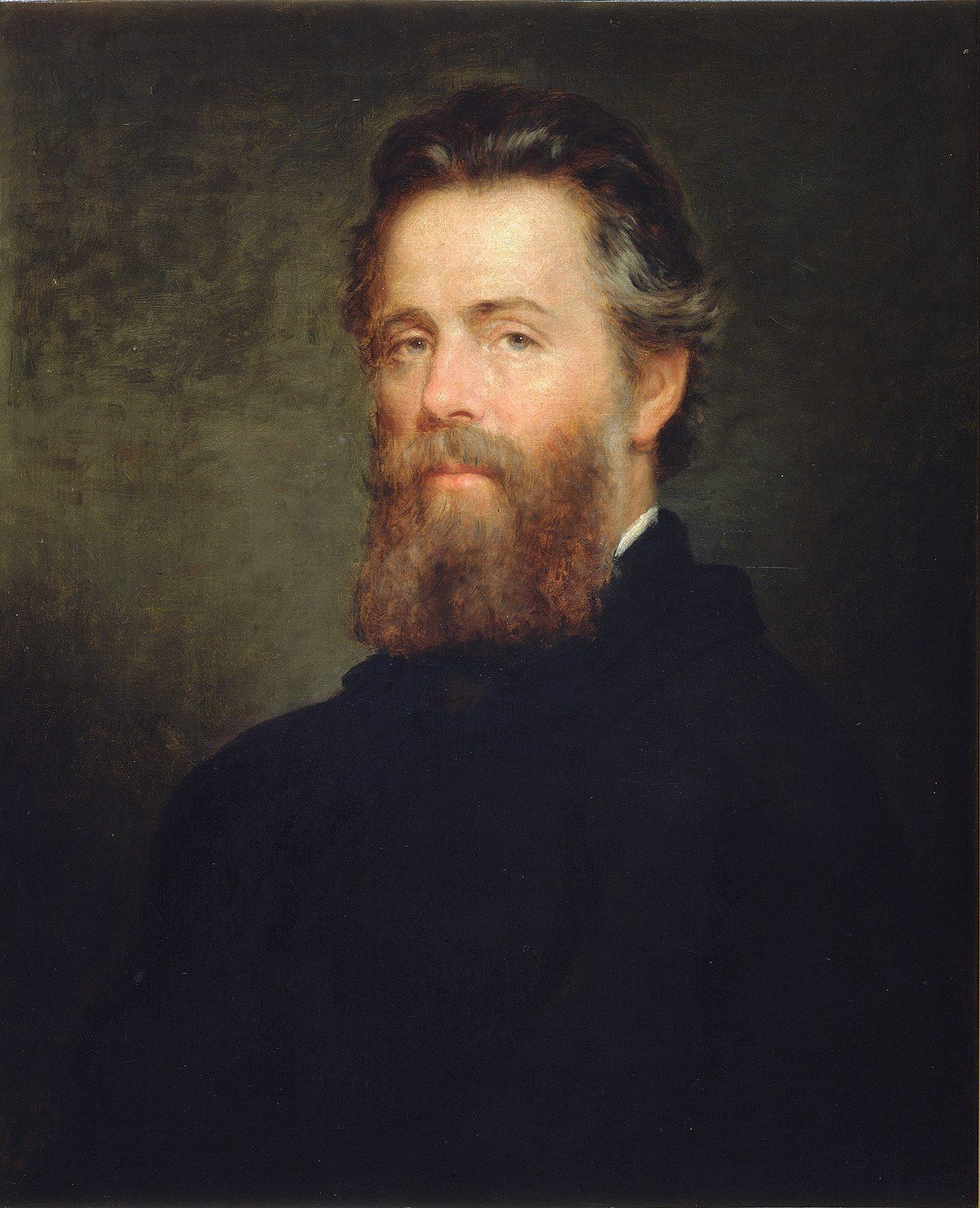
Herman Melville
Herman Melville (1819–1891) was an American novelist, short story writer, and poet, best known for his masterpiece Moby-Dick, a novel that has become one of the cornerstones of American literature. Born in New York City to a family of modest means, Melville's early life was marked by a series of hardships, including the death of his father and the family's financial struggles. After a series of jobs, including working as a sailor aboard whaling ships, Melville's experiences at sea would deeply influence his later writing.
In the 1840s, Melville published a series of novels based on his seafaring adventures, including Typee, Omoo, and Mardi. These early works were well-received and brought him some fame, but it was Moby-Dick (1851) that would secure his place as one of the greatest American writers. Moby-Dick tells the story of Ishmael, a sailor who joins the whaling ship Pequod, captained by the obsessive and vengeful Captain Ahab, whose pursuit of the elusive white whale, Moby-Dick, becomes a metaphor for the dangers of obsession, human frailty, and the struggle for meaning in an indifferent universe. While Moby-Dick was not initially a commercial success, it has since been recognized as one of the most important works in the American literary canon.
Melville's later works, including Bartleby, the Scrivener and Billy Budd, explore themes of individualism, social alienation, and the complexities of human nature. Though Melville struggled with financial difficulties throughout his life and faced critical neglect, his writing became more appreciated in the 20th century, and today he is regarded as one of America's greatest literary figures. His works continue to resonate for their depth, complexity, and exploration of the human condition.


